Who pays for a condo leak in Florida, in general terms
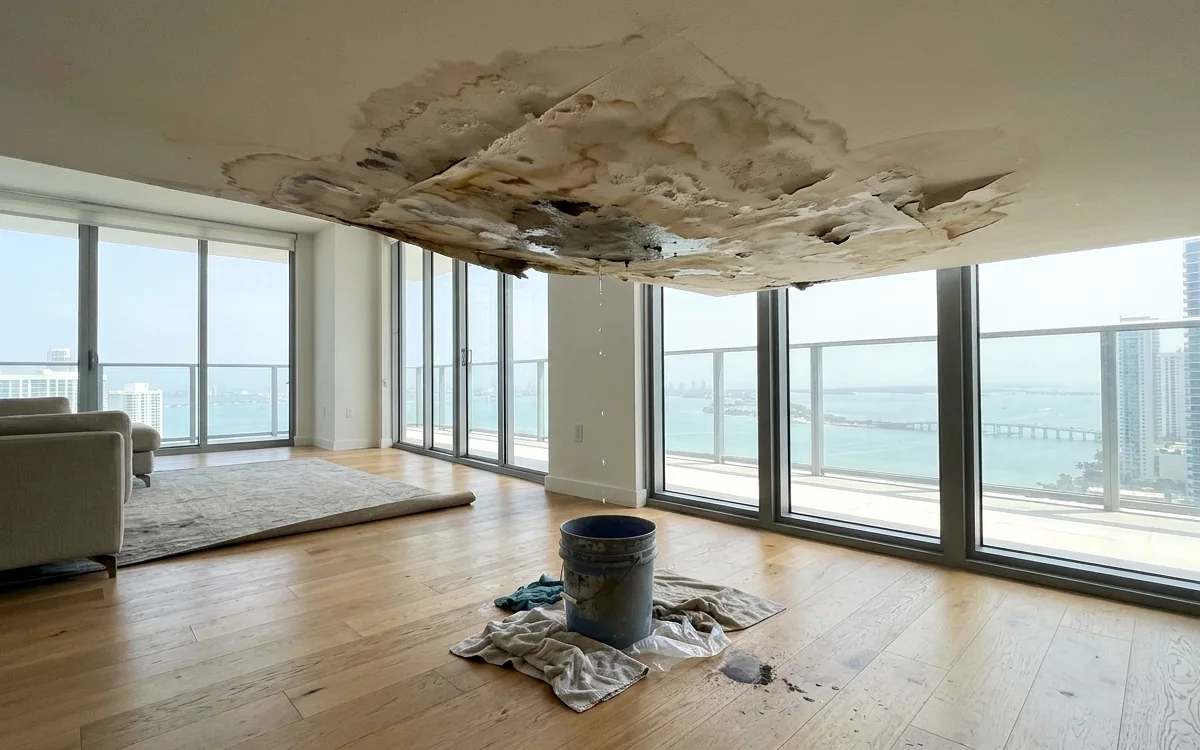
When water comes through your ceiling from the unit above, the first worry is the mess and the second is the bill. Florida law sets a general split between the association and unit owners, and knowing it helps you make the right calls early.
Written from what our crews see on Miami jobs, for homeowners, condo owners and property managers.
At a glance
- Written by
- Winston Albright
- Role
- Guides Editor and Restoration Project Lead
- Updated
- November 2026
- Reading time
- 6 minutes
- Under 718.111(11), the association generally covers the condo property as originally installed.
- Unit owners generally cover finishes, fixtures, appliances, cabinets and belongings through an HO-6 policy.
- Negligence or breaking the condo rules can shift repair costs to the owner whose unit caused the leak.
- Stop the water, document everything and start drying first; the question of who pays comes later.
First, a note on what this guide is
This is a general explanation written by a restoration company, not legal or insurance advice. Every condo has its own declaration and bylaws, every policy has its own wording, and the facts of each leak matter. Your association's documents, your insurer and, if needed, a Florida attorney have the final word.
What we can do is explain the general framework we see play out on condo jobs across Miami, so you know what questions to ask and what records to keep. Miami-Dade County has about 313,352 condo units in about 5,356 associations, so these questions come up every day.
Many of those buildings are not new. In the Miami metro area, 75 percent of condo units in associations of 20 to 49 units, and 59 percent in associations of 50 or more units, were built before 1990. Older supply lines, risers and water heaters in those towers are part of why unit-to-unit leaks are so common, and why the question of who pays comes up so often.
What the association generally covers
Under Section 718.111(11) of the Florida Statutes, the condo association insures and repairs the condominium property as originally installed, generally as a common expense. That usually includes the building structure, common elements like hallways and roofs, and shared systems such as main risers.
A Florida law firm's reading of that section is that, for a sudden leak, drywall and what lies behind it generally falls to the association, while interior finishes, fixtures and contents fall to the unit owner's policy. In plain terms, the walls themselves may be the association's concern, while the paint, flooring and cabinets on them may be yours.
Associations still need to be told quickly. Most will want to send their own manager or maintenance staff to see the source, and many have a set process for unit-to-unit leaks.
Associations with 25 or more units must post official records online under HB 1021, signed in 2024. That can make it easier to find your declaration and the insurance sections of your condo documents without waiting on the office. Read the parts on maintenance, insurance and unit owner responsibilities, since those are where the split for your building is spelled out.
What the unit owner generally covers
The association's policy excludes items inside a unit that serve only that unit. The statute lists examples: floor, wall and ceiling coverings, electrical fixtures, appliances, water heaters, water filters, built-in cabinets and countertops. The unit owner is expected to insure those, usually through an HO-6 policy.
Your own furniture, clothing, electronics and other belongings are also your responsibility. So are upgrades you or a past owner installed beyond what came with the building, depending on your documents.
Section 627.714 requires a Florida condo unit owner policy to include at least $2,000 of loss assessment coverage for covered losses. That coverage can help if the association passes a share of a covered loss to owners as a special assessment. Ask your agent how much loss assessment coverage you carry, since many owners in older towers choose more than the minimum.
- Flooring, paint, wallpaper and ceiling finishes
- Light fixtures and electrical fixtures inside the unit
- Appliances and the water heater
- Built-in cabinets and countertops
- Furniture, clothing and other personal belongings
When fault changes the answer
The general split can shift when someone is at fault. Under 718.111(11), if damage not covered by insurance results from a unit owner's negligence, intentional conduct or failure to follow the condo documents, that owner pays for the repairs. That includes damage caused by a tenant or guest in the unit.
So if the unit above ignored a leaking water heater for months, or a renovation was done against the building's rules, the owner of that unit may be responsible for damage to yours. Insurers on both sides may also look at whether the source was a sudden failure or a slow leak that went on for a long time.
Common sources in Miami high-rises are ordinary ones. IBHS findings cited by Tower Hill Insurance attribute half of washing machine water losses to burst supply lines and 44 percent of sink-related losses to faulty supply lines, and they found that 75 percent of water heaters fail before they are 12 years old.
What to do in the first hours
Responsibility gets sorted out later. Stopping the water and drying the unit cannot wait. Call building management or the front desk right away so they can shut off the right valve or reach the unit above, and tell your neighbor if you can.
Then document. Photograph your ceiling, walls, floors and damaged belongings before anything is moved, and ask building staff to note the source in writing if they find it. Report the loss to your HO-6 insurer promptly; Florida requires notice of a new residential property claim within 1 year of the date of loss.
Do not hold off on drying while the parties work out who pays. Wet drywall and flooring left for days invite mold, and that can make the damage larger for everyone.
- Call building management and get the water stopped
- Photograph every wet area and damaged item
- Ask for the source to be noted in writing
- Notify your own HO-6 insurer
- Start drying without waiting on the fault question
How drying records help every party
In a condo leak, the association, your insurer and sometimes your neighbor's insurer may all want to see what happened. Clear records keep those conversations short. Moisture maps show which walls, ceilings and floors were wet. Daily readings show when they reached dry. Photos tie each damaged area to the source.
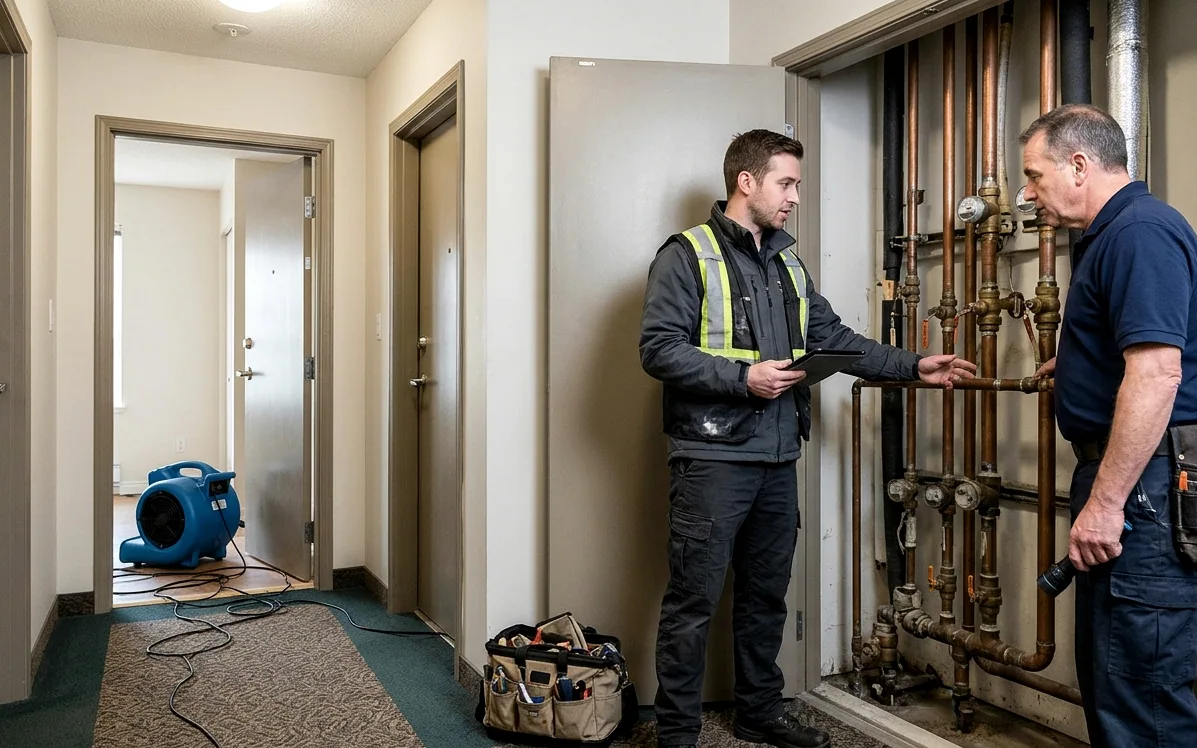
On condo jobs we work alongside building management on access, elevator use and shutoffs, and we keep the drying logs and photos organized so each party can see what applies to them. We do not decide who pays, but good records make it much easier for the people who do.
If water is coming into your unit from above or next door, call us at (786) 947-0034, any hour. We will find how far it spread, start drying, and document it from the first visit.
Reader questions
The leak came from my upstairs neighbor. Do I still file with my own insurer?
In many cases, yes. Your HO-6 policy usually responds to damage to your finishes and belongings, and the insurers may sort out fault between themselves afterward. Report it to your insurer and to building management, and keep copies of every photo and record.
The association says the drywall is theirs but the flooring is mine. Is that normal?
It matches the general split many Florida condos follow under 718.111(11), where the association handles the property as originally installed and owners handle interior finishes. Your own declaration may differ, so ask management to point you to the relevant section.
Can drying start before everyone agrees on who pays?
It should. Waiting days for a decision lets water spread and mold start, which makes the loss bigger for everyone. Tell building management and your insurer that drying is underway, and keep the moisture logs and photos to share with each party later.
More guides from our crews
AC drain line leaks in Miami condos
In a Miami condo, the air conditioner runs most of the year and pulls gallons of water out of the air. When the small drain line that carries that wat
Read the guideCan wet drywall be saved after a leak?
Wet drywall does not always have to come out. Whether it can be dried in place depends on what kind of water soaked it, how long it has been wet, and
Read the guideThe first 24 hours after water damage at home
The first day after a leak or flood decides how much of your home can be dried and kept. These are the steps that matter most, in the order we would t
Read the guideWater where it should not be? Call now.
A person answers every call, day or night. Tell us what got wet and when it started, and we will tell you what happens next.