Black mold removal from drywall, wood and grout in Miami
There is dark, almost black growth on your drywall, around the tub or on the back of a cabinet, and you want to know what it means and how it comes off.
Many molds grow dark green or black, and color alone does not tell you which kind it is or how much of a problem it is. What matters is how much is growing, what it is growing on and what water is feeding it. The removal process is the same careful containment and cleanup we use on any mold job.
At a glance
- Service
- Black Mold Removal
- Group
- Mold Removal
- Hours
- Phones answered 24/7
- Office
- 1428 Brickell Avenue, Floor 3, Miami
- Covers
- Miami-Dade and Broward
When you call, we ask where the dark growth is, how large it looks and whether there has been a leak nearby. We inspect, measure and trace the moisture, then remove the growth under containment and dry or fix the water source. Dark mold on wet drywall keeps spreading, so plan to act within days, not weeks.
What black mold is, and what color tells you
Black mold is a common name, not a lab result. Many mold types grow dark, and drywall paper that stayed wet for a long time often turns almost black as growth spreads across it.
We do not name a species by looking at it. If you need to know what it is, sampling can be arranged through an independent assessor and lab. For most homes, the CDC advises removing visible mold and fixing the moisture rather than routine testing.
The health facts, without the scare
The CDC says mold exposure may cause no reaction at all, or a stuffy nose, sore throat, coughing or wheezing, itchy eyes or a skin rash. People with asthma, mold allergies, weakened immune systems or chronic lung disease can react more strongly.
The CDC also cites a 2004 Institute of Medicine finding of sufficient evidence linking indoor mold exposure to upper respiratory symptoms, cough and wheeze in otherwise healthy people. That is a good reason to remove it properly, and to bring any health questions to your doctor.
Where dark mold shows up in Miami homes
Dark growth is most common where water sits for a long time on paper-faced or wood materials. The back of drywall behind a leaking shower valve, the floor of a sink base, the plywood under an air handler and window sills all fit that pattern.
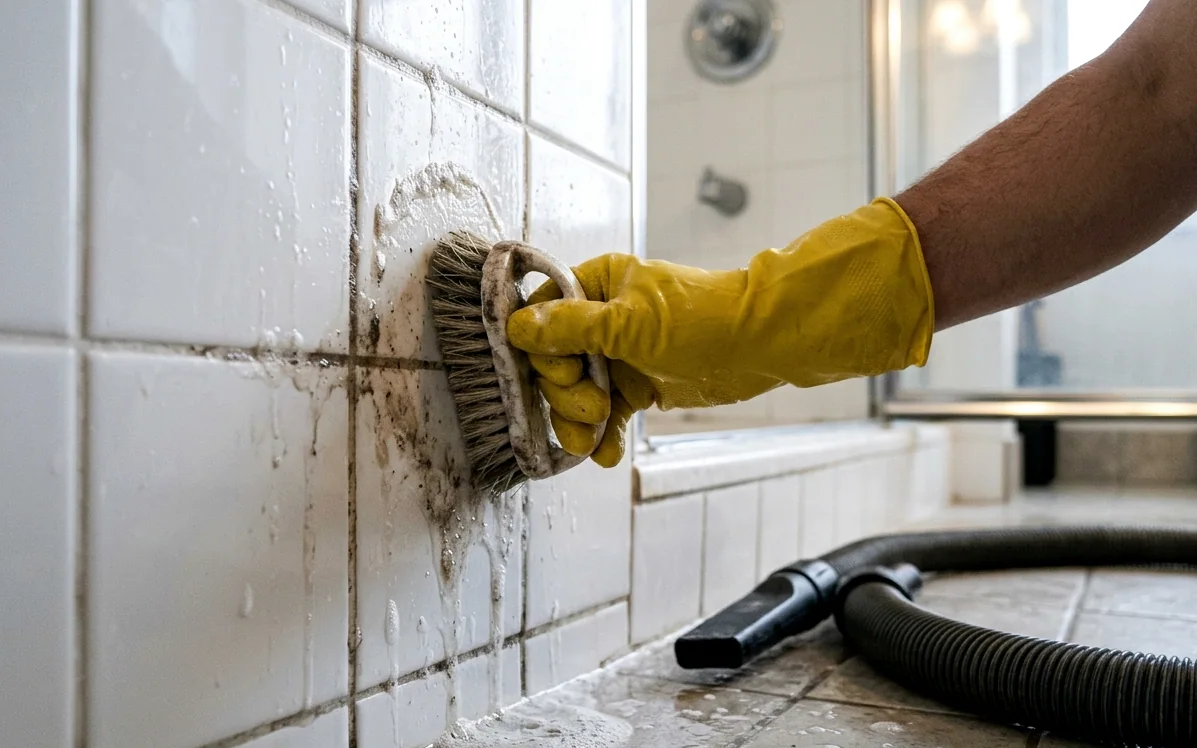
Grout and caulk in showers often look black too. Surface growth on grout can be cleaned, but dark marks that come back right away can mean water is getting behind the tile.
- Drywall behind showers and tubs
- Sink bases and cabinet backs
- Air handler closets and platforms
- Window sills and slider tracks
- Grout lines and silicone caulk
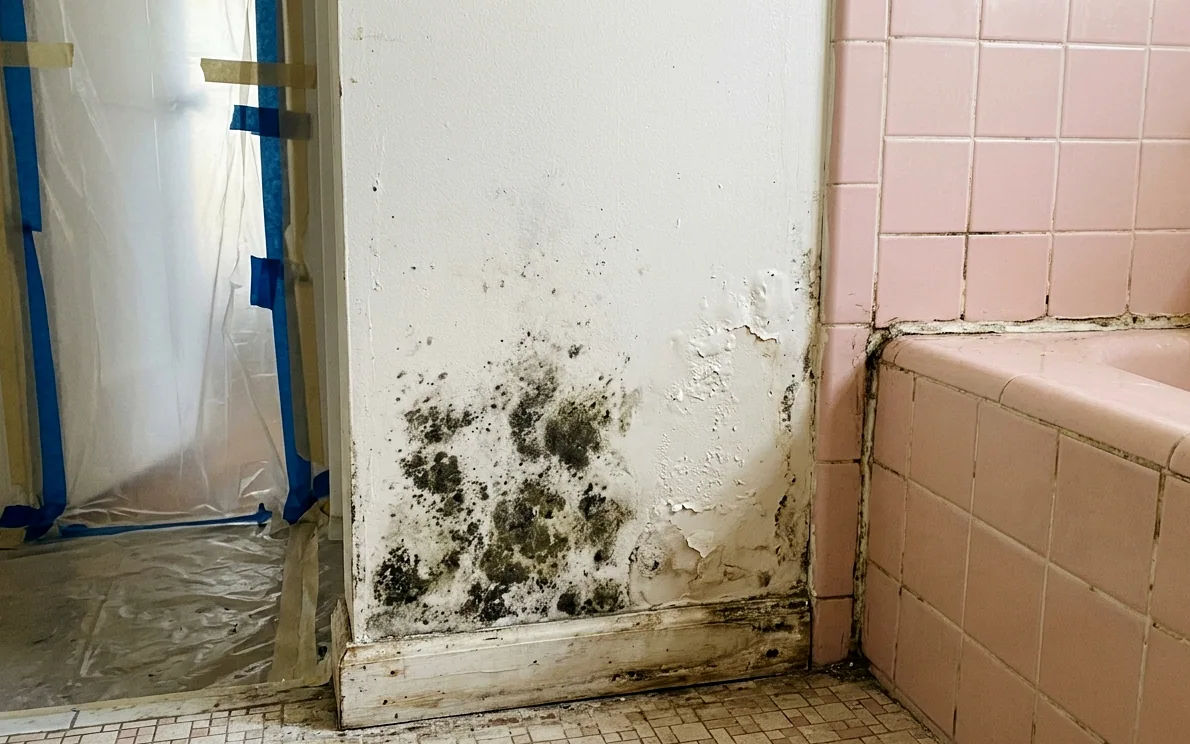
How dark mold comes off drywall, wood and grout
Drywall with growth on the paper or in the core is cut out under containment, since it cannot be cleaned reliably. Wood framing and plywood are cleaned, sanded where staining runs into the grain, and HEPA vacuumed.
Grout and tile surfaces are scrubbed and treated, and old caulk is cut out and replaced. If the growth runs behind the tile, that section of wall is opened so the wet backer and framing can be dried and checked.
Fixing the water so it stays gone
Dark mold almost always means long-term moisture. We trace it with meters and thermal imaging to a leak, condensation or a failed seal, and tell you what needs repair.
The EPA says moldy surfaces should not be painted or caulked until they are cleaned and dry. That is why we never paint over dark mold, and why the area is dried and checked before it is closed.
Miami averages about 141 days a year with measurable rain, and June, August and September are normally its wettest months. A slow leak at a window or roof edge gets rewetted again and again on that schedule, which is why dark growth near windows and ceilings so often points to a leak that never fully dries.
When to call about black mold removal
Dark spots on drywall
Black or dark green patches on walls or ceilings that grow larger over a few weeks.
Black grout that returns
Shower grout turns dark again only days after a good cleaning.
Stained cabinet floor
Dark growth on the back panel or floor of a sink cabinet after a slow drip.
Spotting near windows
Dark marks along sills, slider tracks or the drywall returns beside a window.
Bathroom smells earthy
A damp, musty smell that stays even after the room is cleaned and aired out.
Symptoms that ease away
A stuffy nose or itchy eyes that get better when you are away from home, worth raising with your doctor.
What happens after you call
Tell us what you see
Describe where the dark growth is and any leaks or past water damage nearby.
Inspect and trace moisture
We measure the growth and find the water behind it with meters and thermal imaging.
Contain the area
Plastic sheeting and a HEPA air scrubber keep spores inside the work zone.
Remove and clean
Moldy drywall is cut out, wood and grout are cleaned, and everything is HEPA vacuumed.
Dry and flag the source
The area is dried, and the leak or condensation problem is flagged for repair.
Arrange clearance
An independent assessor can check the area before it is closed, with results sent to you.
What black mold removal usually costs in Miami
These are typical Miami-area ranges for removing dark mold. Black mold is priced the same way as other mold: by size, location and the materials involved.
| What is priced | Typical range |
|---|---|
| Small patch, 10 to 100 sq ft | $535 to $1,465 |
| Priced by affected area, per sq ft | $10.85 to $29.45 |
| Typical remediation job | $1,565 to $8,875 |
| Partial attic or ceiling job | $1,535 to $5,945 |
How much drywall comes out, tile work behind showers and access around cabinets or air handlers move the price. You get a final price after we see it in person. See every cost range we publish.
Black Mold Removal: common questions
Is black mold more dangerous than other mold?
Color does not tell you much about risk. The CDC describes possible reactions to mold in general, with stronger reactions in people with asthma, allergies, weakened immunity or chronic lung disease. Any mold growing indoors should be removed and its moisture source fixed.
Do I need a lab test to know if it is black mold?
Usually not. The CDC does not recommend routine testing when mold is visible, since there are no official standards for acceptable levels. If you want sampling anyway, we arrange it through an independent assessor and lab.
Can black mold in shower grout be cleaned, or does the tile come out?
Surface growth on grout and caulk can usually be cleaned and the caulk replaced. If it returns quickly or the wall behind the tile reads wet, water is getting in behind it, and that section needs to be opened and dried.
Can you paint over black mold with mold-resistant paint?
No. The EPA says moldy surfaces should not be painted until they are cleaned and dry. Paint over live growth peels, and the mold keeps growing underneath.
Should I throw out belongings that had black mold on them?
Hard items such as glass, metal and sealed plastic can usually be cleaned. Porous items like cardboard, upholstery and paper, which the CDC lists among materials mold grows on, are often not worth saving if growth is heavy.
Often needed on the same job
Mold Removal
Containment, removal and cleaning of mold, with the moisture source fixed.
See the serviceBathroom Mold Removal
Mold behind tile, around tubs and on ceilings from steam and slow leaks.
See the serviceWall & Drywall Mold Removal
Mold inside wall cavities and on drywall faces cut out and cleaned.
See the serviceKitchen & Cabinet Mold Removal
Mold under sinks and behind cabinets from drain and dishwasher leaks.
See the serviceWater where it should not be? Call now.
A person answers every call, day or night. Tell us what got wet and when it started, and we will tell you what happens next.