Canal flood and mold cleanup in Tamiami, 33175
Tamiami grew up along the Tamiami Trail and its canal, and in storms such as Hurricane Irene and the October 2000 flood, local gauges caught more than 11 inches of rain in a single event.
That history is why our Tamiami calls so often begin outdoors, with water creeping across a lawn or patio, and end indoors with soaked baseboards and mold behind them. We come out from Brickell, roughly 14 miles to the east, with extraction and drying equipment on the same truck.
At a glance
- Area
- Tamiami
- From our office
- 1428 Brickell Ave, Floor 3
- Phones
- Answered 24/7
- Most calls
- Flood Damage Cleanup
We do. Kelda Restoration covers Tamiami on both sides of SW 137th Avenue, from the older ranch blocks to the newer western subdivisions and condos. Most calls involve storm water that reaches floors, wet drywall left too long and mold in bathrooms and closets. Dial (786) 947-0034 day or night; a person answers and our own crew heads out.
Ranch blocks east of 137th, newer streets west of it
SW 137th Avenue is the dividing line most locals use. East of it, the streets are lined mostly with Spanish eclectic ranch homes built from the late 1970s through the 1990s, while the western side filled in later with newer houses, townhouses and condos.
Tamiami's population climbed from 17,607 in 1980 to 54,788 in 2000, meaning much of the housing went up within about twenty years. Roughly 71.7 percent are owner-occupied, which means most callers are deciding on repairs for a house they plan to keep.
Lake lots, the C-4 and record storm totals
Many Tamiami homes back onto shallow lakes that were placed behind the lots to keep streets and houses from flooding. They do that job in an ordinary summer, but when a slow tropical system parks overhead, lake levels climb and yards, patios and slab edges stay wet for days.
The Tamiami Canal, or C-4, was dredged in the 1920s to help build the Trail itself. During Hurricane Irene on October 15, 1999, 11.60 inches fell at Tamiami Trail and Krome Avenue, and the October 3 to 4, 2000 flood put 12.80 inches into the Tamiami and Krome gauge. The water district later planned flood walls and berms along the C-4 between SW 122nd and SW 130th Avenue.
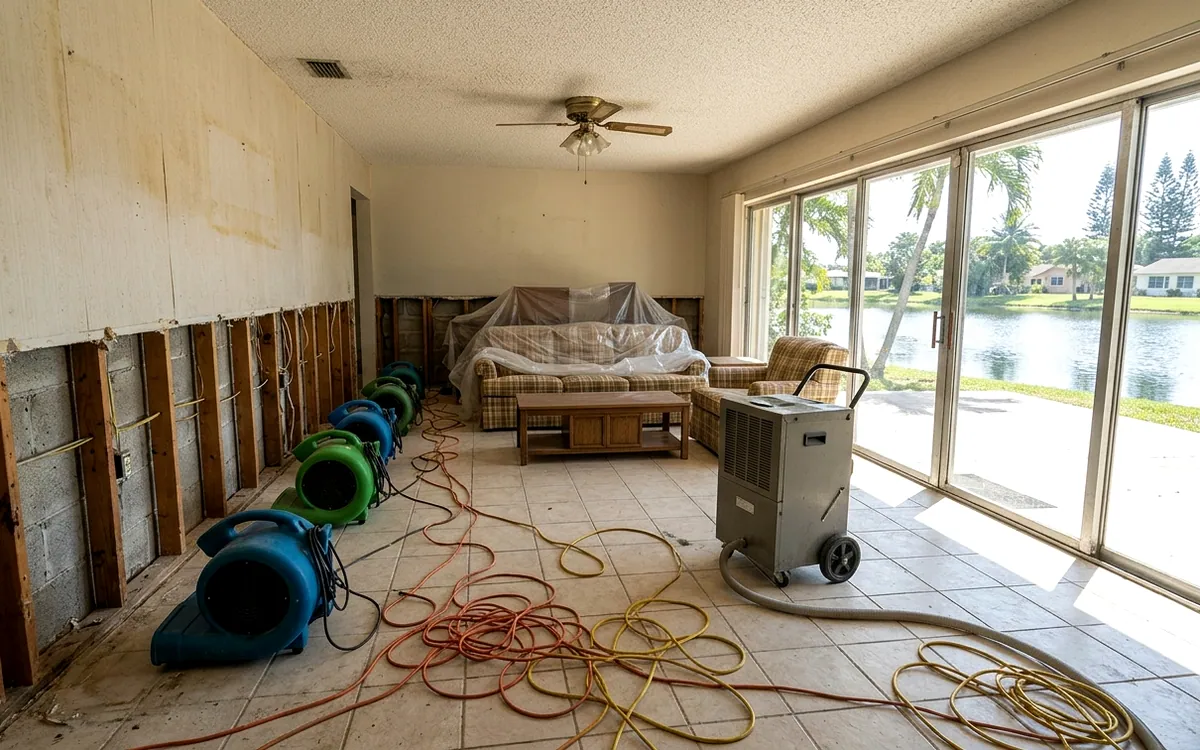
Drying a flooded ranch house before mold sets in
Rising water from outside counts as Category 3 under the IICRC S500 approach, so we treat it as contaminated from the first hour. That means extracting it, cutting wet drywall a set height above the water line, pulling soaked baseboards and carpet pad, and cleaning the slab before drying equipment goes in.
If your house has terrazzo under the carpet, as many older Florida homes do, it usually dries well once the covering is lifted. We set dehumidifiers and air movers, log readings every day and remove the equipment only when walls and floors are back to normal.
Mold that has already started is contained and removed along with the wet materials. Sampling or a clearance test, if you or your insurer wants one, comes from an independent assessor working with a lab.
From the Trail to Kendale Lakes
Tamiami borders Sweetwater and Westchester on the east, Westwood Lakes to the southeast and Kendale Lakes to the south, and we cover every one of them, plus Fontainebleau. The same canal network and the same slow tropical rains shape what we find in each.
Tell us your cross street when you call, or a landmark such as Tree Island Park, Belen Jesuit or Tamiami Lakes Park beside Joe Hall Elementary, and we will route the nearest available crew.
Where water and mold start in Tamiami
Canal along the Trail
The C-4 was dredged beside the Tamiami Trail in the 1920s and climbed over a foot after the heavy May 26, 2020 rain.
Over 11 inches per storm
Irene left 11.60 inches at Tamiami Trail and Krome Avenue in October 1999, and the 2000 flood topped 12 inches at the same gauge.
Lakes behind the lots
Shallow lakes hold storm water behind many homes, but high lake levels keep yards and slab edges wet much longer.
Late 1970s to 1990s houses
Ranch homes east of SW 137th Avenue now have plumbing, shower pans and water heaters that are several decades old.
Services we run most in Tamiami
Flood Damage Cleanup
Rising water and street flooding cleaned out, with flood cuts where needed.
See the serviceFlood Cuts & Drywall Removal
Wet drywall and baseboards cut out at a clean line so walls can dry.
See the serviceMold Removal
Containment, removal and cleaning of mold, with the moisture source fixed.
See the serviceStructural Drying & Dehumidification
Air movers and dehumidifiers set up, logged daily and pulled once dry.
See the serviceStorm & Hurricane Water Damage
Wind-driven rain, surge and roof breaches after tropical weather.
See the serviceEmergency Water Extraction
Truck-mounted and portable extraction to pull standing water out fast.
See the serviceTamiami: questions we hear
Is water that came in from my Tamiami yard or lake safe to mop up myself?
It is treated as contaminated, because outdoor flood water can carry sewage and soil. Wear gloves and boots, keep children and pets away, and do not run household fans over it. Our crew pumps it out, cuts away soaked porous materials and cleans the slab.
How high do you cut drywall after a flood in a Tamiami home?
That comes down to the water line and how far the drywall wicked moisture above it. We take meter readings and cut level just above the wet zone, often at 2 or 4 feet, so the cavity can dry and new board goes back cleanly.
Can mold grow in my Tamiami house if the flood water only stayed a few hours?
Yes. Drywall and baseboards keep holding moisture after the water leaves, and the EPA says drying needs to happen within 24 to 48 hours. When materials stay wet longer, mold can start inside the wall where you will not see it.
Do you work with flood insurance claims for homes in Tamiami?
We document every room with photos, moisture readings and a scope of what was removed, which your adjuster can use. Flood policies and homeowner policies cover different things, so we keep the records separate when both apply.
Other places our crews cover
Water damage in Tamiami? Call our crew lead.
A person answers every call, day or night. Tell us what got wet and when it started, and we will tell you what happens next.