Mold removal in Miami homes and condo units
You found mold on a wall, under a sink or around the air handler closet, and you want it gone without spreading spores through the rest of your home.
Mold removal works when it does two things at once: it takes out the growth under containment, and it fixes the moisture that fed it. The EPA says cleaning mold without fixing the water problem usually lets it come back. Our work follows the ANSI/IICRC S520 standard for professional mold remediation.
At a glance
- Service
- Mold Removal
- Group
- Mold Removal
- Hours
- Phones answered 24/7
- Office
- 1428 Brickell Avenue, Floor 3, Miami
- Covers
- Miami-Dade and Broward
When you call, we ask where the mold is, roughly how big it looks and what water might be behind it. We come out, measure the area, find the moisture source with meters and thermal imaging, and set up containment. Then we remove and clean. Mold keeps growing while materials stay wet, so plan to start soon.
Size decides how the job is set up
The EPA says most people can clean a moldy area of less than about 10 square feet themselves, roughly 3 feet by 3 feet. Larger areas, or mold tied to significant water damage, call for more thorough remediation.
Florida's mold law draws its line in the same place, defining mold assessment and remediation as work on growth larger than 10 square feet. We measure every affected surface on the first visit so the setup fits the size.
Containment keeps spores in the work area
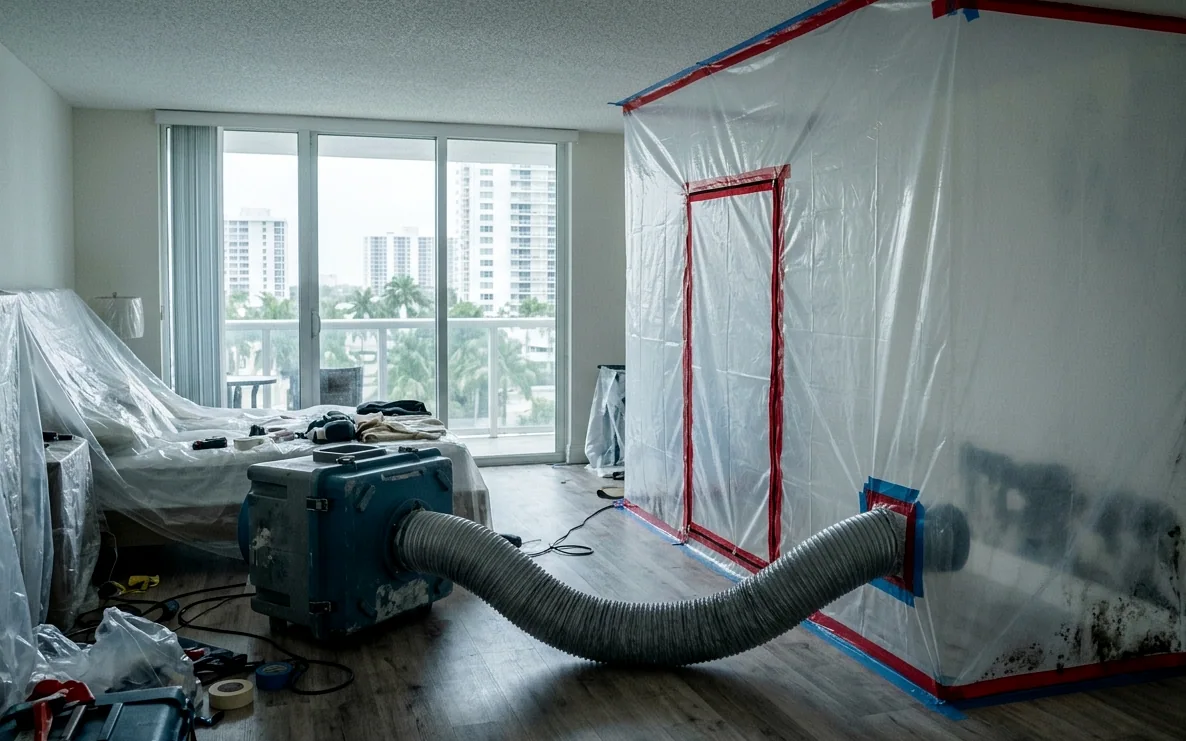
EPA guidance for commercial buildings recommends limited containment with a single layer of polyethylene for 10 to 100 square feet of mold, and full containment with double sheeting and an airlock above 100 square feet. We apply the same approach in homes and units.
Inside the containment, an air scrubber with a HEPA filter runs under negative pressure, so air flows into the work area rather than out of it. Vents in the room are sealed and the path to the door is protected.
- Plastic sheeting walls with a zippered entry
- HEPA air scrubber under negative pressure
- Supply and return vents sealed off
- Floor protection along the exit path
What gets removed and what gets cleaned
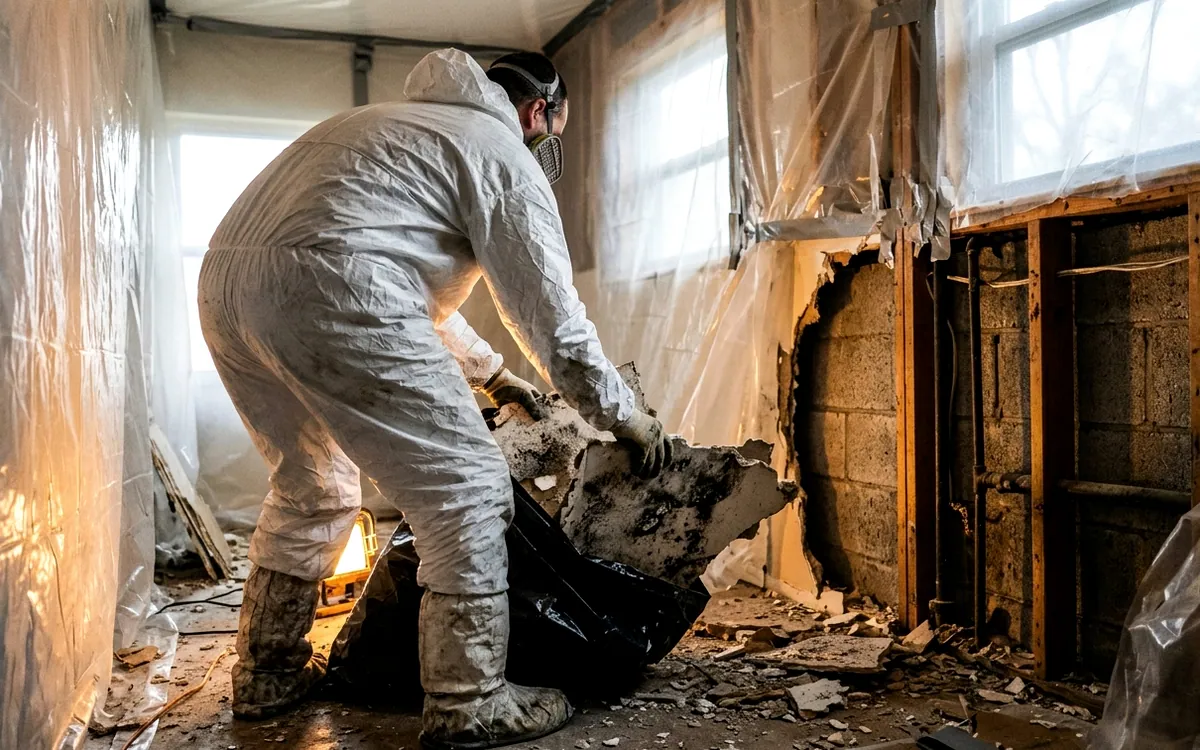
Porous materials with mold growing in them, such as drywall, insulation and carpet pad, are cut out and bagged inside the containment. Wood framing and other solid surfaces are cleaned, sanded where needed and HEPA vacuumed.
The CDC notes mold can grow on paper, cardboard, ceiling tiles, wood, drywall, insulation, carpet, fabric and upholstery. Stored boxes and soft items in the area are sorted with you, and the ones worth saving are cleaned separately.
Fixing the moisture behind the mold
Every mold job starts with finding the water. Thermal imaging and meters show whether it is a slow drip, a sweating duct, a clogged AC drain or room humidity that never comes down.
If the source needs a plumbing or roof repair, we tell you which trade to call and plan the removal around it. The area is then dried to normal readings, because moldy surfaces should not be painted or sealed until they are clean and dry.
Independent clearance before the walls close
When removal and cleaning are done, the area should pass a visual check and a clearance step before new drywall goes up. On larger jobs, clearance testing is arranged through an independent assessor and lab, and the results go to you.
Florida's Section 468.8419 bars a mold remediator from performing or offering an assessment on a structure it remediated within the previous 12 months. Keeping the testing independent means the check on our work is not done by us.
Average relative humidity in Miami runs about 82 percent in the morning, while the EPA recommends keeping indoor humidity below 60 percent. That gap is why a Miami mold job is not finished until the room can hold its humidity down, through the AC, a dehumidifier or fixing the leak that keeps the air damp.
When to call about mold removal
Spots that keep coming back
Growth returns after you wipe it, which usually means moisture is still feeding it.
Musty room or closet
A damp, earthy smell is strongest in one room even with the AC running.
Stains near the AC closet
Dark spots on the wall or floor around the air handler or along the condensate line.
Bubbling paint
Paint lifting on a wall that had a leak, with dark marks showing underneath.
Mold after a water loss
Spots appeared on drywall or baseboards days after a leak or flood that was not fully dried.
Larger than 10 sq ft
The affected area is larger than about 10 square feet, past what the EPA suggests for a do-it-yourself cleanup.
What happens after you call
Call and describe it
Tell us where the mold is, how big it looks and any leaks you know about.
Inspect and measure
We measure affected surfaces and trace the moisture with meters and thermal imaging.
Set up containment
Plastic sheeting, negative air and vent seals go in before anything is disturbed.
Remove and clean
Moldy porous materials are bagged out, and solid surfaces are cleaned and HEPA vacuumed.
Dry the area
Dehumidifiers bring materials back to normal readings once the source is fixed.
Independent clearance
An independent assessor checks the area, and the results come to you before the rebuild.
What mold removal usually costs in Miami
These are typical Miami-area ranges for mold remediation. Size, location and what has to come out drive the number.
| What is priced | Typical range |
|---|---|
| Small area, 10 to 100 sq ft | $515 to $1,485 |
| Typical remediation job | $1,545 to $5,965 |
| Priced by affected area, per sq ft | $15.40 to $29.60 |
| Whole-home remediation | $15,345 to $29,665 |
Containment size, how much drywall and insulation comes out, attic or closet access and the moisture fix move the price. You get a final price after we see it in person. See every cost range we publish.
Mold Removal: common questions
Can I just spray bleach on the mold?
On a small hard surface, cleaning can work. Bleach does not reach mold growing inside drywall or wood, though, and the EPA notes mold returns if the water problem is not fixed. Larger areas or mold tied to water damage call for removing the affected material.
Will mold spread to other rooms while you work?
Containment with plastic sheeting and a HEPA air scrubber under negative pressure keeps air moving into the work area, not out of it. Vents are sealed, and debris is bagged inside the containment before it leaves.
Do I have to leave my home during mold removal?
For small, contained jobs most people stay and keep clear of the work area. The CDC says people with asthma, mold allergies or weakened immune systems can react more strongly, so they may want to stay elsewhere while removal is underway.
Why don't you do the clearance test yourselves?
Florida law keeps assessment and remediation on the same structure separate. Clearance is arranged through an independent assessor and lab, and the results come straight to you.
How do you keep the mold from coming back?
We find and dry the moisture source and tell you what still needs repair. Holding indoor humidity under 60 percent, as the EPA recommends, and fixing leaks quickly are what keep it from returning.
Often needed on the same job
Mold Inspection
A walk-through with meters and thermal imaging to find mold and its cause.
See the serviceMold Testing
Air and surface sampling arranged through an independent assessor and lab.
See the servicePost-Remediation Clearance Testing
Independent verification that a mold job passed before walls close.
See the serviceWall & Drywall Mold Removal
Mold inside wall cavities and on drywall faces cut out and cleaned.
See the serviceWater where it should not be? Call now.
A person answers every call, day or night. Tell us what got wet and when it started, and we will tell you what happens next.