Post‑remediation mold clearance testing in Miami
The mold has been removed and the containment is still up, and before anyone closes the walls you want an independent answer on whether the job actually passed.
Clearance testing is the check after mold remediation that tells you the area is ready to rebuild. In Florida it is done by an independent assessor and lab, not by the company that did the removal. We coordinate the timing so the check happens before containment comes down.
At a glance
- Service
- Post-Remediation Clearance Testing
- Group
- After the Cleanup
- Hours
- Phones answered 24/7
- Office
- 1428 Brickell Avenue, Floor 3, Miami
- Covers
- Miami-Dade and Broward
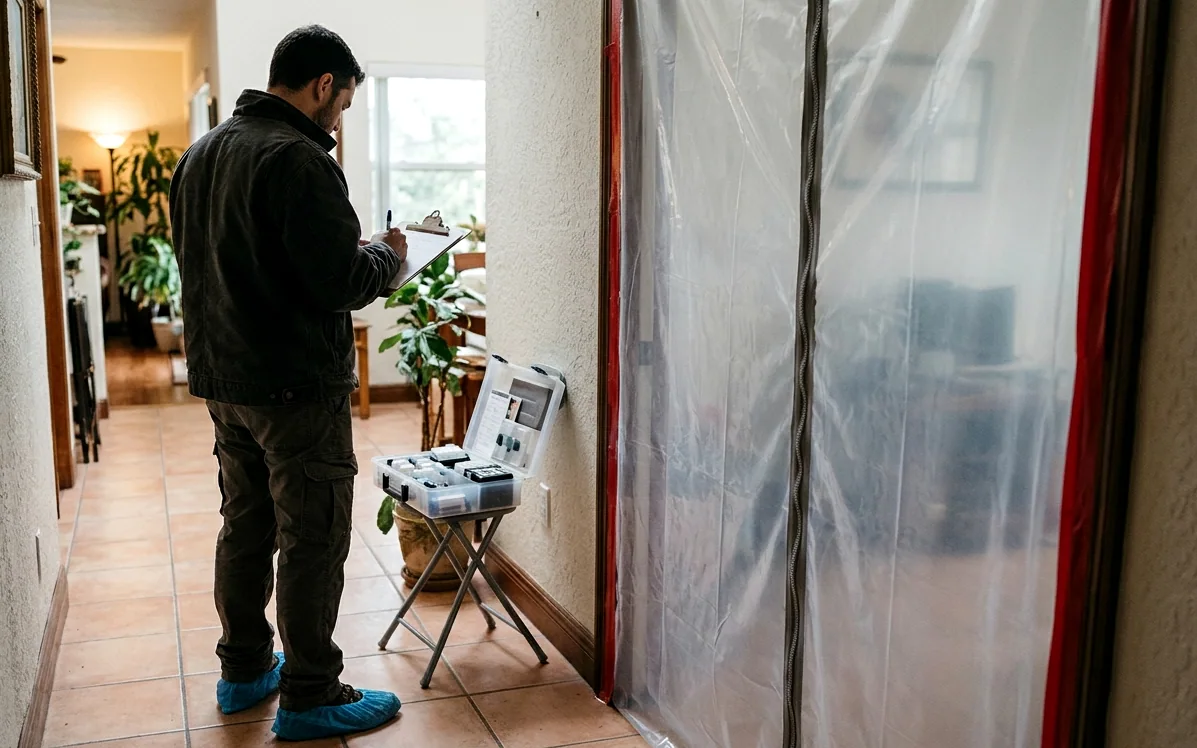
Once our removal and cleaning are done, we call the independent assessor you choose or one you ask us to contact. The assessor inspects the area, takes samples and sends them to a lab, while our containment stays up. If the area passes, we take down containment and repairs can start. If it does not, we clean again and the assessor rechecks.
Why someone else does the check
Florida's mold law keeps assessment and remediation apart. A mold remediator, or its company, cannot assess a structure it remediated within the previous 12 months. We follow that rule and never grade our own work.
That separation also helps you. The result comes from someone with no stake in whether our job passes, which carries more weight with buyers, landlords, associations and insurers.
What the assessor looks at
A clearance check usually starts with a visual inspection of the work area. The assessor looks for remaining growth, dust and debris, and checks that materials are dry. Moisture readings matter, because the EPA says cleaning mold without fixing the water problem usually lets it come back.
Sampling is then done as the assessor decides. That can include air samples inside and outside the work area, surface samples, or both, with results read by a lab.
- No visible mold or debris left
- Surfaces clean and dry to the touch
- Moisture readings at dry levels
- Lab results within the assessor's criteria
How we get the space ready
Before the assessor arrives, we finish removal, HEPA vacuum and wipe surfaces, and run air filtration inside containment. We check that the moisture source has been addressed and that materials are dry. Then we leave containment sealed so the area stays as it was cleaned.
We share our photos and moisture logs with the assessor if you want us to. That gives them a clear picture of what was removed and where.
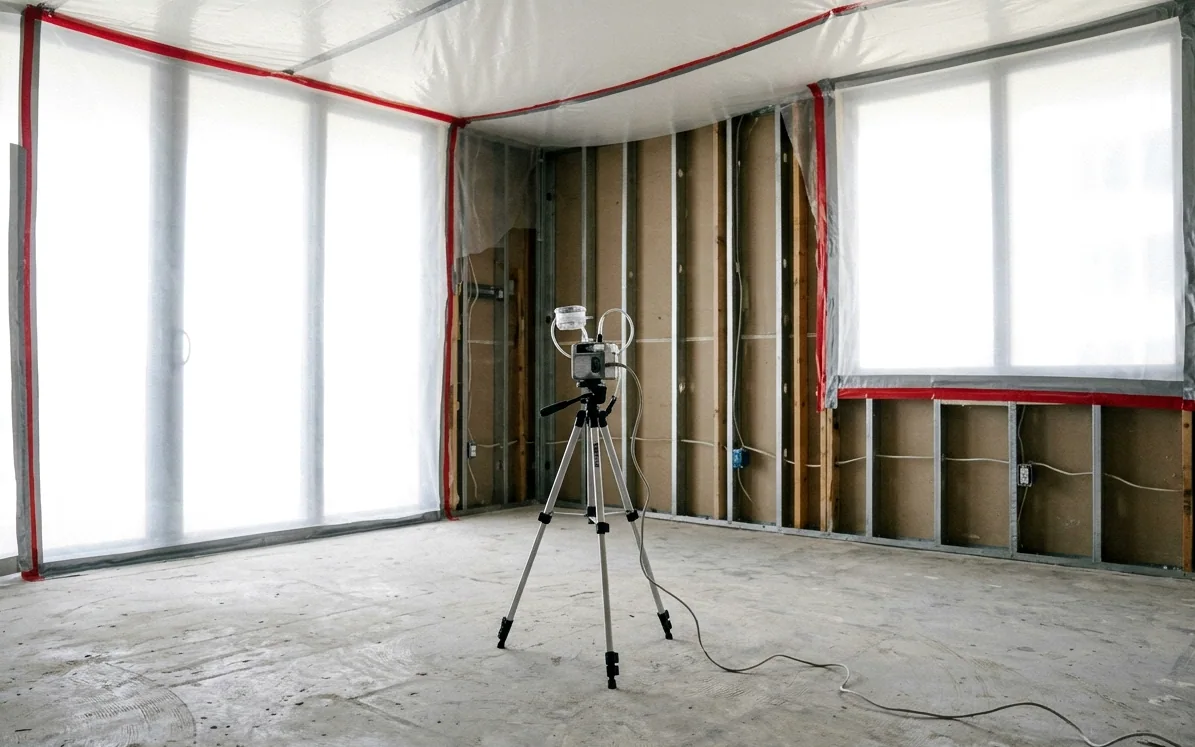
If the area does not pass
Sometimes an area needs another round. If the assessor finds remaining growth or results above their criteria, we clean the flagged areas again and keep containment up. The assessor then rechecks.
We would rather redo a section than have you close a wall over a problem. That is the reason clearance happens before rebuild, not after.
What clearance can and cannot tell you
Clearance tells you the remediated area was clean and dry when it was checked. It does not predict what happens if a new leak starts or indoor humidity stays high. The CDC also notes there are no official standards for acceptable mold levels, so the assessor sets the pass criteria for each job.
Keep the clearance report with your home records. It is useful if you sell, refinance or file a later claim.
The CDC recommends keeping indoor humidity at or below 50 percent, while Miami's average morning relative humidity runs about 82 percent. A remediated area that is left open to humid air before clearance can pick up moisture again, which is one reason we keep containment sealed until the assessor is done.
When to call about post-remediation clearance testing
Removal just finished
Mold work is done and containment is still sealed, which is the right moment to schedule clearance.
Walls about to close
Clearance should happen before drywall, cabinets or flooring go back over the work area.
Selling or renting soon
A written clearance result from an independent assessor is useful paperwork for a buyer or tenant.
Condo board wants proof
Associations often ask for documentation that a unit's mold work passed before neighbors' access returns to normal.
Sensitive people at home
If someone has asthma or mold allergies, an independent check before moving back in is worth having.
Large or repeat job
Bigger remediations, or mold that came back once, are good reasons to confirm the result independently.
What happens after you call
Finish the remediation
We complete removal, cleaning and drying, and keep containment sealed.
Schedule the assessor
We coordinate a visit with the independent assessor of your choice.
Inspection and sampling
The assessor inspects the area and collects samples for an independent lab.
Review the results
The assessor reports to you, and we go over what it means for the next step.
Reclean if needed
Any flagged area is cleaned again under containment, then rechecked.
Release for rebuild
Once the area passes, containment comes down and repairs can begin.
What post-remediation clearance testing usually costs in Miami
The independent assessor and lab bill you directly, so their fees are separate from ours. These are typical Miami-area ranges for the pieces around clearance.
| What is priced | Typical range |
|---|---|
| Independent assessor visit, average home | $465 to $785 |
| Assessor visit, large home with several work areas | $610 to $985 |
| Our LGR dehumidifier kept running in containment, per day | $91 to $122 |
| Our reclean labor if an area is flagged, per hour | $78 to $194 |
Assessor fees depend on the number of samples, rooms and lab turnaround. Our side depends on how long containment stays up, and the final price is set after an on-site look. See every cost range we publish.
Post-Remediation Clearance Testing: common questions
Can Kelda Restoration do the clearance test on its own mold job?
No. Florida law bars a remediator from assessing a structure it remediated within the previous 12 months, so an independent assessor and lab do the check. We coordinate timing and access.
Do I pick the assessor or do you?
You can pick any independent assessor you like. If you do not have one, we can give you names to contact, and you hire and pay them directly.
How long does containment stay up while we wait for lab results?
Containment stays sealed from the assessor's visit until the results come back and the area passes. Lab turnaround varies, so we plan equipment time around it.
What does it mean if the clearance fails?
It means the assessor found remaining growth, debris or results above their criteria in part of the work area. We reclean those spots under containment and the assessor checks again.
Is clearance testing required for every mold job?
Not always. Small areas under about 10 square feet may not need it, but for larger jobs, condo units and homes with sensitive occupants, an independent result before rebuild is worth getting.
Often needed on the same job
Mold Removal
Containment, removal and cleaning of mold, with the moisture source fixed.
See the serviceMold Testing
Air and surface sampling arranged through an independent assessor and lab.
See the serviceCondo Mold Remediation
Mold in condo units contained so neighbors and hallways stay clean.
See the serviceBlack Mold Removal
Dark mold growth on drywall, wood and grout removed under containment.
See the serviceWater where it should not be? Call now.
A person answers every call, day or night. Tell us what got wet and when it started, and we will tell you what happens next.