Roof leak water damage repair and drying in Miami
Rain is getting in through your roof, there is a stain or drip in the ceiling, and you are worried about what the attic insulation and the walls below are soaking up.
Roof leaks rarely show where the water enters. Water finds a gap in the tile, underlayment or flashing, runs along the roof deck or rafters, and soaks insulation before it shows up as a ceiling stain several feet away.
At a glance
- Service
- Roof Leak Water Damage
- Group
- Leaks Inside the Home
- Hours
- Phones answered 24/7
- Office
- 1428 Brickell Avenue, Floor 3, Miami
- Covers
- Miami-Dade and Broward
Call (786) 947-0034 and tell us where you see the water, whether it is still raining and how long the leak has been active. If the roof is still open, a tarp goes on first. Then we dry the attic, remove wet insulation and ceiling drywall that cannot dry, and dry the walls and floor below. Start within 48 hours.
How a roof leak travels inside
Water that gets past the roof covering hits the underlayment and roof deck, then follows the slope or the rafters until it finds a low point or a fastener. That is why a stain over the hallway can come from a gap above the bedroom.
Along the way, it soaks into insulation, which holds water against the top of the ceiling drywall. Ceilings often stain, sag or drip hours after the rain stops because the insulation is still releasing water.
Stopping the water before drying
There is no point drying an attic that will get wet again with the next storm. If the leak is still active and the roof cannot be repaired right away, we cover the area with a tarp so the drying work holds.
The roof repair itself comes from a roofer. We show them where water entered by tracing stains on the deck and framing from the attic side, which shortens their search on the roof.
- Cracked or slipped barrel tiles
- Worn underlayment under the tile
- Failed flashing at walls, chimneys and skylights
- Gaps around roof vents and plumbing stacks
- Ponding on low-slope and flat roof sections
What happens in the attic
We check the attic side of the leak with moisture meters and a thermal camera. Wet insulation is bagged and removed, because the EPA advises discarding wet insulation that cannot be dried in place within 48 hours.
With the insulation out, the roof deck and rafters dry with air movers and a dehumidifier. If stained framing shows mold growth, that is handled under containment as a separate mold job.
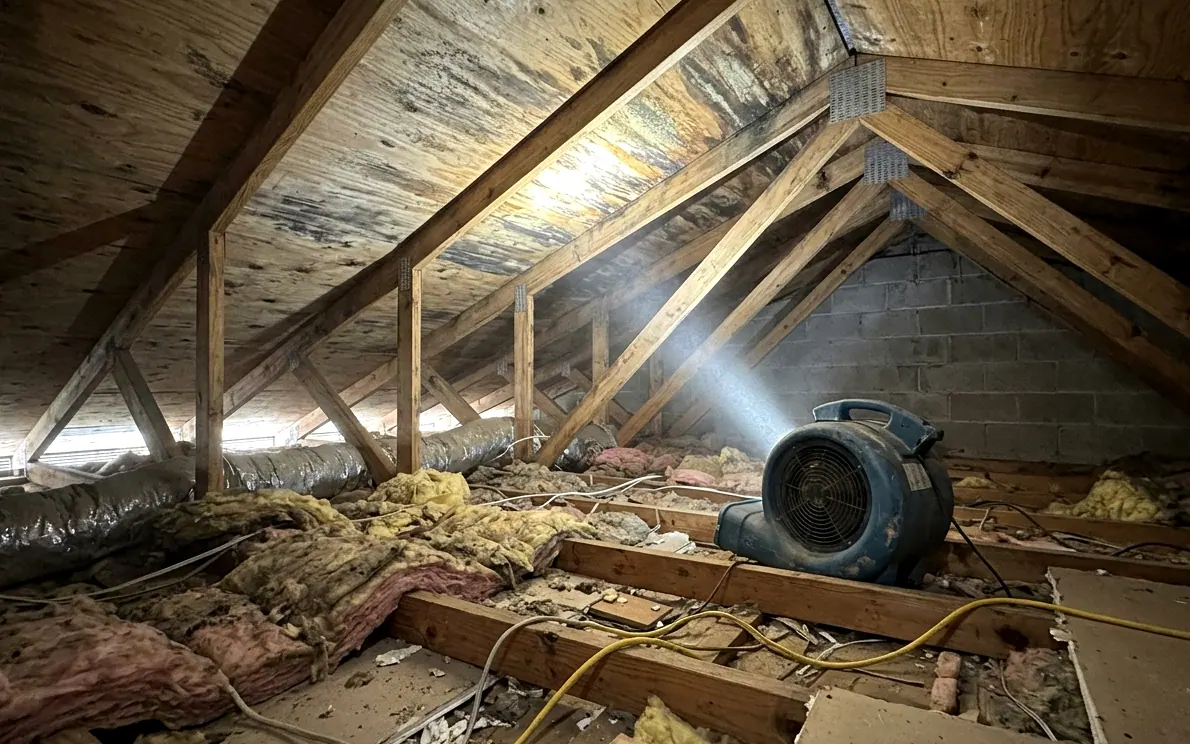
Ceilings and walls below the leak
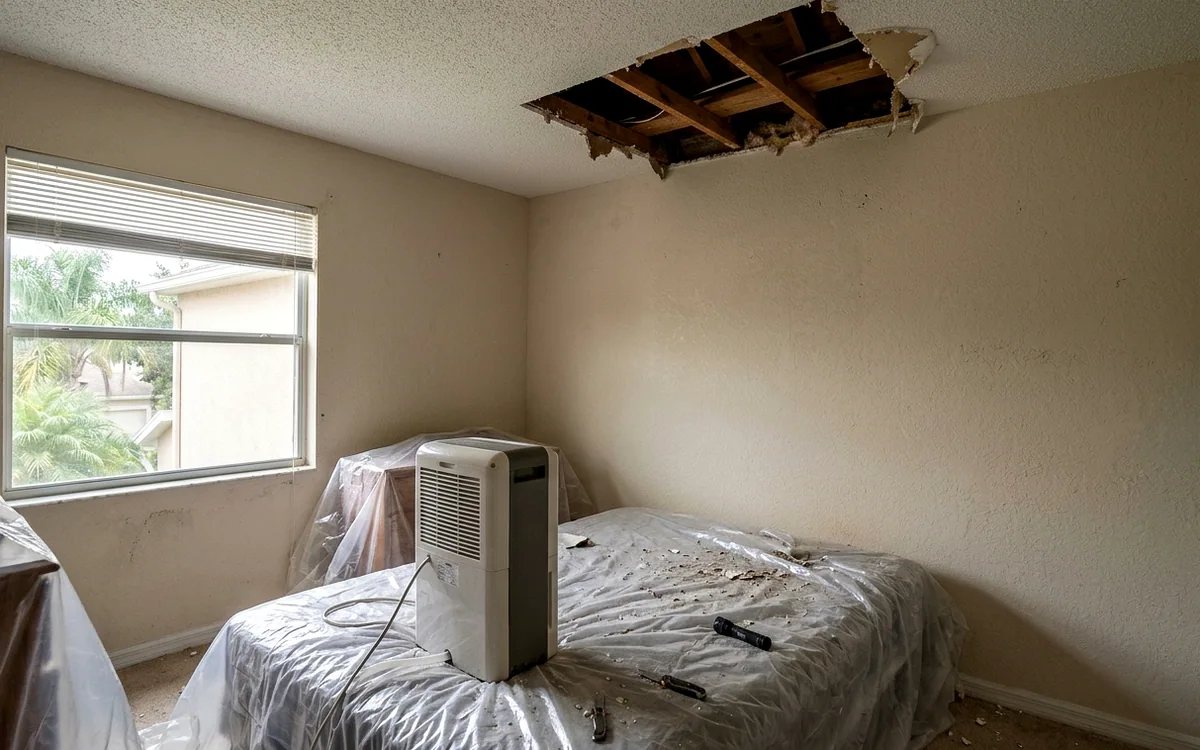
Ceiling drywall that held water often sags, cracks at the seams or loses its texture. Saturated ceiling drywall is cut out to the edge of the wet area, which also lets air reach the cavity above.
Walls below the leak can take water down from the top plate. We read the upper walls as well as the floor, since water from overhead often reaches the tops of walls, light fixtures and closets before the floor.
Flat roofs and concrete roofs
Many homes and small buildings have low-slope or flat roof sections over additions, porches and garages. Water that ponds on those sections can find its way through seams and into the ceiling below.
Where the roof structure is concrete, water can sit in the slab and come through the ceiling below for days. Concrete is a Class 4 material in the S500 standard, so it needs longer drying and closer monitoring than drywall.
The NWS defines the South Florida wet season as May 15 to October 15, and Miami averages about 141 days a year with measurable rain. Older 1920s homes often have clay barrel tile roofs, and mid-century homes are commonly concrete block and stucco with tile roofs, so worn underlayment under tile is a frequent source of leaks.
When to call about roof leak water damage
Brown ceiling rings
A stain with a darker edge that grows after each rain shows water is reaching the ceiling from above.
Sagging ceiling drywall
A bulge in the ceiling means water is pooling on the drywall, and it should be drained before it falls.
Drips at light fixtures
Water following wires or framing to a fixture is a sign of a roof leak, so turn off that circuit.
Damp attic insulation
Compressed, dark or wet insulation in the attic shows where the roof is letting water through.
Peeling paint near the ceiling
Paint that bubbles at the top of a wall can mean water is coming down from the top plate.
Musty upstairs rooms
A damp smell in rooms right under the roof can point to a slow leak soaking insulation.
What happens after you call
Cover the roof
If the leak is still active, a tarp goes over the area before inside work starts.
Trace from the attic
We follow staining and readings on the deck and framing back to where water entered.
Remove wet insulation
Soaked insulation is bagged and removed so the deck and ceiling can dry.
Open the ceiling
Saturated ceiling drywall is cut out to the edge of the wet area.
Dry and monitor
Air movers and dehumidifiers run in the attic and rooms below, with daily readings.
Repair after the roof
Once the roof is fixed and readings are dry, new insulation, drywall and paint go back.
What roof leak water damage usually costs in Miami
These are typical Miami-area ranges for roof leak water damage inside the home. The roof repair itself is priced separately by a roofer.
| What is priced | Typical range |
|---|---|
| Small ceiling stain, one room, drying and patch | $1,410 to $2,780 |
| Attic insulation removal and drying, one area | $1,860 to $3,940 |
| Ceiling drywall removal and drying, several rooms | $3,170 to $6,240 |
| Clean rainwater drying, per sq ft | $3.20 to $3.95 per sq ft |
How long the leak was active, how much insulation and ceiling is wet, and attic access all move the price. The final price comes after an on-site look. See every cost range we publish.
Roof Leak Water Damage: common questions
Why is my ceiling stain far from where the roof is leaking?
Water runs along the roof deck and rafters before it drips onto the ceiling. The stain shows where it finally dropped, not where it entered, which is why we trace it from the attic side.
Can a wet ceiling dry without being cut out?
A small stain from a short leak sometimes dries in place, especially if the insulation above is removed. Drywall that sags, crumbles or stays wet past about 48 hours is cut out and replaced.
Do you replace the attic insulation after drying?
Yes. Once the roof is repaired and the attic reads dry, new insulation goes in over the dried ceiling. Putting insulation back before the roof is fixed would just trap the next leak.
What should I do if my ceiling is bulging with water?
Move furniture and electronics out from under it and put down a bucket. If it is safe, poke a small hole at the lowest point so the water drains in one place instead of the ceiling collapsing.
Does a roof leak mean I have mold in the attic?
Not always. A leak caught and dried quickly may leave no growth. A slow leak that ran for weeks often does, and we check the deck and framing while we are in the attic.
Often needed on the same job
Ceiling Water Damage
Stains, sagging drywall and leaks from the unit or attic above.
See the serviceEmergency Tarping & Board-Up
Roof tarps and window boards to stop more water getting in after a storm.
See the serviceAttic Mold Removal
Mold on roof decking and rafters from leaks or poor attic ventilation.
See the serviceStorm & Hurricane Water Damage
Wind-driven rain, surge and roof breaches after tropical weather.
See the serviceWater where it should not be? Call now.
A person answers every call, day or night. Tell us what got wet and when it started, and we will tell you what happens next.