Mold inspection in Miami to find growth and its cause
You smell something musty, see a few spots or just finished drying a leak, and you want someone to look closely before you spend money on removal.
Our mold inspection is a visual walk-through backed by moisture meters and thermal imaging. It finds visible growth, the damp materials around it and the water source feeding it. It does not include lab sampling; if you want air or surface samples, those are arranged separately through an independent assessor and lab.
At a glance
- Service
- Mold Inspection
- Group
- Mold Removal
- Hours
- Phones answered 24/7
- Office
- 1428 Brickell Avenue, Floor 3, Miami
- Covers
- Miami-Dade and Broward
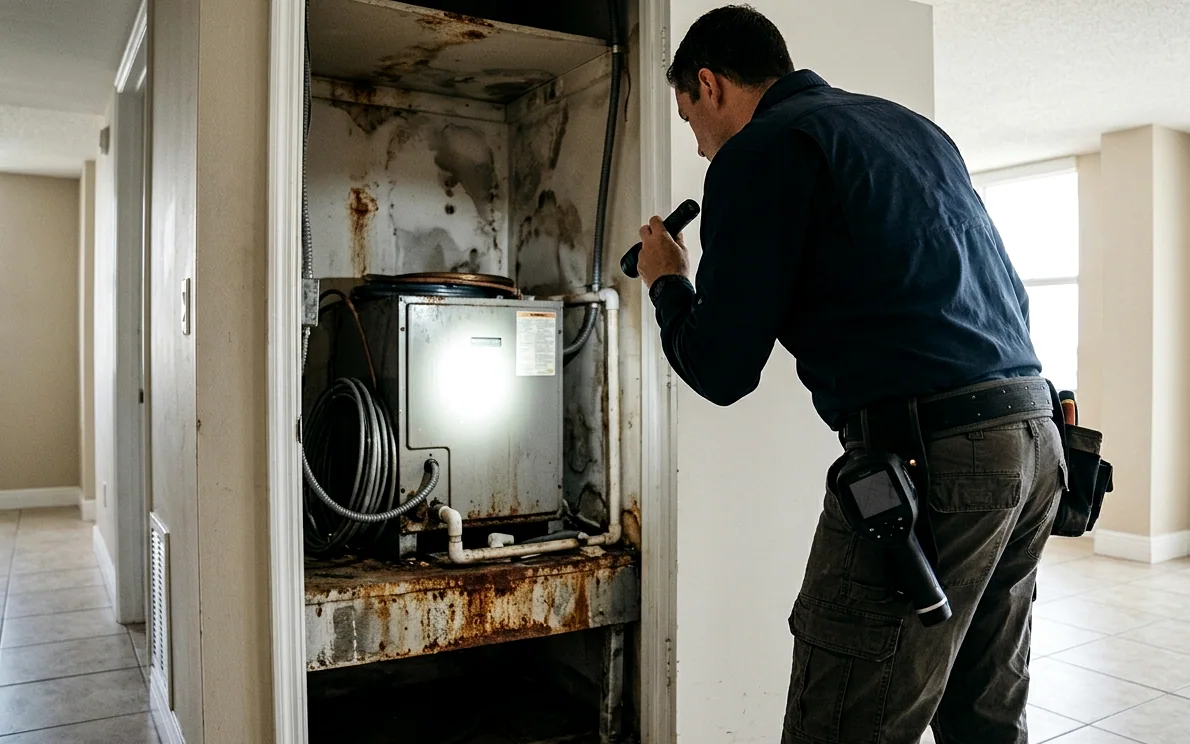
When you call, we ask what you are noticing and when it started, then set a visit. A technician walks the home room by room, checks walls, ceilings, closets, cabinets and the air handler area, and confirms damp spots with meters. You get photos, a sketch of problem areas and a clear next step. Visible mold should be handled within days.
What the walk-through covers
We start where you noticed the problem, then work outward, because mold usually follows water. The usual stops are bathrooms, kitchen sink bases, laundry areas, closets, window and slider frames, ceilings under bathrooms and the air handler closet.
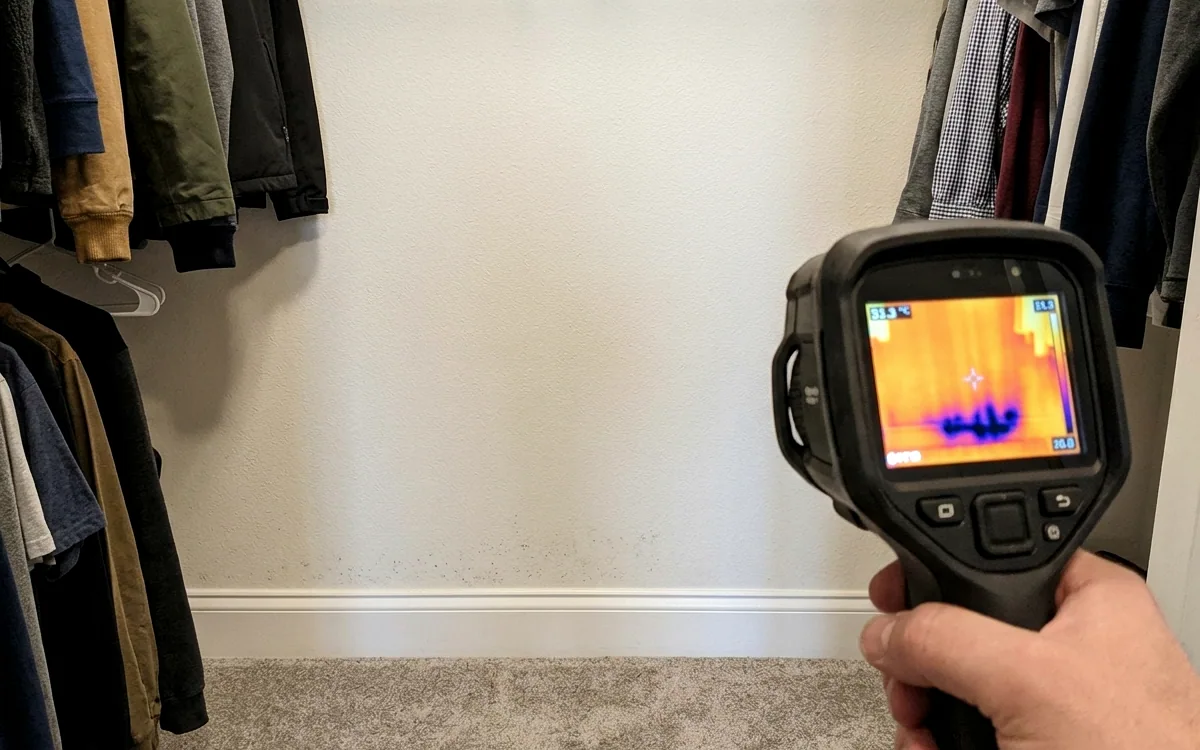
Each room gets a close look at its surfaces, a check for musty odor and a pass with the thermal camera. Anything suspicious gets a direct meter reading.
- Bathrooms, tubs and shower walls
- Kitchen and laundry plumbing
- Air handler closet and condensate line
- Windows, sliders and exterior walls
- Ceilings below bathrooms or the roof
- Closets on outside walls
Why we look for the water first
The EPA says the key to mold control is moisture control, because mold cannot grow without moisture. An inspection that points at spots without explaining the water behind them leaves you where you started.
So each area of growth is tied to a likely cause: a slow drip, a sweating line, a window leak or room humidity that stays high. That tells you whether the fix is plumbing, a seal or drying.
What an inspection does not include
Our inspection does not take air or surface samples or send anything to a lab. Florida's Section 468.8419 keeps mold assessment and mold remediation on the same structure separate for 12 months, so when sampling is wanted it goes through an independent assessor rather than the company that may do the removal.
If the walk-through shows visible growth, the CDC advises removing it and fixing the moisture rather than routine testing. If you still want lab results for a sale, a lease or a health question, we can help you set up an independent assessor.
What you get at the end
You get photos of every area of concern, moisture readings, a simple sketch showing where the growth and wet materials are, and a measurement of the affected surfaces. That measurement matters, because the EPA treats areas over about 10 square feet differently from small spots.
We also give you a plain recommendation: clean it yourself, dry it, repair the source or plan a contained removal. If removal is needed, the same photos and sketch become the starting point for the scope.
When an inspection makes sense
An inspection helps when you smell mold but cannot see it, or after any leak that sat for more than a day or two. It is also useful before you close up walls after drying, and when you are moving into an older home or unit.
It is also worth doing at the end of the wet season. By then, months of humid air have had time to work on closets, air handler platforms and window frames.
The median year built for Miami's housing stock is 1976, and about 14 percent of units date from the 1950s alone. Decades of humid summers, with August mornings averaging about 83 percent relative humidity, give older closets, window frames and AC platforms plenty of time to collect moisture.
When to call about mold inspection
Musty smell, nothing visible
A damp odor hangs in a closet or bedroom, but you cannot find any spots.
A leak sat for days
Water from a leak or overflow went unnoticed for more than 48 hours before drying started.
Moving into an older home
You are buying or renting a place and want to know about hidden moisture before you move in.
Spots in several rooms
Small patches keep showing up in different places, which often points to indoor humidity.
AC closet looks damp
Water stains or a damp smell around the air handler or its drain line.
Before closing a wall
Walls were opened and dried, and you want a second look before new drywall goes up.
What happens after you call
Call with what you notice
Tell us about smells, spots, past leaks and the age of the home or unit.
Room-by-room walk-through
A technician checks surfaces, closets, cabinets and the air handler area.
Thermal scan and readings
The camera flags suspect areas and meters confirm which materials are damp.
Measure and photograph
Affected areas are measured, photographed and marked on a sketch of the home.
Explain the next step
We tell you the most likely cause and whether it needs cleaning, drying, repair or removal.
What mold inspection usually costs in Miami
These are typical Miami-area ranges for a mold inspection visit. The size of the home and how far the problem spreads set the price.
| What is priced | Typical range |
|---|---|
| Average home or condo unit | $315 to $645 |
| Large home with widespread growth | $655 to $985 |
| Standalone inspection, broader range | $465 to $795 |
| Small area removal if growth is found, 10 to 100 sq ft | $552 to $1,445 |
Square footage, the number of rooms with concerns and access to attics or air handler closets move the price. You get a final price after we talk through your home and see it. See every cost range we publish.
Mold Inspection: common questions
Does your mold inspection include air samples?
No. Our inspection is visual, backed by moisture meters and thermal imaging. If you want air or surface samples, those are arranged through an independent assessor and lab, and the results go to you.
Can you find mold I cannot see?
Often, by following the moisture. Thermal imaging and meters show where materials are damp behind a surface, and a musty smell narrows the search. Growth inside a wall can only be confirmed by opening it, which we would talk through with you first.
How long does a mold inspection take?
Most condo units and average homes take one to two hours, depending on size and how many areas raise concern. Large homes, or homes with growth in several rooms, take longer.
Should I clean the spots before you come?
Leave them as they are so we can see the size and pattern. Wiping or spraying can spread spores and hides the clues that point to the water source.
What happens if the inspection finds nothing?
You get readings and photos showing dry materials, which is useful when buying a home, after a repair or for your own records. If a smell remains, we point to other likely causes, such as a dry drain trap or damp stored items.
Often needed on the same job
Mold Testing
Air and surface sampling arranged through an independent assessor and lab.
See the serviceMold Removal
Containment, removal and cleaning of mold, with the moisture source fixed.
See the serviceLeak Detection & Moisture Mapping
Thermal imaging and meters to trace hidden water inside walls and floors.
See the serviceMusty Odor Removal
Damp and musty smells traced to the source and removed, not masked.
See the serviceWater where it should not be? Call now.
A person answers every call, day or night. Tell us what got wet and when it started, and we will tell you what happens next.