Condo water damage cleanup in Miami high‑rises and mid‑rises
Water is coming through your ceiling from the unit above, or your own leak has reached the neighbor below, and now building management, two owners and possibly two insurance companies are involved.
Condo water damage is a drying job with extra people in it. We extract the water and dry your unit the same way we would a house, while working within the building's rules and keeping the association, the neighbors and the adjusters informed.
At a glance
- Service
- Condo Water Damage
- Group
- Condos & Commercial
- Hours
- Phones answered 24/7
- Office
- 1428 Brickell Avenue, Floor 3, Miami
- Covers
- Miami-Dade and Broward
When you call, we ask for your building and unit, then contact the front desk or manager to clear access, the service elevator and parking. Our crew extracts water, finds how far it spread, including into units below, and sets drying equipment. Water moving between floors spreads fast, and the EPA advises drying within 24 to 48 hours.
What to do in the first hour
If the water is coming from your unit, close the main shutoff valve for the unit or the valve at the fixture. If it is coming from above, call the front desk or building management so they can reach the unit above and shut the water there.
Then call us and take photos of everything before anything is moved. Ceilings, walls, floors and anything wet on the floor are all useful for the claim.
- Shut off water at the unit valve or fixture
- Notify the front desk or building manager
- Turn off power to wet ceiling fixtures at the panel
- Photograph ceilings, walls and floors
- Move valuables off wet flooring
Association and unit owner: a general picture
Florida condo law, in Section 718.111(11), generally makes the association responsible for repairing and covering the condominium property as originally installed. Items inside a unit that serve only that unit, such as floor, wall and ceiling coverings, appliances, water heaters, built-in cabinets and countertops, are generally the unit owner's to cover.
One Florida law firm reads this to mean that for a sudden leak, drywall and what is behind it generally falls to the association, while finishes, fixtures and contents fall to the owner's policy. If damage comes from an owner's negligence or failure to follow the condo documents, that owner can be responsible. This is a general summary, not legal advice, and your condo documents and adjuster have the final word.
Working with building management
Most Miami condo buildings have rules for contractors: paperwork on file, service elevator reservations, work hours and loading dock times. We call ahead, follow those rules and keep the manager updated on what we find and how long equipment will run.
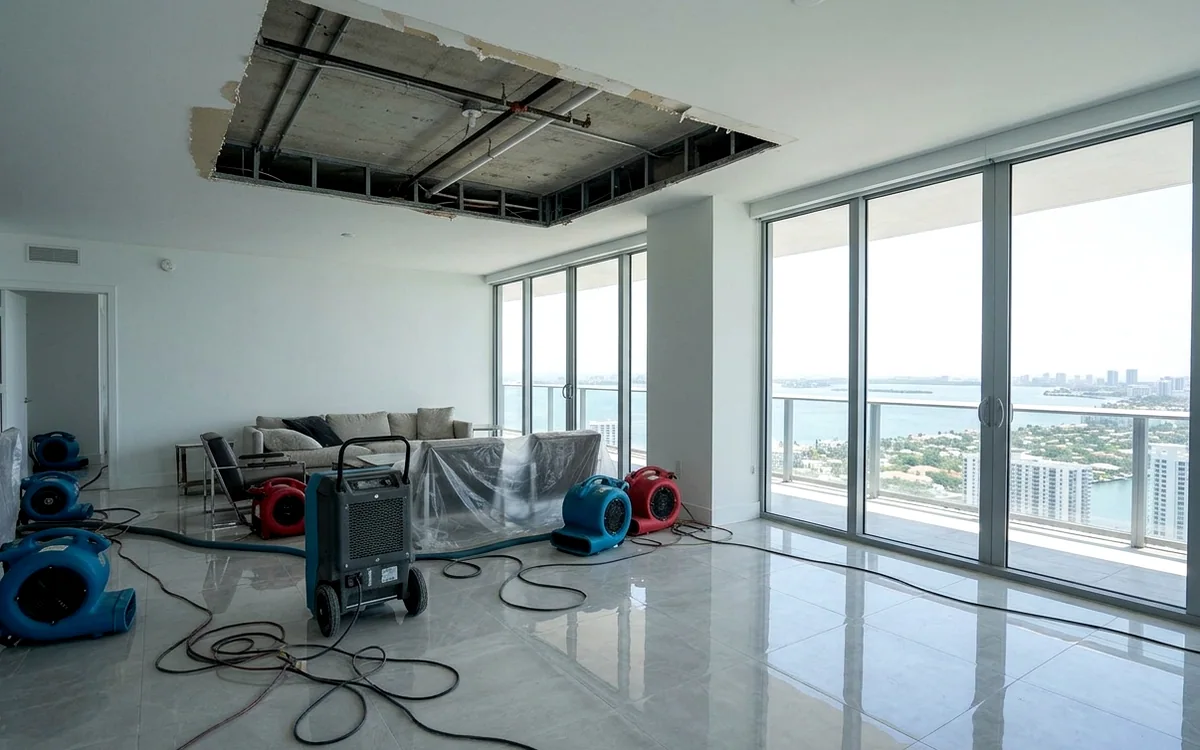
We also check the units below and beside yours when the building allows it. Water travels through slab penetrations, pipe chases and wall cavities, so the damage often extends past the unit where the leak started.
Getting equipment up and down the building
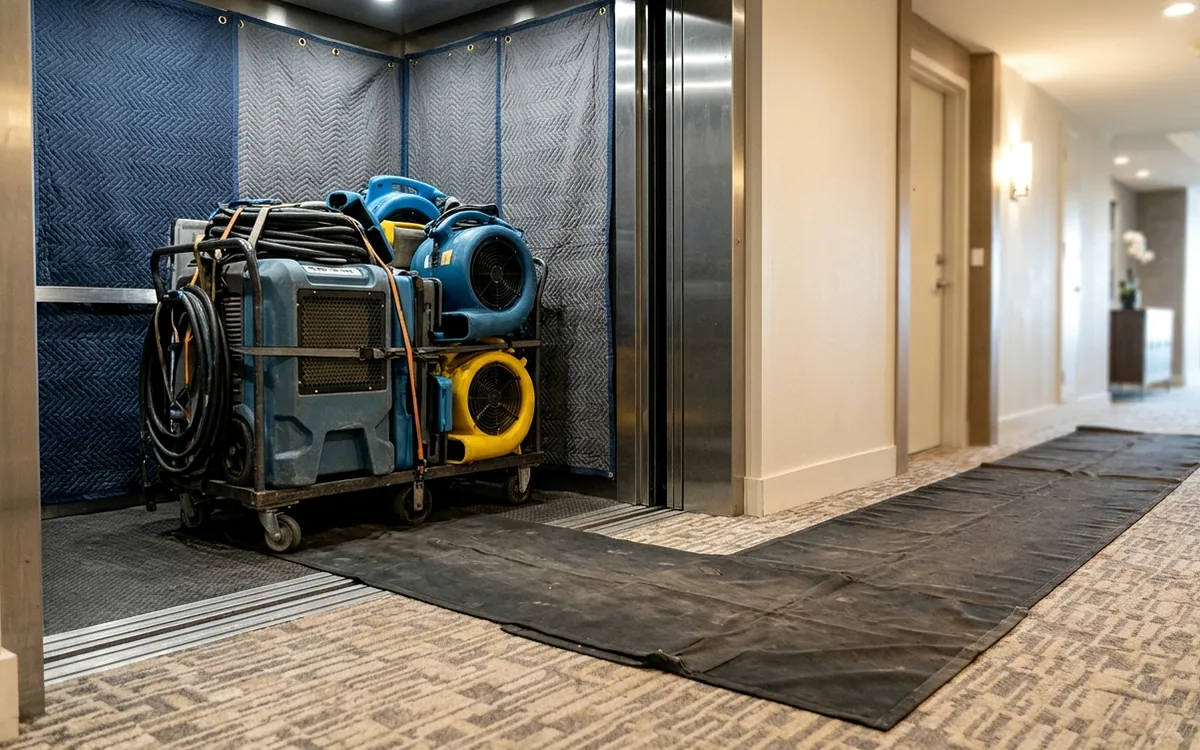
Drying a condo means bringing air movers, dehumidifiers and extraction gear up a service elevator, often during set hours. We pad the elevator, protect hallway floors with runners and keep carts off the common area carpet.
Wet drywall, pad and debris leave the same way, bagged and taken down to the loading area so nothing drips in the corridors or lobby.
Protecting your neighbors while we dry
Drying equipment runs day and night for several days, so we set it to keep noise reasonable and keep doors closed to the hallway. If a neighbor's unit is wet too, we dry it at the same time so one unit is not dumping moisture into the other.
We keep a daily moisture log for each affected unit. That gives the association, both owners and both insurance companies the same set of readings and photos to work from.
Miami-Dade County has about 313,352 condo units in about 5,356 associations, and most units in larger metro associations were built before 1990. Older supply lines and water heaters stacked floor over floor mean one failure can reach several units below.
When to call about condo water damage
Dripping ceiling fixture
Water coming out of a light or smoke detector usually means the unit above has a leak.
Bulging ceiling drywall
A sagging spot on the ceiling is holding water and should be relieved before it falls.
Wet carpet near shared wall
Moisture along a wall you share with another unit can come from their plumbing or appliances.
Stains spreading downward
Water marks starting at the top of a wall point to an overhead source, not your own unit.
Neighbor reports a leak
If the owner below says water is coming from your unit, the source is often a supply line, water heater or AC drain.
Water in a hallway or closet
Puddles in a utility closet or common corridor can mean a riser or a unit's equipment is leaking.
What happens after you call
Clear building access
We contact management to arrange the service elevator, parking and any paperwork the building requires.
Extract the water
Standing water is pulled from floors and carpet in every affected unit we can reach.
Map every unit
Meters and thermal imaging show how far the water spread, including floors below and shared walls.
Remove wet materials
Wet pad, baseboard and drywall that cannot dry in place are cut out at clean lines.
Dry and log daily
Air movers and dehumidifiers run with daily readings recorded for each unit.
Report to all parties
Photos, moisture logs and scope notes go to you, the manager and the adjusters involved.
What condo water damage usually costs in Miami
Condo water jobs are priced per unit, by how much water there was and how long the drying runs. These are typical Miami-area ranges for one unit.
| What is priced | Typical range |
|---|---|
| Small leak, one room in a single unit | $1,420 to $2,960 |
| Overhead leak across several rooms | $3,180 to $6,240 |
| Water extraction and drying, by area | $4.35 to $8.70 per sq ft |
| Dehumidifier rental, per unit per day | $88.60 to $123.40 per day |
Water category, the number of rooms, how many units are affected and building access rules all move the price. Your final price comes after an on-site look. See every cost range we publish.
Condo Water Damage: common questions
Who pays when the leak came from the unit above?
It depends on the source and the condo documents. In general terms, Florida law points the association to the structure and drywall and the unit owner to finishes and contents, and an owner who was negligent can be responsible. Your adjuster and condo documents settle it, and we provide the documentation for all of them.
Do you need permission from the building to start?
Most buildings require contractors to check in, and many want paperwork on file before work begins. We contact management first and can usually start extraction once access is cleared.
Can you dry my neighbor's unit too?
Yes, with that owner's permission and the building's approval. Drying both units at the same time works better, since a wet unit next to a dry one keeps feeding moisture back.
What is loss assessment coverage?
If the association charges owners for a covered loss to common property, loss assessment coverage on your unit owner policy can help with that charge. Section 627.714 requires at least $2,000 of it on Florida unit owner policies, so check with your agent.
Will the equipment be noisy for the neighbors?
Air movers and dehumidifiers make a steady hum. We keep doors to the hallway closed, set fans to sensible speeds overnight and pull equipment as soon as the readings say the unit is dry.
Often needed on the same job
Ceiling Water Damage
Stains, sagging drywall and leaks from the unit or attic above.
See the serviceCondo Mold Remediation
Mold in condo units contained so neighbors and hallways stay clean.
See the serviceStructural Drying & Dehumidification
Air movers and dehumidifiers set up, logged daily and pulled once dry.
See the serviceInsurance Claim Documentation
Photos, moisture logs and scope notes organized for your adjuster.
See the serviceWater where it should not be? Call now.
A person answers every call, day or night. Tell us what got wet and when it started, and we will tell you what happens next.