AC drain line leak water damage cleanup in Miami
Water is pooling around your air handler closet, the baseboard next to it feels soft, or a ceiling below the unit has a brown ring that keeps growing.
A clogged condensate line rarely floods a room in one go. It drips for days or weeks, soaking the subfloor, the bottom of the closet walls and the flooring next to it. We find how far the water traveled, pull it out and dry what can be saved.
At a glance
- Service
- AC Drain Line Leak Damage
- Group
- Leaks Inside the Home
- Hours
- Phones answered 24/7
- Office
- 1428 Brickell Avenue, Floor 3, Miami
- Covers
- Miami-Dade and Broward
When you call, we ask where the air handler sits, what you see, and whether the AC is still running. A crew comes out, measures moisture around the closet and the rooms beside it, extracts standing water and sets up drying equipment. Condensate counts as gray water, so the first 24 to 48 hours matter most for keeping mold out.
Why a small drip turns into a big wet area
An air conditioner pulls a lot of water out of humid air, and all of it has to leave through a narrow drain line. When algae, dust or debris blocks that line, the water backs up into the drain pan and spills over the edge.
Because the leak is slow and usually hidden inside a closet, it often runs for a long time before anyone notices. By then the water has wicked into drywall, under the baseboard and across the slab or subfloor.
Where condensate water ends up
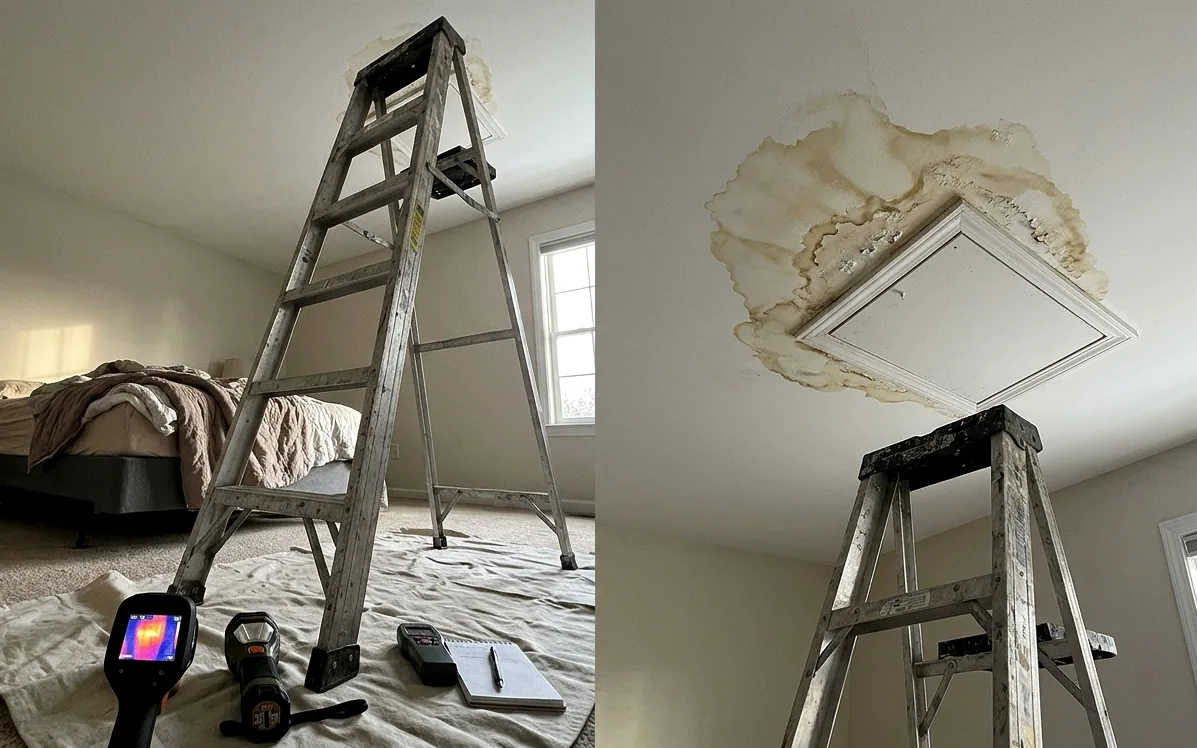
In a single-story home the water spreads across the slab under tile, laminate or carpet. In a condo or a two-story house with the unit above, it can come through the ceiling of the room below or the neighbor's unit.
- Under the drain pan and the air handler platform
- Bottom 12 to 24 inches of the closet walls
- Flooring and baseboards in the hallway outside the closet
- Ceilings below an attic or upper-floor unit
- Inside insulation around the return plenum
Why we treat it as gray water
Industry guidance lists AC condensate as Category 2 water. It is not sewage, but it has been sitting in a pan with whatever grows there, so it carries more contamination than water from a supply pipe.
That changes what we can keep. Hard surfaces get cleaned and dried. Carpet pad that has been soaked, and drywall that has sat wet for days, usually comes out instead of being dried in place.
Drying the closet and the rooms around it
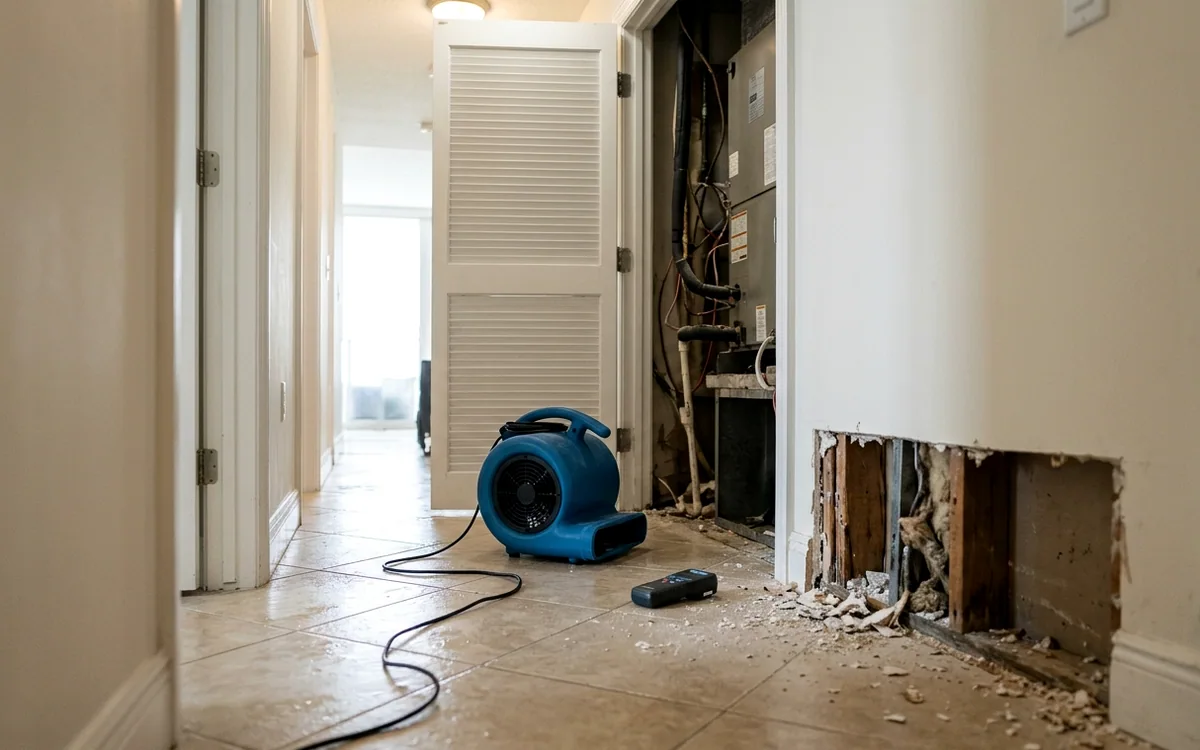
Air handler closets are tight, so we often cut a small section of drywall at the base to let air reach inside the wall cavity. Air movers push air across the wet surfaces while a dehumidifier pulls that moisture out of the room.
We take readings every day and write them down. Equipment stays until the materials reach normal dry levels for the house, not just until they feel dry to the touch.
Working with your AC technician
We dry and repair the water damage. Clearing the drain line, replacing a cracked pan or adding a float switch is work for your HVAC technician, and it should happen before or during our drying so the leak does not start again.
If we see mold growth on the air handler cabinet or coil area, we point it out and can handle the cleaning as a separate job.
Miami mornings average about 82 percent relative humidity, so air conditioners here run long hours and produce a steady stream of condensate. The U.S. Department of Energy notes that a clogged condensate drain stops the unit from removing humidity, which is why a blocked line here often shows up as both a leak and a sticky house.
When to call about ac drain line leak damage
Water in the drain pan
A pan that is full or overflowing means the drain line is blocked and water is already escaping somewhere.
Soft or swollen baseboard
Baseboard near the air handler that bulges or crumbles has been sitting wet for a while.
Ceiling stain under the unit
A ring on the ceiling below an attic or upper-floor air handler often grows with every cooling cycle.
Musty smell when the AC runs
A damp, earthy odor that gets stronger with the system on points to moisture near the return or closet.
AC shut off by itself
Many systems have a float switch that kills the unit when the pan fills, so a sudden shutdown can mean a backup.
Rooms feel sticky
A clogged drain stops the system from removing humidity, so indoor air stays clammy even when it is cool.
What happens after you call
Call and shut the unit off
We ask you to turn the AC off at the thermostat so no more condensate is made while we are on the way.
Moisture mapping
We use meters and a thermal camera to trace how far the water spread past the closet.
Extraction and removal
Standing water is pulled out, and soaked pad, insulation or baseboard that cannot be saved is removed.
Cleaning the affected area
Surfaces touched by the gray water are cleaned and an antimicrobial is applied where it fits the job.
Drying with daily checks
Air movers and a dehumidifier run while we log readings each day until the materials are dry.
Repairs and photos
Drywall, baseboard and paint are put back, and you get moisture logs and photos for your insurer.
What ac drain line leak damage usually costs in Miami
Most AC drain line jobs are small to mid-sized, but a leak that ran for weeks can reach several rooms. These are typical Miami-area ranges, not quotes.
| What is priced | Typical range |
|---|---|
| Extraction and drying, gray water, per sq ft | $6.35 to $8.70 per sq ft |
| Air mover, per unit per day | $23.50 to $33.75 |
| LGR dehumidifier, per day | $87 to $121 |
| Whole AC leak job, extraction through drying | $1,415 to $5,880 |
Price moves with how long the leak ran, how many rooms it reached and whether drywall or flooring has to come out. The final price is set after an on-site look. See every cost range we publish.
AC Drain Line Leak Damage: common questions
Can I keep running the AC while you dry the leak?
Not until the drain line is cleared, because every cooling cycle adds more water to the pan. Once your HVAC technician has the line flowing again, running the AC actually helps the drying by pulling humidity out of the house.
Will the hallway tile have to come up?
Usually not. Tile on a slab can often be dried in place by drying the grout lines and the wall base around it. We pull tile only if readings stay high underneath or the tile has come loose.
The water came through my neighbor's ceiling. Who handles that?
We can dry both units if both owners want us to. In a condo, who pays for which part depends on your association documents and the cause of the leak, so we document each unit separately.
Does a float switch stop this from happening again?
A float switch shuts the system off when the pan fills, which limits how much water escapes. It does not clear the clog, so regular drain line cleaning by your HVAC technician is still the main fix.
Is condensate water harmful to touch?
It is gray water, which can carry bacteria from the pan and line. Wear gloves if you are wiping it up, keep kids and pets out of the area, and do not run a shop vacuum through soaked carpet pad.
Often needed on the same job
AC Air Handler Mold Cleaning
Mold in air handler closets, on coils and around supply vents.
See the serviceCeiling Water Damage
Stains, sagging drywall and leaks from the unit or attic above.
See the serviceStructural Drying & Dehumidification
Air movers and dehumidifiers set up, logged daily and pulled once dry.
See the serviceCondo Water Damage
Unit-to-unit leaks in high-rises, worked alongside building management.
See the serviceWater where it should not be? Call now.
A person answers every call, day or night. Tell us what got wet and when it started, and we will tell you what happens next.