Musty odor removal for Miami homes and condos
Your home or condo smells damp and musty, air fresheners stop working after an hour, and you cannot find anything wet, which usually means the source is hidden somewhere you have not looked.
A musty smell almost always comes from moisture and the mold or bacteria growing in it. Covering it up does nothing for the cause. We find where the smell starts, deal with the wet material and dry the space so it does not come back.
At a glance
- Service
- Musty Odor Removal
- Group
- After the Cleanup
- Hours
- Phones answered 24/7
- Office
- 1428 Brickell Avenue, Floor 3, Miami
- Covers
- Miami-Dade and Broward
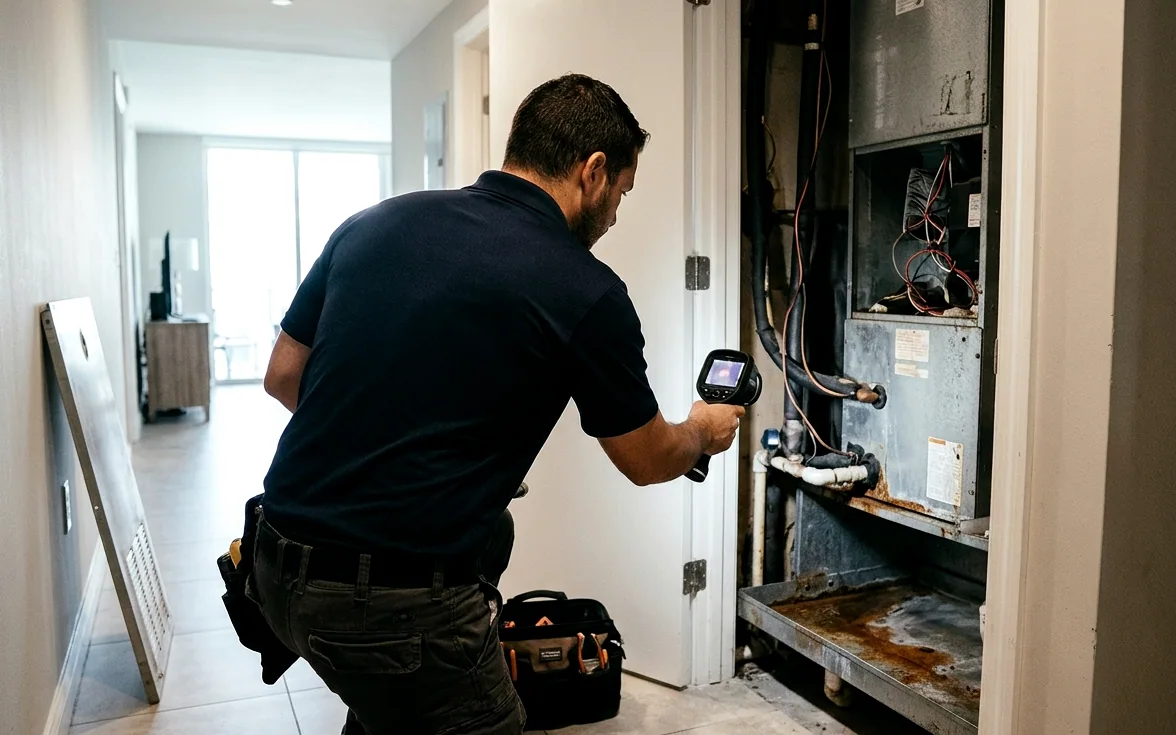
You call and tell us where the smell is strongest and when it started. We visit with moisture meters and a thermal camera, check common hiding spots like AC closets, under sinks and behind baseboards, and show you what we find. If the cause is active moisture, the sooner it is dried, the less material has to come out.
Why masking the smell does not work
Sprays, candles and plug-ins cover the smell for a while, but the damp material keeps producing it. Ozone and fogging alone have the same problem when wet drywall or carpet pad is still there. The EPA says the key to mold control is moisture control, and the same goes for musty odors.
We remove the source first. Odor control products come after cleaning and drying, not instead of them.
Where musty smells usually start
The most common sources are things that hold water out of sight. A slow drip under a sink, a blocked AC condensate drain or a washer hose seeping behind the machine can keep a small area damp for weeks. Closets on exterior walls and rooms with poor airflow often smell first.
We check each likely spot with meters and a thermal camera instead of guessing. Pinpointing the source keeps the work small.
- AC air handler closets and drain pans
- Under kitchen and bathroom sinks
- Carpet pad over a slab leak
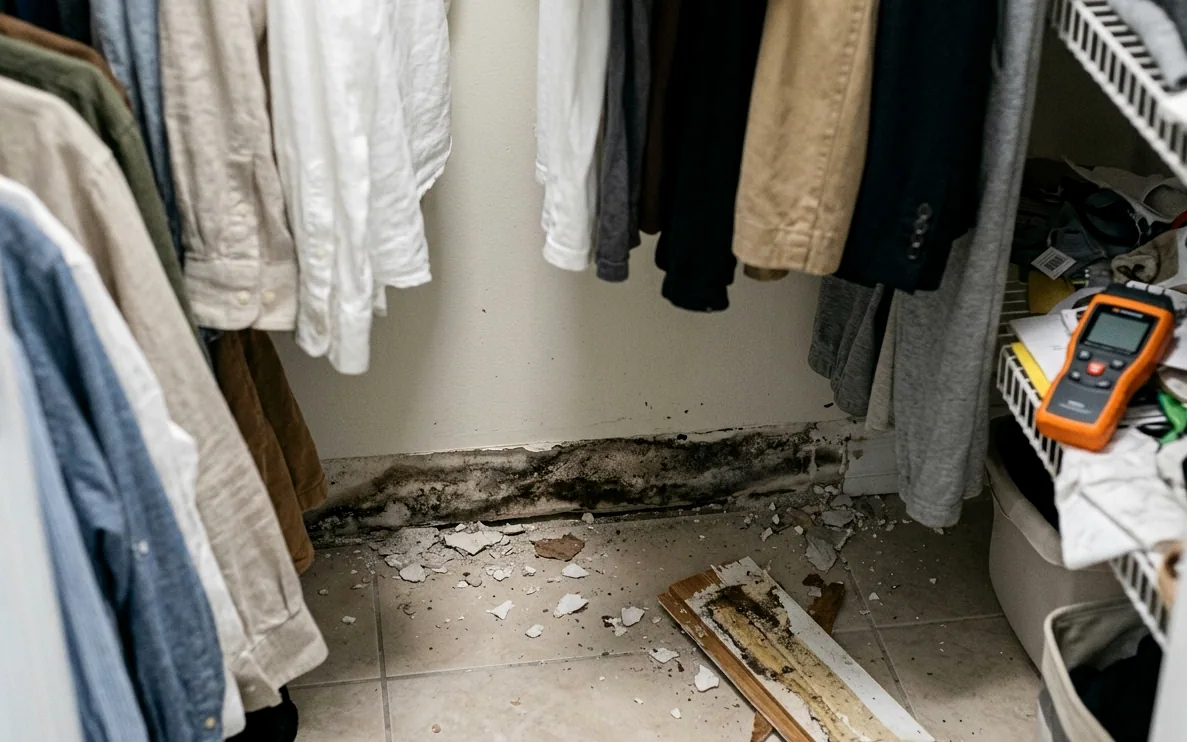
- Closets on exterior walls
- Behind baseboards after an old leak
- Stored boxes and fabric in damp rooms
When the smell means mold
A musty smell is often the first sign of mold that has not shown on the surface yet. The CDC notes that mold can grow on drywall, wood, carpet, insulation, fabric and paper. If we find growth, we explain its size and whether it needs removal under containment.
Our inspection is visual, with meters and thermal imaging. If you want air or surface sampling, that is arranged through an independent assessor and lab, since Florida keeps mold assessment and remediation separate.
Drying and cleaning the source
Once the source is found, wet material that cannot be dried is removed and the area is dried with air movers and dehumidifiers. Hard surfaces are cleaned, and an antimicrobial may be applied once they are clean. We take readings until the area is dry.
After that, we can treat lingering odor in fabrics or the air. At that point the treatment holds, because nothing is feeding the smell anymore.
Keeping the smell from coming back
Most musty odors return because indoor humidity stays high. The EPA recommends keeping indoor relative humidity below 60 percent, ideally between 30 and 50 percent. We check your levels and suggest what would help, such as clearing an AC drain or adding dehumidification.
Simple habits help too. Open closet doors now and then, keep cardboard off the floor and run bathroom fans after showers.
Miami averages about 141 days a year with measurable rain, and morning relative humidity averages about 82 percent. With that much moisture in the air, any indoor spot that stays damp tends to start smelling quickly.
When to call about musty odor removal
Smell stronger with AC on
This often points to the air handler closet, a wet drain pan or mold on the coil.
Odor in one closet
A single musty closet usually means a damp exterior wall or a leak behind it.
Damp smell after rain
If it shows up after storms, water may be getting in around a window, slider or roof.
Musty sink cabinet
A smell under the sink often means a slow drain or supply leak soaking the cabinet floor.
Carpet smells underfoot
Odor rising when you walk on carpet suggests the pad underneath is wet, sometimes from a slab leak.
Stored clothes smell
Clothes picking up a musty smell in storage mean the room's humidity is running too high.
What happens after you call
Tell us where it is
On the call, describe where the smell is strongest and when it began.
Trace the source
We use meters and thermal imaging to find the damp material behind the odor.
Remove and dry
Wet material that cannot be saved comes out, and the area is dried and logged.
Clean and treat
Surfaces are cleaned, then odor treatment is applied to fabrics or air if still needed.
Check humidity
We check indoor humidity and explain what will keep the area dry.
What musty odor removal usually costs in Miami
Odor jobs are usually priced as finding the source, then the cleanup it needs. These are typical Miami-area ranges for the most common parts.
| What is priced | Typical range |
|---|---|
| Source-finding inspection with meters and thermal camera | $315 to $640 |
| Small affected area cleanup, 10 to 100 sq ft | $520 to $1,470 |
| Restoration labor, per hour | $73 to $196 |
| LGR dehumidifier, per day | $86 to $124 |
Price moves with how hidden the source is, how much material has to come out and how long drying takes. The final price is set after an on-site look. See every cost range we publish.
Musty Odor Removal: common questions
Why does my condo smell musty only when the AC is on?
That pattern usually points to the air handler closet, a wet drain pan or growth on the coil. The U.S. Department of Energy notes that a clogged condensate drain stops the unit from removing humidity, which makes the smell worse.
Will an ozone machine get rid of a musty smell?
Not on its own if wet material is still there, because the source keeps producing odor. Treatment works best after the damp material is removed and the area is dry.
Does a musty smell always mean mold?
Not always, but it does mean moisture. Damp carpet pad, wet wood or stored fabric can smell musty before any mold is visible, and moisture left long enough often leads to mold.
Can you find the odor source without opening walls?
Often we can narrow it down with meters and thermal imaging before cutting anything. If a wall does need opening, we make a small inspection cut where the readings point.
How long until the musty smell is gone?
Once the source is removed and dried, most of the smell fades within days. Odor held in fabrics or furniture may need its own cleaning or treatment.
Often needed on the same job
Mold Inspection
A walk-through with meters and thermal imaging to find mold and its cause.
See the serviceAC Air Handler Mold Cleaning
Mold in air handler closets, on coils and around supply vents.
See the serviceCloset Mold Removal
Musty closets and mold on walls, shelving and stored clothing.
See the serviceWhole-Home Dehumidifier Installation
Ducted dehumidifiers that hold indoor humidity down in Miami summers.
See the serviceWater where it should not be? Call now.
A person answers every call, day or night. Tell us what got wet and when it started, and we will tell you what happens next.