Condo water damage and mold removal in Miami Beach, 33139
On Miami Beach, most water damage starts inside a building rather than in a yard: a supply line fails two floors up, a slider lets wind-driven rain in, or tidal water reaches a lobby.
Kelda Restoration crosses the bay from our Brickell office to dry condo units, Art Deco apartments and bayside homes all over the island. We find where the water went inside walls and under tile, dry it out, and deal with any mold that followed, coordinated with your building manager when there is one.
At a glance
- Area
- Miami Beach
- From our office
- 1428 Brickell Ave, Floor 3
- Phones
- Answered 24/7
- Most calls
- Condo Water Damage
Yes, we cover all of Miami Beach, from South Pointe up through North Beach. Most calls here are unit-to-unit leaks in condo towers, rain pushed through windows and sliders, and mold behind wet drywall. Call (786) 947-0034 any hour. A project manager answers, asks what you are seeing, and sends a crew with extraction and drying equipment.
Deco walk-ups, MiMo blocks and oceanfront towers
Much of the city is multifamily. South Beach holds hundreds of Art Deco hotels and apartment buildings put up between 1923 and 1943, North Beach has its mid-century MiMo buildings, and high-rise condo towers line the ocean. Single-family homes sit mostly on the bayside islands.
Each building type holds water differently. Thick plaster and block in a Deco building dry slowly and can hide moisture for weeks, while drywall partitions in a newer tower wick water fast and pass it to the unit next door. We plan the drying around the building in front of us.
How water reaches a Miami Beach unit
The city averages about 4.4 feet above sea level, and the western edge of South Beach sits almost at normal high tide. Fall king tides push water into some streets, and heavy rain can stack on top of that. Miami Beach logged nearly 7 inches on June 11 2024 alone, and parts of Collins Avenue were knee-deep.
Inside the towers, the usual sources are quieter: a washer hose, a water heater, an AC drain line or a tired window seal. Water from one unit runs down through ceilings and along slab edges, so the owner below often finds it first. Irma showed the storm side in 2017, when surge pushed Indian Creek over Collins Avenue just north of the Fontainebleau.
Working inside condo buildings on the island
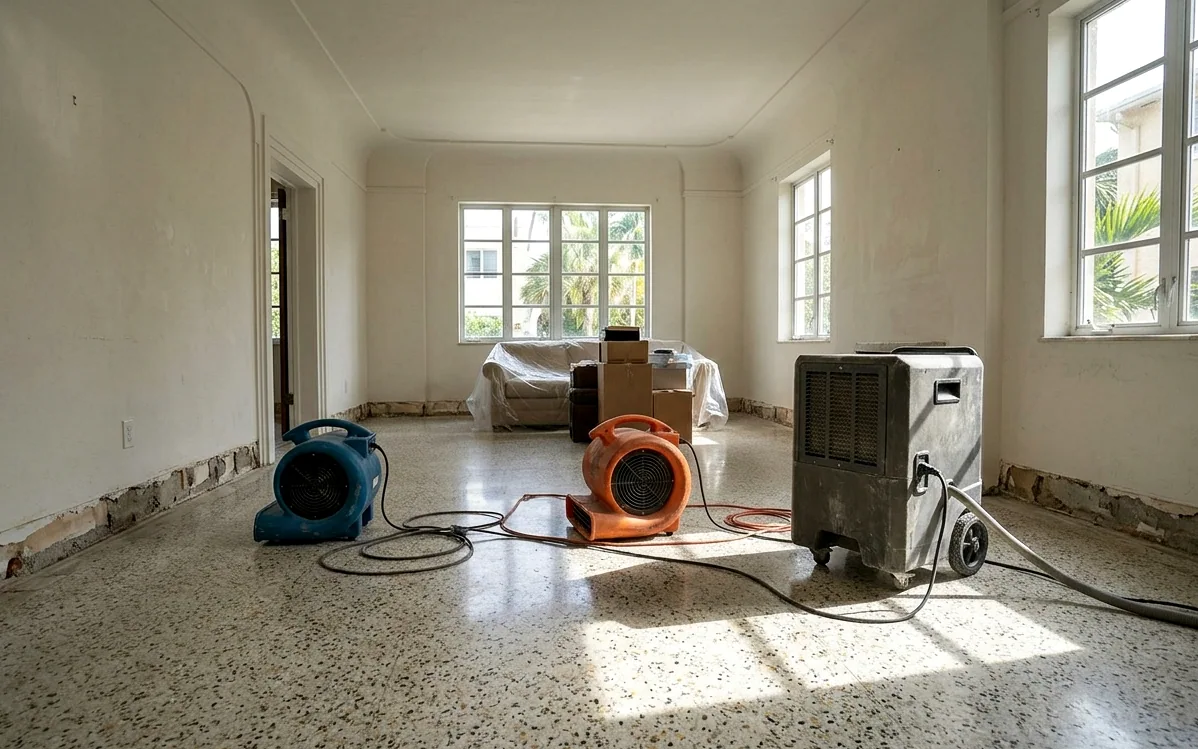
Most jobs here start with the front desk. We confirm the elevator reservation, loading zone or garage access, and permitted work hours with management before the crew arrives, and we protect hallways and elevator cabs on the way in. Equipment is sized to fit a service elevator and a standard unit door.
Under Florida condo law, the association generally covers the building as originally installed, while the unit owner covers finishes, fixtures and contents. We photograph and log moisture readings in every affected unit, so the association and each owner hand their adjusters the same record.
Neighbors across the causeways we also cover
From Miami Beach we regularly head north to Surfside and Bal Harbour, and west across the water to North Bay Village and Downtown Miami. We also take calls from Fisher Island owners and their building staff.
The number is the same everywhere: (786) 947-0034. Tell us the building, the unit and where you see water, and we will tell you what we need from management before we pull up.
Where water and mold start in Miami Beach
Barely above high tide
With the city averaging about 4.4 feet above sea level, ground-floor units and lobbies are first in line when tides and rain meet.
Fall king tides
Tidal flooding grew far more frequent from the mid-2000s, which is why the city has put roughly $500 million into pumps, higher seawalls and raised streets.
Unit-to-unit leaks
One failed supply line in a tower can wet several units below it. Each owner then needs separate readings and photos for their own claim.
Old Deco masonry
Buildings from 1923 to 1943 have thick plaster and block that hold moisture long after the surface feels dry to the touch.
Services we run most in Miami Beach
Condo Water Damage
Unit-to-unit leaks in high-rises, worked alongside building management.
See the serviceCondo Mold Remediation
Mold in condo units contained so neighbors and hallways stay clean.
See the serviceCeiling Water Damage
Stains, sagging drywall and leaks from the unit or attic above.
See the serviceWindow Leak Water Damage
Rain pushed through window and slider frames into walls and floors.
See the serviceFlood Damage Cleanup
Rising water and street flooding cleaned out, with flood cuts where needed.
See the serviceStorm & Hurricane Water Damage
Wind-driven rain, surge and roof breaches after tropical weather.
See the serviceMiami Beach: questions we hear
My upstairs neighbor's leak came through my Miami Beach ceiling. Who do I call first?
Call building management so they can find and stop the source, then call us at (786) 947-0034. We can start drying your unit while the source unit is handled, and we keep separate moisture records for each unit so neither owner's claim gets muddled.
Can you work in Miami Beach buildings that limit contractor hours?
Yes. We schedule around the association's rules, book the service elevator, and plan loud work like drywall cuts for permitted hours. Drying equipment usually has to run overnight, so we clear that with management at the start.
Does king tide flooding in Miami Beach cause mold in ground-floor units?
It can. Tidal water that gets into a lobby or ground-floor unit is treated as contaminated, so wet drywall and baseboards near the floor usually come out. Drying the wall cavity within the 24 to 48 hours the EPA advises is what keeps mold from following.
Do you handle mold in Art Deco apartments in Miami Beach?
We do. Older plaster and masonry walls take longer to dry, so we use meters and thermal imaging to find where moisture is still sitting before any repairs. If you want lab testing, it is arranged through an independent assessor, and we handle the removal under containment.
Other places our crews cover
Water damage in Miami Beach? Call our crew lead.
A person answers every call, day or night. Tell us what got wet and when it started, and we will tell you what happens next.