Burst pipe water damage cleanup and drying in Miami
A pipe or fitting just let go, water is spraying or pouring out under pressure, and it is soaking the cabinet, wall and floor faster than you can mop.
A pressurized supply line can put out a lot of water in a short time. The good news is that it is usually clean water, so when the shutoff and extraction happen quickly, much of the cabinetry, flooring and trim can often be dried and kept.
At a glance
- Service
- Burst Pipe Water Damage
- Group
- Water Damage & Flooding
- Hours
- Phones answered 24/7
- Office
- 1428 Brickell Avenue, Floor 3, Miami
- Covers
- Miami-Dade and Broward
First, shut off the water at the fixture valve or the main. Then call (786) 947-0034 and tell us where the pipe failed, how long it ran and what floors it reached. A crew extracts the water, opens up what cannot dry and sets drying equipment. Clean water stays clean only for a short time, so start the same day.
Shut the water off first
Most fixtures have a small valve underneath: under the sink, behind the toilet, behind the washer. If that valve will not turn or the leak is inside a wall, shut off the main. In a single-family home it is usually near the meter or where the line enters the house.
In a condo, the unit shutoff is often in a utility closet, near the water heater or behind an access panel. If you cannot find it, call building security or maintenance at the same time you call us, because water from your unit can reach the units below.
Where supply lines usually fail
Many burst pipe calls are not a pipe at all but a flexible hose or fitting. IBHS findings cited by Tower Hill Insurance attribute half of washing machine water losses to burst supply lines and 44 percent of sink-related losses to faulty supply lines.
Older homes add their own risks. About 55 percent of Miami's housing was built before 1980, and aging fittings, corroded shutoff valves and brittle connectors are common in those houses.
- Braided or rubber washing machine hoses
- Sink and toilet supply connectors
- Ice maker and refrigerator lines
- Water heater connections
- Corroded shutoff valves and fittings inside walls
Clean water, but only for so long
Water from a broken supply line is Category 1 under the IICRC S500 standard, clean water from a source that poses no substantial harm. That gives you the best chance of saving carpet, pad, cabinets and baseboards.
Clean water does not stay clean. Once it soaks through dust, flooring and building materials and sits in a warm house, it picks up contamination. The EPA advises drying wet materials within 24 to 48 hours to prevent mold growth.
When the leak is inside a wall
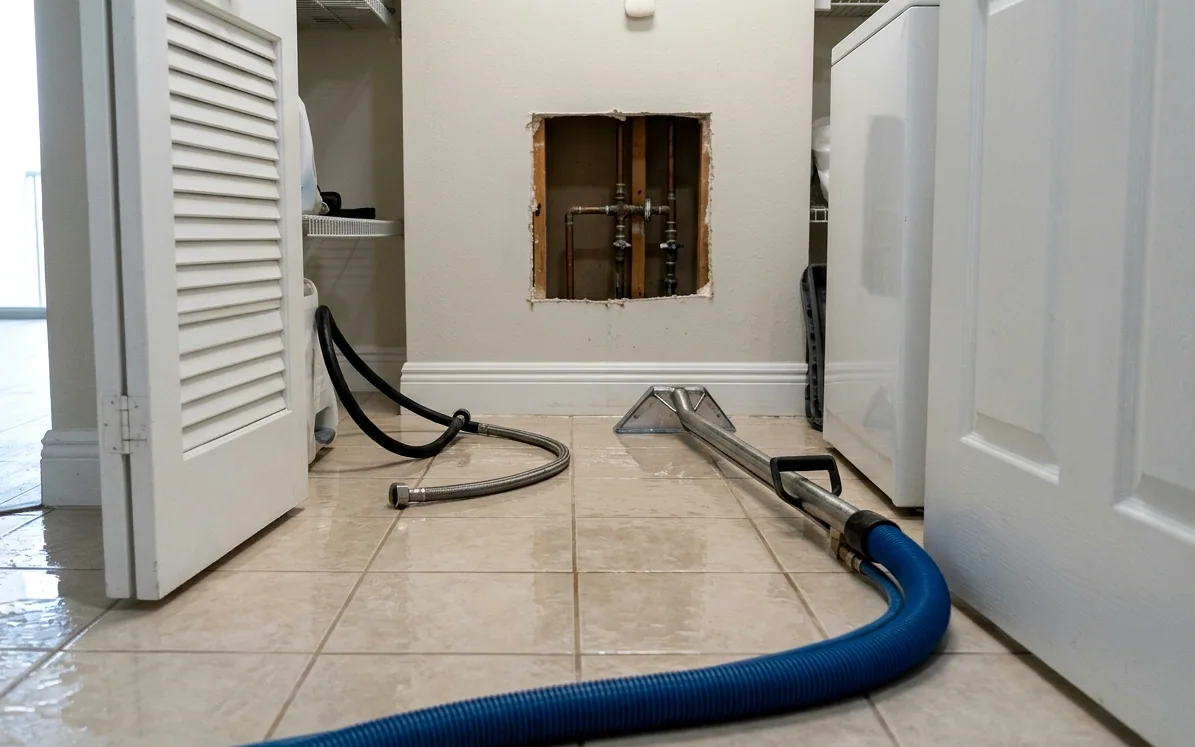
A pipe that fails inside a wall may not show for a while. You might see a damp patch, bubbling paint or swollen baseboard, or hear water running when every faucet is off. We use moisture meters and a thermal camera to trace where the water traveled before opening anything.
If the wall needs to come open, we cut a clean access hole so the plumber can reach the pipe and so the cavity can dry. A neat, square opening is quicker to patch once the repair is done and the wall reads dry.
Saving cabinets and flooring
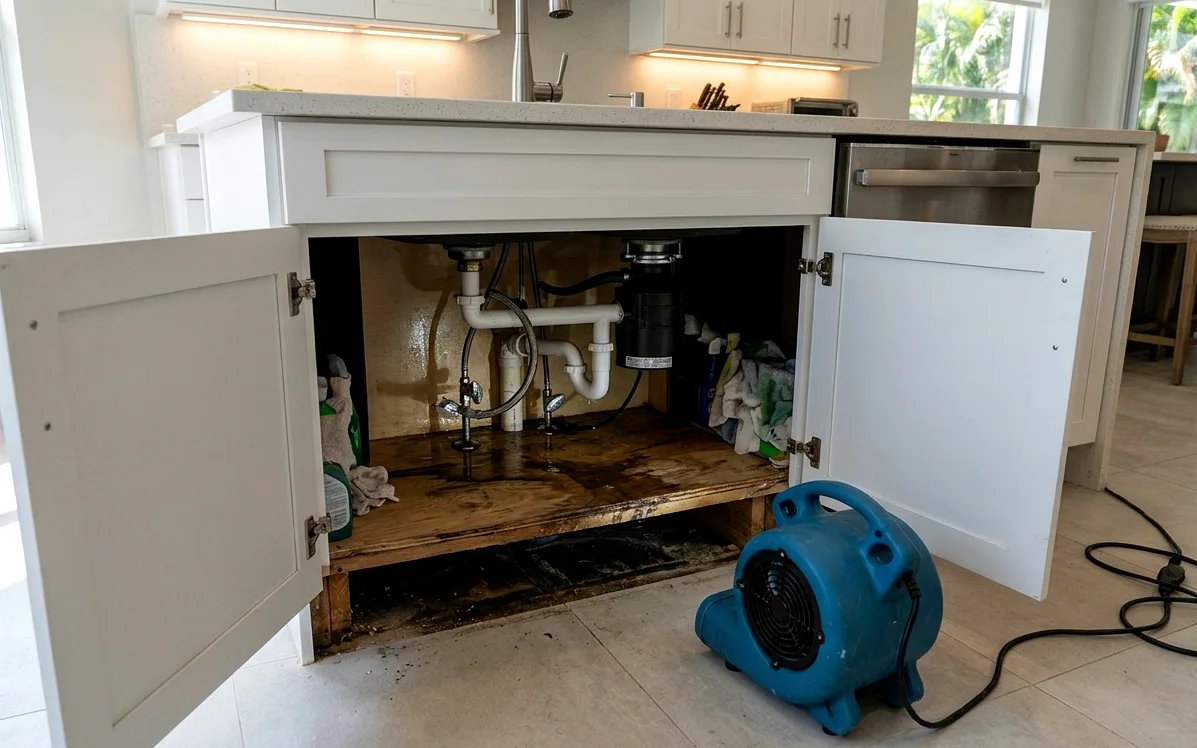
Under-sink leaks soak the cabinet floor and the toe kick first. We pull the toe kick and drill small holes or remove the cabinet floor panel when needed, then push dry air into the space under the cabinet so it dries without removing the whole run.
Tile on a slab usually stays. Laminate and engineered wood often trap water underneath and may need to come up. Solid hardwood can sometimes be dried in place with floor drying mats when it is caught early.
About 55 percent of Miami's housing units were built before 1980, so original fittings and aging shutoff valves are common in the homes we work in. Morning relative humidity averages about 82 percent, so a closed house with dehumidifiers dries faster than one with the windows open.
When to call about burst pipe water damage
Water spraying from a fitting
A visible spray or steady stream from a connector or valve is an active supply line failure and needs the shutoff closed now.
Running water sound
Hearing water moving with every fixture off can mean a pipe is leaking inside a wall or under the slab.
Bubbling or peeling paint
Paint that blisters on a wall near a bathroom or kitchen is often sitting over a wet cavity.
Swollen cabinet base
A soft or puffed-up cabinet floor under a sink means the supply line or drain has been leaking.
Sudden high water bill
A jump in usage with no change in habits points to a leak you have not found yet.
Low water pressure
A sudden drop in pressure at fixtures can mean water is escaping somewhere along the line.
What happens after you call
Close the shutoff
We walk you through finding the fixture valve or main while the crew heads over.
Extract the water
Standing water is pulled from tile, carpet and under cabinets with extractors and wands.
Trace the spread
Meters and a thermal camera show how far water traveled in walls, cabinets and floors.
Open what cannot dry
Toe kicks, baseboards and small wall sections come off where needed so air can reach wet areas.
Dry and log
Air movers, dehumidifiers and cabinet drying setups run with daily readings.
Patch after the repair
Once the plumber fixes the line and readings are dry, drywall, trim and cabinets are put back.
What burst pipe water damage usually costs in Miami
These are typical Miami-area ranges for burst pipe water damage. Most of these jobs are clean water, so they tend to cost less per square foot than flood or sewage work.
| What is priced | Typical range |
|---|---|
| Under-sink or toilet supply leak, one room | $1,390 to $2,870 |
| Clean-water extraction and drying, per sq ft | $3.15 to $3.90 per sq ft |
| Washing machine hose failure, laundry and hallway | $2,240 to $4,610 |
| Pipe inside a wall, several rooms with wall openings | $3,860 to $6,190 |
How long the line ran, how many rooms and floor types it reached, and how much wall or cabinet needs to be opened all move the price. The final price comes after an on-site look. See every cost range we publish.
Burst Pipe Water Damage: common questions
Should I turn off the main or just the valve under the sink?
If the fixture valve turns and stops the water, that is enough. If it is stuck, leaking itself, or the pipe is inside a wall, shut off the main. Leave it off until a plumber has repaired the line.
Can my kitchen cabinets be saved after a supply line leak?
Often, yes. Cabinets wet with clean water and dried quickly usually stay. We open the toe kick and dry the space under the cabinet floor. Particleboard that has already swelled and crumbled is replaced.
Do you fix the broken pipe as well?
Our crews handle the water damage: extraction, drying and putting walls and trim back. The pipe itself is repaired by a plumber, and we open the wall in a way that gives them good access and keeps the patch small.
My pipe burst in the middle of the night. Did the delay cause more damage?
A few hours makes a difference in how far water spreads, but clean water caught within the first day usually allows a lot to be saved. The sooner extraction starts, the smaller the drying job becomes.
Will the water travel into the condo below mine?
It can. Water moves through floor and wall openings and down along pipes. We check your unit's floor and lower walls, and building management usually checks the unit below for wet ceilings.
Often needed on the same job
Appliance Leak Water Damage
Washer hoses, dishwashers and ice maker lines that leak under floors.
See the serviceLeak Detection & Moisture Mapping
Thermal imaging and meters to trace hidden water inside walls and floors.
See the serviceKitchen & Cabinet Mold Removal
Mold under sinks and behind cabinets from drain and dishwasher leaks.
See the serviceStructural Drying & Dehumidification
Air movers and dehumidifiers set up, logged daily and pulled once dry.
See the serviceWater where it should not be? Call now.
A person answers every call, day or night. Tell us what got wet and when it started, and we will tell you what happens next.