Wall and drywall mold removal in Miami, FL
There is a stain or a patch of dark spots on your wall that keeps getting bigger, the paint is bubbling, or the baseboard has started to swell and smell musty.
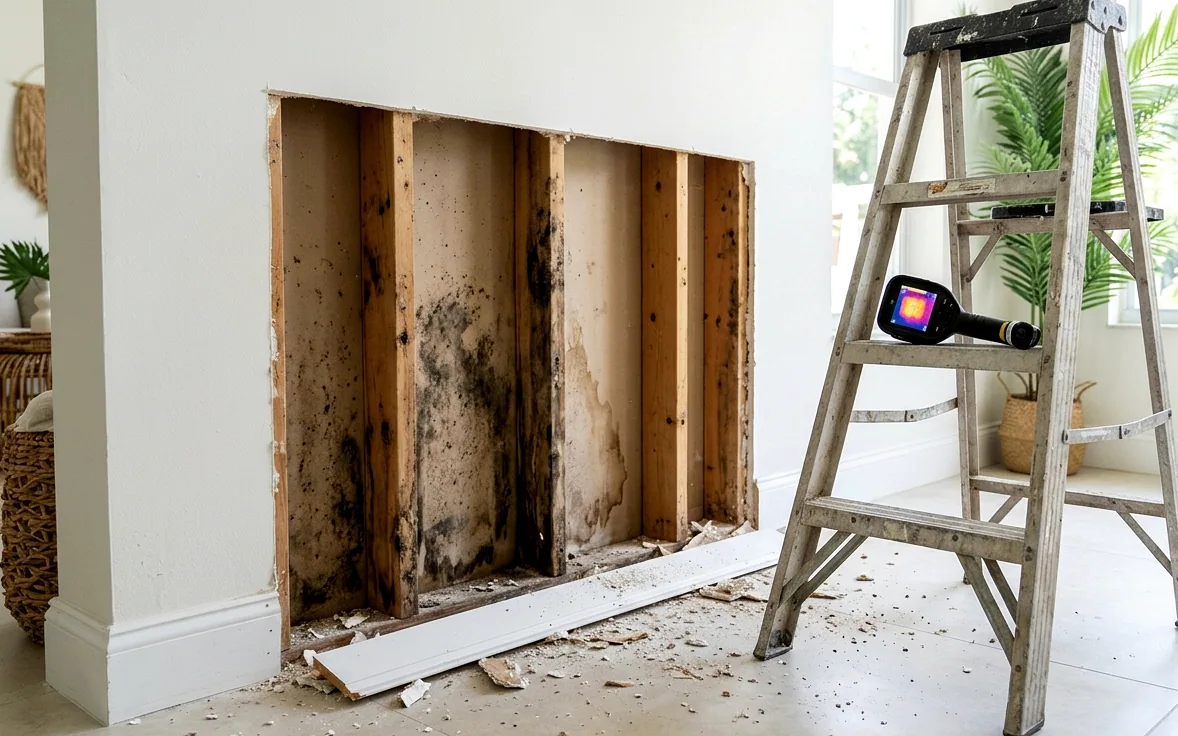
Mold you can see on a wall is often the small part of what is there. Drywall has a paper face on both sides, and the back side, inside the cavity, usually has more growth than the front. We open the wall, take out what is damaged, and dry the framing so it does not start again.
At a glance
- Service
- Wall & Drywall Mold Removal
- Group
- Mold Removal
- Hours
- Phones answered 24/7
- Office
- 1428 Brickell Avenue, Floor 3, Miami
- Covers
- Miami-Dade and Broward
When you call, we schedule an inspection to map moisture across the wall and the rooms on either side of it. If the wall is still wet, drying starts right away and the source gets traced. Wet drywall that cannot be dried within about 48 hours tends to grow mold, so a wall that got wet recently should be looked at within a day or two.
Why drywall grows mold so easily
Drywall is a gypsum core wrapped in paper, and the CDC lists both drywall and paper among the materials mold grows on. Once the paper gets wet and stays wet, mold has everything it needs.
The back face of the board sits in a dark cavity with no airflow. That is why a small spot on the room side often turns out to be a much larger patch once the wall is opened.
Tracing where the water came from
A wall gets wet from somewhere, and the location of the mold tells us a lot. Growth near the floor points one way, growth near the ceiling another.
We read the wall with a meter in a grid and use a thermal camera to follow the wet area to its edge before we cut.
- Low on the wall: slab leaks, appliance leaks, floor-level flooding
- Mid-wall: plumbing lines, shower valves, AC condensate lines
- High on the wall: roof leaks, windows, the unit above
- Exterior walls: rain through stucco cracks or window frames
Cutting out the wall the right way
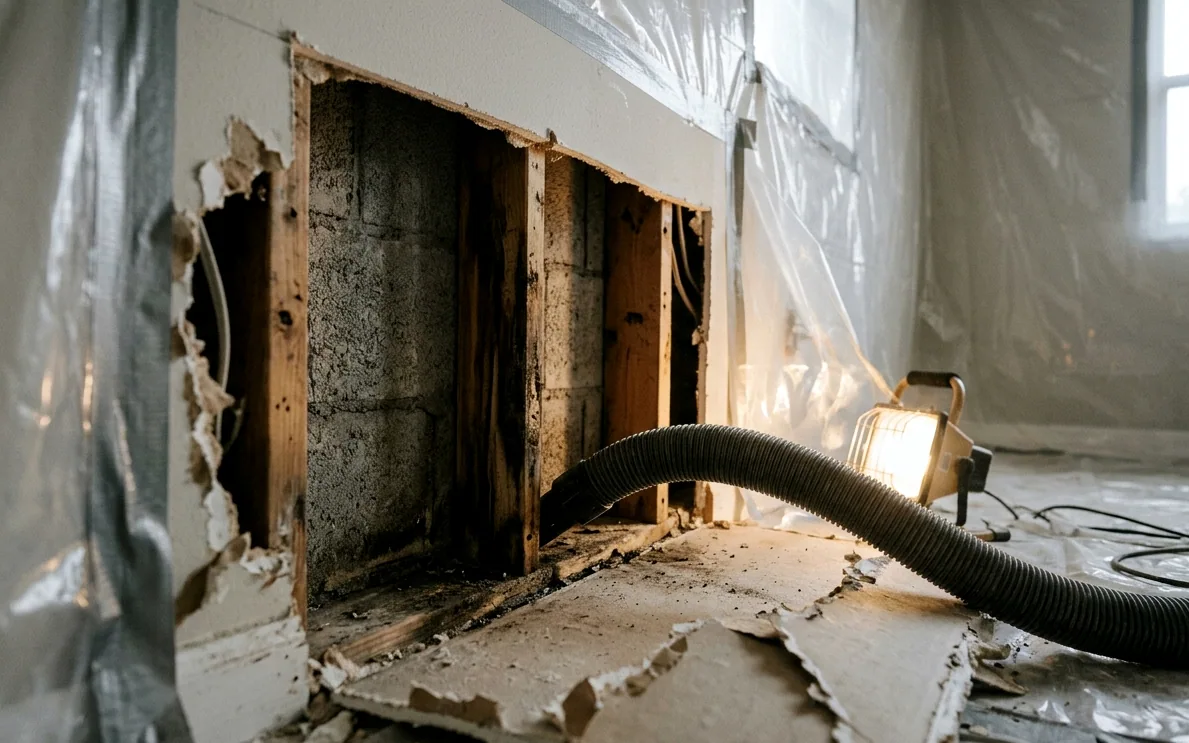
We set containment around the work area and keep it under filtered negative air before any drywall comes off. The wall is cut at a straight line past the last wet or moldy reading, so the patch is clean and the repair is simple.
Damaged drywall, wet insulation and swollen baseboards are bagged inside the containment and carried out. We do not spread moldy material through the house on the way out.
Cleaning studs and the cavity
With the board off, we HEPA vacuum the studs, bottom plate and the back of the exterior sheathing or block. Wood framing is scrubbed or sanded where growth has stained it, and metal studs are wiped clean.
The cavity is then dried with air movers and a dehumidifier until the framing reads normal. An antimicrobial treatment goes on the cleaned surfaces before the wall is closed.
Why painting over it does not work
Stain-blocking primer can hide a mold spot for a few weeks, but it does nothing to the growth behind it or to the moisture that caused it. The EPA says moldy surfaces should not be painted until they are cleaned and dry.
Once the wall is clean, dry and the source is fixed, we can hang new drywall, tape, texture and paint so the room looks like it did before.
Miami averages about 141 days a year with measurable rain, and dew points in the 70s are close to a daily event in the wet season. Walls here rarely get a long dry spell, so drywall that gets wet tends to stay wet unless the cavity is opened and dried.
When to call about wall & drywall mold removal
Spreading dark stain
A gray or brown patch that grows a little each week usually has a moisture source behind it.
Bubbling or peeling paint
Paint lifting off the wall in blisters means water is getting into the drywall from behind.
Swollen baseboards
Baseboards that have puffed up or pulled away from the wall have been sitting in moisture.
Soft spot when pressed
Drywall that gives under light pressure has lost strength from being wet.
Musty odor at one wall
A smell that is strongest at one wall or corner often points to growth in the cavity.
Wavy or bowed wall
A wall that looks rippled in side light may have wet board that is sagging off the studs.
What happens after you call
Map the wet area
Moisture readings and thermal images show how far the water spread inside the wall.
Contain the room
Plastic sheeting and negative air keep dust and spores in the work area.
Cut and remove
Drywall is cut at a clean line past the damage, and insulation and baseboards come out as needed.
Clean the framing
Studs and plates are HEPA vacuumed, scrubbed and wiped until no growth remains.
Dry the cavity
Air movers and dehumidifiers run until the framing reaches normal moisture readings.
Rebuild the wall
New drywall, tape, texture and paint go up once the source is fixed and everything is dry.
What wall & drywall mold removal usually costs in Miami
Drywall jobs are priced by how much wall has to come out and how long the cavity needs to dry. These are typical Miami-area ranges.
| What is priced | Typical range |
|---|---|
| Single wall section, under 100 sq ft | $510 to $1,390 |
| Multiple walls or a full room | $1,670 to $5,640 |
| Mold removal priced by wall area | $15.30 to $27.60 per sq ft |
| Drying equipment, dehumidifier daily rate | $87.40 to $121.60 per day |
Insulation removal, the number of rooms involved and the drywall rebuild move the price most. Your final price comes after we have opened the wall and seen the cavity. See every cost range we publish.
Wall & Drywall Mold Removal: common questions
How far past the mold do you cut the drywall?
We cut past the last wet or stained reading, usually at a straight line a short distance beyond it. Moisture readings decide the line, not just what you can see on the paint.
Can moldy drywall be cleaned instead of removed?
Light surface growth on painted drywall that is dry can sometimes be cleaned. Once the paper face is stained through, soft, or growing on the back side, the board needs to come out.
Is a plaster wall handled differently from drywall?
Yes. Plaster over block or lath is denser and dries more slowly, and it does not feed mold the way paper-faced drywall does. Older Miami homes with plaster are often cleaned and dried in place rather than cut out.
Does the insulation in the wall need to go too?
If it got wet and stayed wet, yes. Fiberglass and other wall insulation hold moisture and mold, and the EPA advises discarding insulation that cannot be dried within 48 hours.
How long before the wall can be closed?
Most cavities dry in two to four days once opened, depending on the framing and how long the water was there. We close the wall only when readings show it is dry.
Often needed on the same job
Flood Cuts & Drywall Removal
Wet drywall and baseboards cut out at a clean line so walls can dry.
See the serviceBlack Mold Removal
Dark mold growth on drywall, wood and grout removed under containment.
See the serviceStructural Drying & Dehumidification
Air movers and dehumidifiers set up, logged daily and pulled once dry.
See the serviceWater Damage Repair
Drywall, baseboards, paint and trim put back once the structure is dry.
See the serviceWater where it should not be? Call now.
A person answers every call, day or night. Tell us what got wet and when it started, and we will tell you what happens next.