Mold testing in Miami through an independent assessor and lab
You need lab numbers for a home sale, a lease, a health question or a dispute with a building, and you want the sampling done by someone with no stake in the cleanup.
Mold testing means air or surface samples sent to a lab for analysis. We arrange it through an independent mold assessor and lab, and the results go to you directly. Keeping the testing separate from any removal is how Florida law sets it up, and it keeps the numbers honest.
At a glance
- Service
- Mold Testing
- Group
- Mold Removal
- Hours
- Phones answered 24/7
- Office
- 1428 Brickell Avenue, Floor 3, Miami
- Covers
- Miami-Dade and Broward
When you call, we ask why you want testing and what you are seeing, then connect you with an independent assessor. The assessor takes air and surface samples, sends them to a lab and gives you the results and a protocol. Testing is not urgent the way a leak is, but schedule it before any cleanup disturbs the area.
Why the testing is independent
Florida's Section 468.8419 bars a mold assessor or its company from performing or offering remediation on a structure it assessed within the previous 12 months. It likewise bars a remediator from assessing a structure it remediated in that window.
We do the removal side of mold work, so we do not sample the homes we may clean. The assessor works for you, the lab reports to the assessor and to you, and nobody on the testing side is selling the cleanup.
When testing is worth it, and when it is not
The CDC does not recommend routine mold testing at home, noting there are no official standards for acceptable mold levels. When you can see mold, it advises removing it and fixing the moisture source instead.
Testing earns its cost when you smell mold but cannot find it, or when a sale or lease needs a documented report. It also helps when a doctor has asked about exposure, or when you and a landlord or association disagree about whether a problem exists.
- Musty odor with no visible growth
- Real estate or lease paperwork
- A health question raised by your doctor
- A dispute with an association or landlord
- Checking a finished job before walls close
Air samples and surface samples
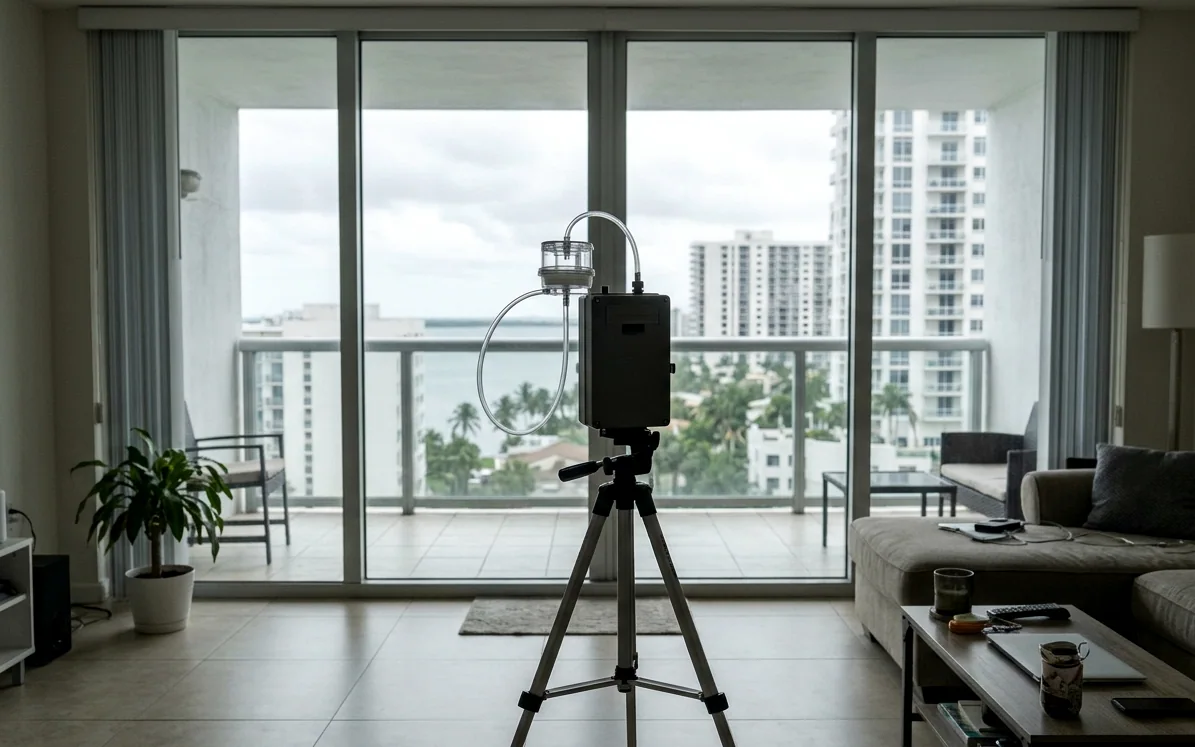
Air samples pull a measured volume of room air through a cassette, usually with an outdoor sample taken for comparison. The lab identifies and counts spore types inside and out, and the assessor compares the two.
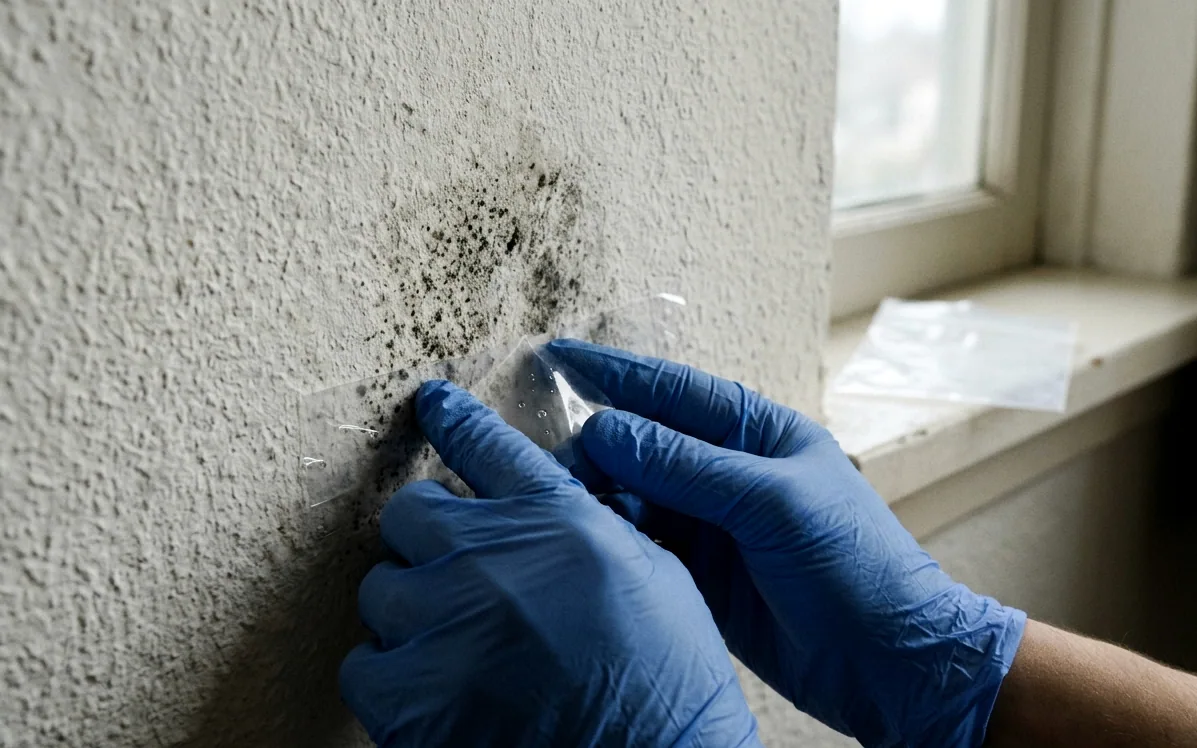
Surface samples use tape lifts or swabs on a stain or suspect spot to show the lab what is actually growing there. Many assessors use both, choosing sample spots from what they see on the walk-through.
Reading the lab report
A lab report lists spore types and counts for each sample. Because no official acceptable level exists, the assessor reads the numbers against the outdoor sample and the conditions in the home, not against one cutoff.
The assessor's protocol then says what, if anything, needs remediation and how. If removal is called for, you can take that protocol to any remediation company, including ours, for a scope and price.
Testing after remediation
Clearance testing checks that a finished mold job actually passed before new drywall goes up. On our jobs, clearance is arranged through an independent assessor so the check on our work is not done by us.
Clearance usually combines a visual check of the cleaned area, moisture readings and air samples inside the area that was contained. Results go to you, and the walls close only after a pass.
Miami's average relative humidity is about 82 percent in the morning, and dew points in the 70s are an almost daily occurrence in the wet season. In air that humid, the outdoor comparison sample is what gives an indoor number its meaning, so ask for one with any Miami air test.
When to call about mold testing
Odor with no source
A musty smell hangs on, but an inspection found no visible growth.
Home sale or purchase
A buyer, seller or lender wants a lab report on file.
A health question
Your doctor asked about possible mold exposure where you live.
Dispute over a leak
You and your association, landlord or neighbor disagree about whether mold is present.
After a long water loss
Water sat for days and you want to know whether spores moved beyond the wet room.
Before the rebuild
A mold job is done and you want independent clearance before new drywall goes up.
What happens after you call
Explain why you want testing
The reason shapes which samples make sense, so we start there on the call.
Connect with an assessor
We set you up with an independent mold assessor, who schedules the sampling visit with you.
Samples are taken
The assessor collects indoor and outdoor air samples and any surface samples needed.
Lab analysis
Samples go to an independent lab for spore identification and counts.
Results go to you
You receive the lab report and the assessor's protocol, and you decide the next steps.
What mold testing usually costs in Miami
These are typical Miami-area ranges for an assessment with sampling. The assessor and lab set and bill their own fees.
| What is priced | Typical range |
|---|---|
| Assessment with sampling, average home or unit | $335 to $635 |
| Larger home or several problem areas | $675 to $965 |
| Standalone assessment, broader range | $485 to $785 |
| Small area remediation if results call for it | $545 to $1,455 |
The number of samples, how many rooms are tested and whether an outdoor comparison is included move the price. The assessor confirms a final price after reviewing your home, before any samples are taken. See every cost range we publish.
Mold Testing: common questions
Why can't the company removing my mold also test it?
Florida's Section 468.8419 keeps assessment and remediation on the same structure separate for 12 months. An independent assessor means the person reading the numbers has no stake in the cleanup.
Is there a safe mold level a lab can tell me?
No. The CDC notes there are no official standards for acceptable mold levels. The assessor reads your indoor numbers against an outdoor sample and what they saw in the home.
Do I need testing if I can already see the mold?
Usually not. The CDC advises removing visible mold and fixing the moisture instead of routine testing. Testing can still make sense if you need a report for a sale, a lease or a dispute.
Who gets the lab results?
You do. The assessor sends you the lab report and their protocol, and you can share it with us, your association, a landlord or an adjuster as you choose.
How should I prepare my home before an air test?
Ask the assessor, since most want normal living conditions for a day or so before sampling. Avoid cleaning, sanding or running an air purifier right before the visit, because that can throw off the results.
Often needed on the same job
Mold Inspection
A walk-through with meters and thermal imaging to find mold and its cause.
See the servicePost-Remediation Clearance Testing
Independent verification that a mold job passed before walls close.
See the serviceMold Removal
Containment, removal and cleaning of mold, with the moisture source fixed.
See the serviceCondo Mold Remediation
Mold in condo units contained so neighbors and hallways stay clean.
See the serviceWater where it should not be? Call now.
A person answers every call, day or night. Tell us what got wet and when it started, and we will tell you what happens next.