What to do in the first 24 hours after water damage
The first day after a leak or flood decides how much of your home can be dried and kept. These are the steps that matter most, in the order we would take them ourselves.
Written from what our crews see on Miami jobs, for homeowners, condo owners and property managers.
At a glance
- Written by
- Winston Albright
- Role
- Guides Editor and Restoration Project Lead
- Updated
- November 2026
- Reading time
- 6 minutes
- Shut off the water at the fixture valve or the main before you do anything else.
- Cut power to wet areas only from a dry spot, and stay out from under a sagging ceiling.
- Photograph every room, the source and the failed part before you clean or throw anything away.
- Wet materials need to be dried within 24 to 48 hours, and Miami humidity makes that hard without equipment.
Stop the water before anything else
Every minute the source keeps running adds water to the floor, the walls and possibly the room below. Learn where your main shutoff is before you ever need it. In most Miami houses it sits near the street meter or where the supply line enters the house, and in condos it is often inside a utility closet or behind an access panel near the water heater.
If the leak comes from one fixture, close the small valve under the sink, behind the toilet or behind the washer first. A leaking water heater has its own cold supply valve on top of the tank. In a high-rise, call the front desk or building management at the same time, because a riser pipe or a neighbor's unit may be the real source.
If you cannot find the source or cannot stop it, that is the moment to pick up the phone. The IICRC S500 water damage standard treats finding and fixing the source as the owner's job, but on our jobs we help trace it, so drying never starts on a wall that is still being fed water.
- Main shutoff: near the meter or where the line enters the house
- Fixture valves: under sinks, behind toilets and washers
- Water heater: the cold supply valve on top of the tank
- Condo: building staff for risers and the unit above
Make the power and the room safe
Water and electricity together are the real danger in the first hour. If water is near outlets, power strips or a floor-level appliance, switch off the breakers for that area from a dry spot. If the panel itself is in the wet area, or you would have to stand in water to reach it, stay out and wait for help.
Unplug lamps, chargers and electronics only when your hands and feet are dry. Look up as well as down. A sagging, bulging patch of ceiling drywall is holding water, and it can come down without warning, so keep children and pets out of that room and away from the spot under it.
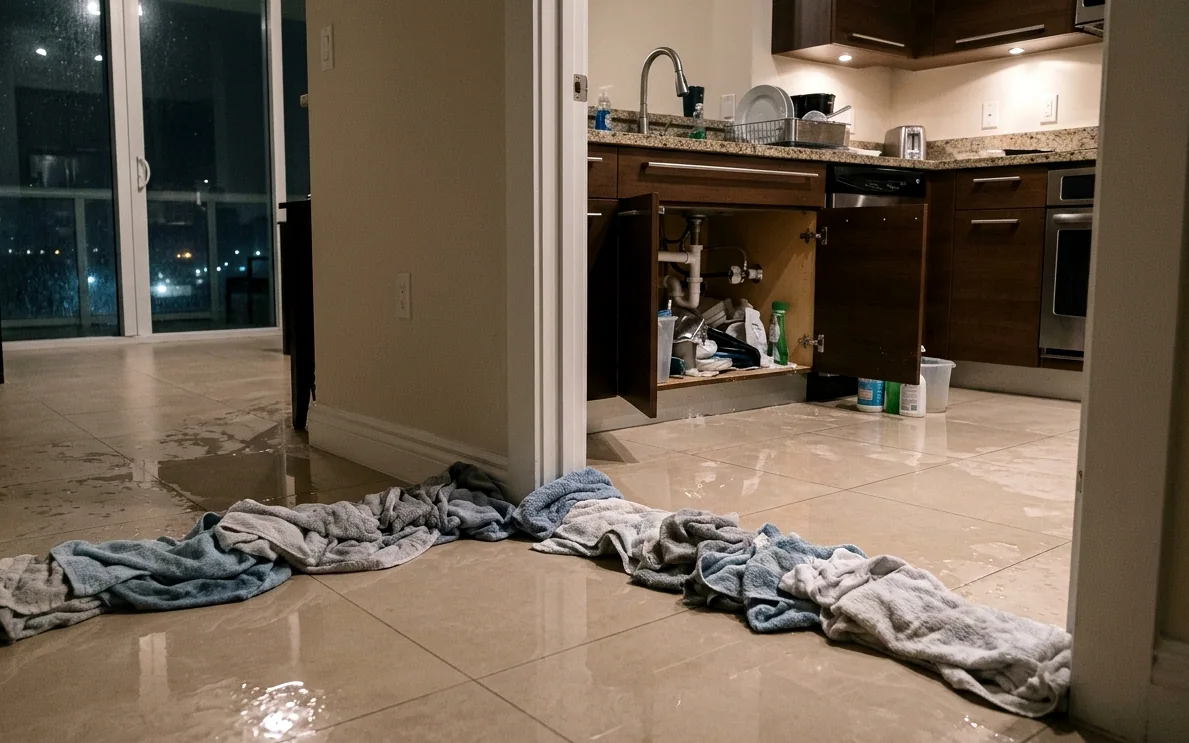
Wet tile and terrazzo are slippery, and Miami homes have plenty of both. Lay dry towels at the doorways you have to use, and wear shoes with some grip instead of walking barefoot through the water.
Take photos before you move anything
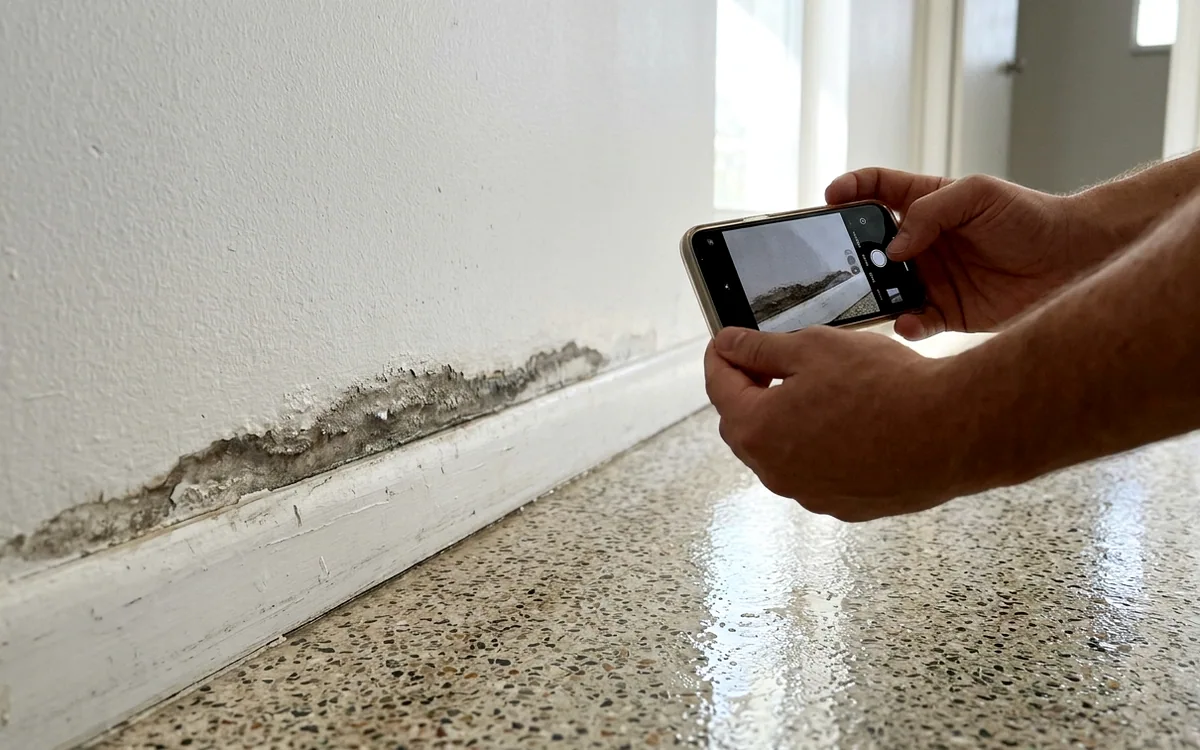
Before you mop, lift or throw anything out, walk the space with your phone. Take wide shots of each room, then close shots of the water line on the walls, the wet flooring, the source and any damaged furniture or boxes. A slow video that pans across each room is useful too.
Photograph the failed part itself if you can see it: the split supply hose, the rusted tank, the clogged drain line. Keep it in a zip bag instead of tossing it. Adjusters often want to see the cause, and the part itself says more than any description.
Write down the time you found the water and the time you shut it off. Florida sets a deadline for reporting a property claim, so those early notes matter later. Our guide to Florida claim deadlines covers that part in more detail.
- Wide shots of every affected room
- Close shots of water lines and wet materials
- The source and the failed part
- Model and serial numbers of damaged appliances
- A note of the time found and the time stopped
Start removing water if it is clean and safe
If the water came from a clean supply line, rain or a sink overflow, you can start pulling up standing water with towels, a mop or a wet vacuum. Move rugs, furniture and stored boxes off the wet floor. Slip foil or small plastic blocks under furniture legs that cannot be moved, so the wood does not soak up water and stain the floor.
Open closet doors and cabinet doors in the wet area so trapped air can move. Keep the AC running if it works and is not part of the problem, because it pulls moisture out of the air. A box fan helps the surface, but a fan alone will not dry the inside of a wall or the underside of a floor.
Stop and step back if the water came from a toilet, a backed-up drain or flooding from outside. That is contaminated water, and it changes the whole approach, from what can be saved to what protection people need. Our guide to water categories explains why.
What not to do in the first day
Much of the extra damage we see on Miami jobs comes from well-meant moves in the first few hours. A handful of habits make drying harder or put people at risk, and they are easy to avoid once you know them.
Painting or caulking over a wet stain is a common one. The EPA says moldy surfaces should not be painted or caulked until they are cleaned and dry, and the same logic applies to a fresh water stain: the water is still there underneath, and paint only hides where it went.
- Do not use a household vacuum on water; it can shock you and it ruins the vacuum.
- Do not switch on ceiling fans or lights under a wet, sagging ceiling.
- Do not paint over or caulk wet stains to hide them.
- Do not assume it will dry on its own behind baseboards and cabinets.
- Do not throw out damaged items before they are photographed.
- Do not track wet carpet or rugs through dry rooms and spread the water.
Why the clock matters more in Miami
The EPA advises drying water-damaged areas and items within 24 to 48 hours to prevent mold growth. In Miami that window feels shorter, because the air is already carrying so much moisture. Average morning relative humidity runs about 82 percent across the year, and the National Weather Service notes dew points in the 70s are an almost daily occurrence in the wet season.
So wet drywall, baseboards and cabinet backs do not dry on their own here the way they might somewhere drier. Professional drying uses air movers and dehumidifiers sized to the room, with moisture readings taken every day until the materials reach a dry standard.
If water got into the walls, under the flooring or into the ceiling, or if more than one room is wet, call us at (786) 947-0034. The line is answered 24/7, and the sooner drying starts, the more of your home stays in place instead of going out in a dumpster.
Reader questions
I mopped up the water and the floor looks dry. Does anyone still need to check it?
Often, yes. Water runs under baseboards, into the bottom of drywall and under tile or vinyl plank, where a mop never reaches. A moisture meter reading along the base of the walls shows in a few minutes whether the room is truly dry or still wet behind the surface.
Should I turn off my AC after a leak?
Only if the leak is coming from the AC itself, such as a clogged condensate line or an overflowing air handler pan. If the system works and is not part of the problem, leaving it on helps pull moisture from the air while drying gets set up.
Can I throw out a soaked rug before the adjuster sees it?
Photograph it first, both close up and in the room, and keep a small cut sample if you can. If it is soaked with toilet or flood water, move it outside or to the garage so it stops affecting the room. Throwing items away with no record makes them harder to account for in a claim.
More guides from our crews
AC drain line leaks in Miami condos
In a Miami condo, the air conditioner runs most of the year and pulls gallons of water out of the air. When the small drain line that carries that wat
Read the guideCan wet drywall be saved after a leak?
Wet drywall does not always have to come out. Whether it can be dried in place depends on what kind of water soaked it, how long it has been wet, and
Read the guideFlorida water damage claim deadlines
Florida shortened its property claim deadlines at the end of 2022, and many homeowners still go by the old rules. Here is the general timeline, and th
Read the guideWater where it should not be? Call now.
A person answers every call, day or night. Tell us what got wet and when it started, and we will tell you what happens next.