Ceiling leak and mold removal in Westchester, 33155
Westchester's 1950s and 1960s concrete-block ranch homes are aging in the places water likes most: worn roofs over the ceilings, cast-iron drains under the slab and original supply lines inside the walls.
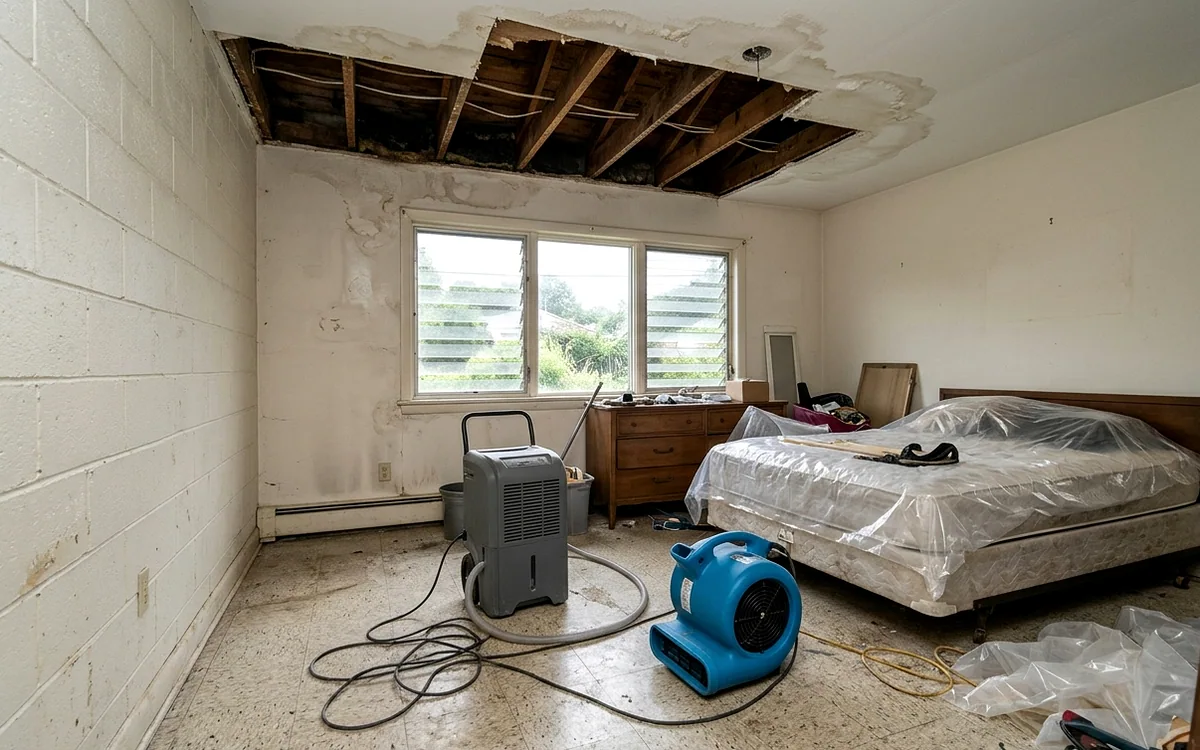
Most homes here are single-story CBS ranches on regular lots, so a roof leak lands straight on a living room or bedroom ceiling. Water soaks the insulation above, stains the drywall or plaster, and mold can start if the area is not dried within 24 to 48 hours. We find the wet area, dry it and remove the damaged ceiling and any growth.
At a glance
- Area
- Westchester
- From our office
- 1428 Brickell Ave, Floor 3
- Phones
- Answered 24/7
- Most calls
- Ceiling Water Damage
Yes. Kelda Restoration serves all of Westchester, from the streets around Tropical Park out to the blocks near FIU. Calls here usually involve roof and ceiling leaks, AC drain overflows, slow drain-line leaks and mold found behind baseboards. Phone (786) 947-0034 any time of day or night, and our own crew comes to stop the water and start drying.
What Westchester homes are built from
Westchester grew up as a neighborhood of concrete-block ranch houses on regular lots, with a few townhomes and small apartment buildings mixed in. In 2020 it held 18,362 housing units with only 3.1 percent vacant, and about 65 percent are owner-occupied.
Block walls do not rot, but the materials attached to them do. Furring strips, drywall, ceiling joists and roof decking in a house this age have often been through several reroofs and patch jobs, and every seam is a place water can slip in.
Where the water usually starts
On a one-story ranch, the roof is a common culprit: worn flashing at a vent, a cracked tile or an old flat section over a converted carport. The water shows up as a brown ring on the ceiling, a bulge in the drywall or a drip from a light fixture.
Below the floor, original cast-iron drains and older supply plumbing can leak for months before anyone notices damp baseboards or a musty closet. Outside, the Tamiami Canal (C-4) handles flood control for about 600,000 people, and after the May 26 2020 downpour it rose more than a foot along a seven-mile stretch.
How a ceiling job runs from first call to dry
We check the attic or roof space first, if the house has one, and use moisture meters and a thermal camera to trace how far water has spread across the ceiling. Wet insulation is bagged and removed, and sagging drywall comes down before it falls on its own.
Dehumidifiers and air movers then dry the joists and framing, and we treat any mold found on the wood. If the roof is still open, we can tarp it until your roofer gets there. Any mold testing or clearance check is handled by an independent assessor and lab, never by our own crew.
Other neighborhoods west of the Palmetto
We also work in Sweetwater, Coral Terrace, Olympia Heights, Fontainebleau and Tamiami. Bird Road, Coral Way and Tamiami Trail tie these neighborhoods together, and our trucks use the Palmetto Expressway to reach them from Brickell.
On the rare night when all of our crews are already on jobs, the call goes to another trusted local restoration provider, so you still get someone at the door.
Where water and mold start in Westchester
Tamiami Canal levels
The C-4 rose more than a foot along seven miles after the May 2020 rain, which slows drainage for the low inland blocks nearby.
Aging ranch roofs
Most homes date to the 1950s and 1960s, and older roof coverings over single-story ceilings are a frequent starting point for leaks.
Cast-iron drain lines
Original cast-iron drains under older slabs can crack and seep, wetting floors and wall bottoms without any visible drip.
Hard hit in October 2000
The No-Name Storm struck southwest Miami-Dade hardest, and about 93,000 residences countywide were flooded or cut off by water.
Services we run most in Westchester
Ceiling Water Damage
Stains, sagging drywall and leaks from the unit or attic above.
See the serviceRoof Leak Water Damage
Wet ceilings, insulation and walls under a leaking roof dried and repaired.
See the serviceEmergency Tarping & Board-Up
Roof tarps and window boards to stop more water getting in after a storm.
See the serviceMold Removal
Containment, removal and cleaning of mold, with the moisture source fixed.
See the serviceAC Drain Line Leak Damage
Clogged condensate lines and air handler overflows that soak floors and walls.
See the serviceLeak Detection & Moisture Mapping
Thermal imaging and meters to trace hidden water inside walls and floors.
See the serviceWestchester: questions we hear
My Westchester ceiling has a brown stain but no drip. Is it still wet?
It may be. A stain can stay damp inside for days, especially with wet insulation sitting on top of it. A moisture meter and thermal camera tell us in minutes whether the drywall and joists are still holding water.
Do you remove mold from ceilings in Westchester ranch homes?
Yes. We contain the room, take down moldy drywall and insulation, clean and treat the joists, and dry the space before anything new goes back up. Most of these jobs start with a roof or AC leak, so we confirm the source is stopped first.
Can you cover an open roof in Westchester until a roofer arrives?
Yes. If a storm has opened the roof or a section is leaking badly, our crew can put down a tarp to keep more rain out. Roof repair itself is for your roofer, while we dry and repair the inside of the house.
What causes a musty smell in an older Westchester home with no visible leak?
Often it is a slow drain or supply leak inside a wall or under the slab, or an AC drain line that has been dripping into a closet. We trace it with meters and thermal imaging, then open only what we need to.
Other places our crews cover
Water damage in Westchester? Call our crew lead.
A person answers every call, day or night. Tell us what got wet and when it started, and we will tell you what happens next.