Storm and hurricane water damage cleanup in Miami homes
The storm is over, rain got in through the roof, windows or doors, and now you have wet ceilings, soaked floors and walls that will not stay dry on their own.
Tropical weather puts water into a house from several directions at once. Wind drives rain sideways through frames and vents, a damaged roof lets water into the attic, and surge or street flooding comes in at ground level.
At a glance
- Service
- Storm & Hurricane Water Damage
- Group
- Water Damage & Flooding
- Hours
- Phones answered 24/7
- Office
- 1428 Brickell Avenue, Floor 3, Miami
- Covers
- Miami-Dade and Broward
Call (786) 947-0034 once it is safe to be on the road. We ask where the water came in, whether the roof or windows are still open, and what floors are wet. A crew stops new water first, then extracts, removes wet materials and dries. The EPA advises drying within 24 to 48 hours to prevent mold.
Three ways storm water gets inside
Wind-driven rain is the most common. Strong gusts push water through window and slider frames, under doors, through soffit vents and around wall penetrations, even when the glass and roof are intact.
Roof breaches send water into the attic and down through ceilings, light fixtures and the tops of walls. Surge or street flooding comes in from the ground and is treated as Category 3 water, which means more of the wet material has to come out.
- Rain pushed through slider tracks and window frames
- Water entering at lifted or missing roof tiles
- Soffit and ridge vents taking in rain
- Ground-level water from surge or street flooding
- Leaks around AC line sets and wall penetrations
Stopping more water from getting in
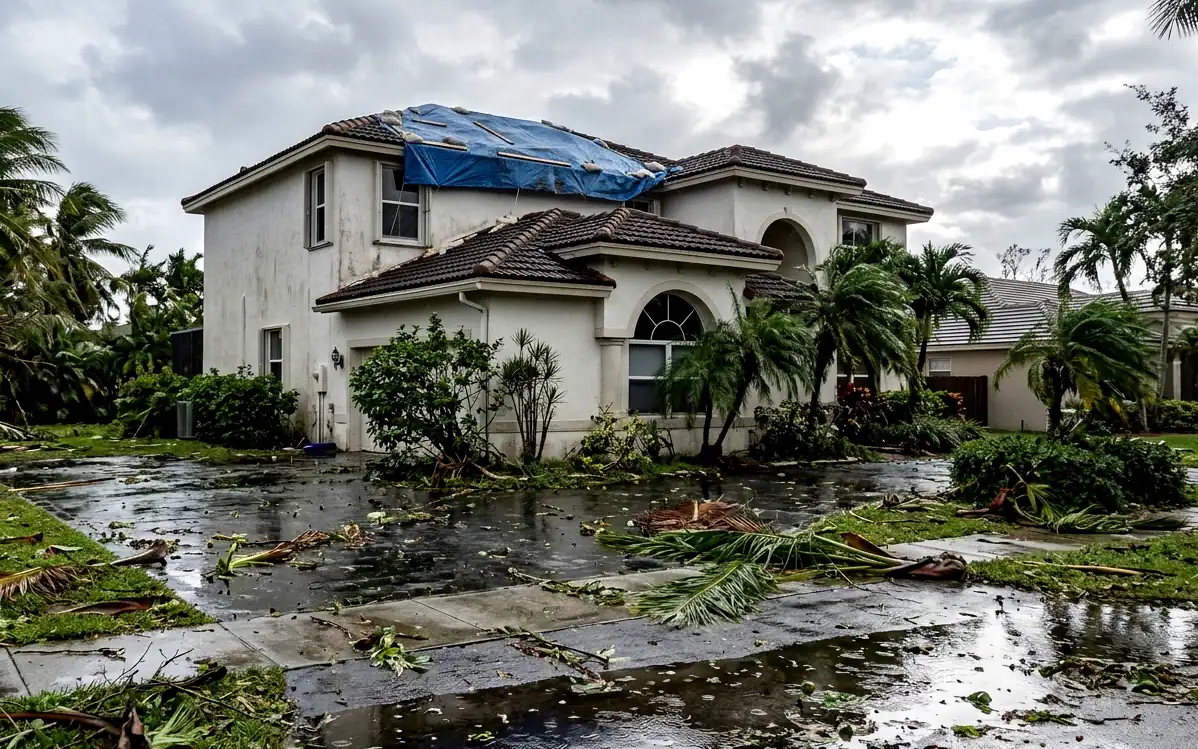
Drying a room while rain still comes through the roof wastes the equipment and the time. When a roof or window is open, the first job is to cover it, with a roof tarp or boards over a broken opening, so the next band of rain does not undo the work.
Once the openings are closed, we extract standing water, read the walls and ceilings with meters and a thermal camera, and set drying equipment. Permanent roof and window repairs follow from the right trade once the weather allows.
Ceilings and attics after a roof breach
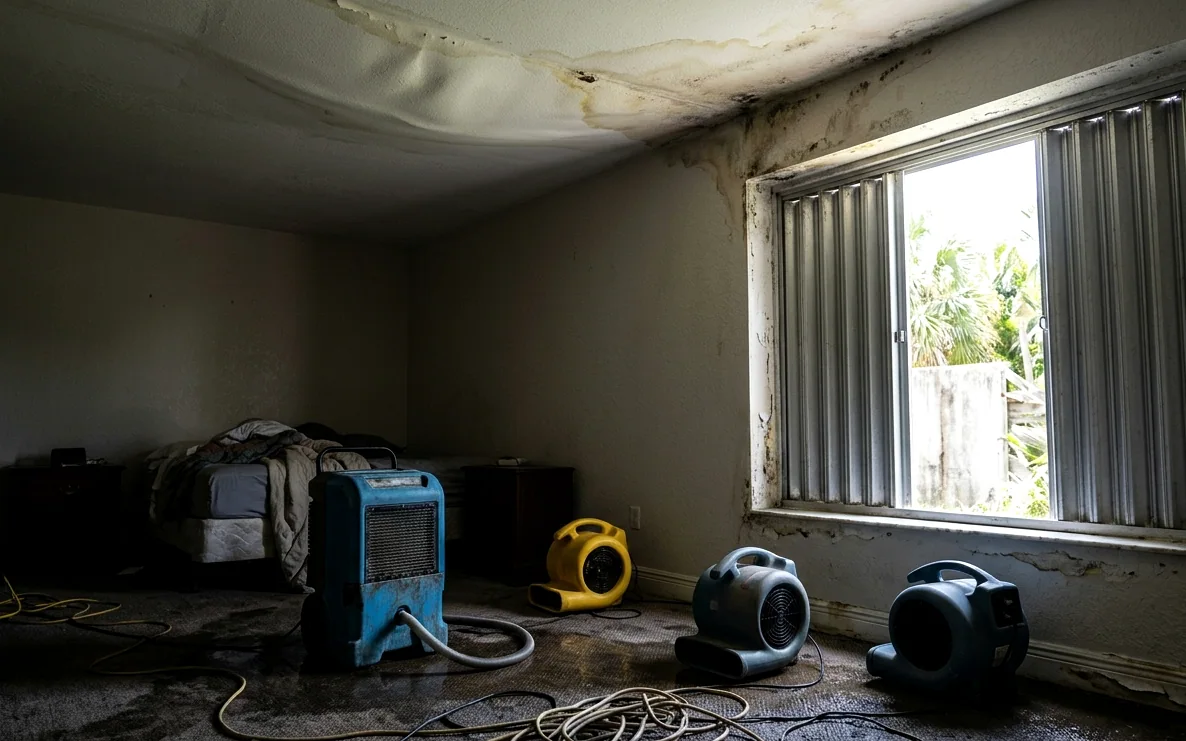
Water that comes in through the roof soaks insulation first. Wet insulation holds water against the ceiling drywall, so the ceiling often sags or stains hours after the rain stops. The EPA advises discarding wet ceiling tiles, insulation and swollen wallboard that cannot be dried in place within 48 hours.
We check the attic side as well as the room below. Wet insulation is removed, the roof deck and framing are dried, and ceiling drywall that held water is cut out so the cavity can dry.
Working through a regional storm
After a hurricane, calls come in across the whole county at the same time, so we sort them by how much water is still getting in and how long it has been sitting. Homes with open roofs, standing water or soaked ceilings go first.
On the rare nights when every one of our crews is already committed, we pass the call to another trusted local restoration provider so you still get help that night. You can also take photos and start moving belongings out of wet rooms while you wait.
Storm claim dates and records
Florida law gives you 1 year from the date of loss to give notice of a new claim, and 18 months for a supplemental claim. For hurricane losses, the date of loss is the hurricane's landfall date or the date NOAA verifies the weather event.
Wind damage and flood damage are often handled by different policies, so we separate them in our notes and photos: where rain entered from above, and where water rose from the ground. Moisture logs and photo records go to you for both adjusters.
Hurricane season runs from June 1 to November 30, with most activity between mid-August and mid-October and a peak around September 10. Miami-Dade is in Florida's High-Velocity Hurricane Zone, which carries stricter building code requirements, but wind-driven rain still finds its way through frames and vents in older homes.
When to call about storm & hurricane water damage
New ceiling stains
Brown rings or sagging drywall after a storm usually mean water came in through the roof and soaked the insulation above.
Water at slider tracks
Puddles along sliding glass doors are a sign wind pushed rain through the frame and possibly into the wall below.
Wet carpet near windows
Damp carpet along an exterior wall often points to rain driven through the window frame or stucco cracks.
Missing or lifted roof tiles
Tiles out of place after high winds leave the underlayment exposed, and the next rain can reach the attic.
Dripping light fixtures
Water at a ceiling light means it has traveled along framing from a roof leak, so switch that circuit off.
Ground-level water entry
Water that came in under exterior doors during the storm is treated as outside water and needs more removal.
What happens after you call
Call when safe
We ask where water entered, whether openings are still exposed and which rooms are wet.
Cover open areas
Roof tarps and boards close openings so more rain does not undo the drying.
Extract and remove
Standing water comes out, then wet insulation, ceiling drywall and baseboards that cannot dry are removed.
Dry and monitor
Air movers and dehumidifiers run in the rooms and attic with daily moisture readings.
Separate the records
We note and photograph wind-driven water and rising water separately for your adjusters.
Repair once dry
Drywall, ceilings, trim and paint go back after the structure reads dry and the openings are fixed.
What storm & hurricane water damage usually costs in Miami
These are typical Miami-area ranges for storm water damage. Storm jobs vary widely because they can involve the roof, ceilings, walls and floors at once.
| What is priced | Typical range |
|---|---|
| Wind-driven rain at one or two windows, drying | $1,390 to $3,140 |
| Roof breach, ceiling and insulation removal, drying | $2,860 to $5,970 |
| Clean rainwater extraction and drying, per sq ft | $4.10 to $5.80 per sq ft |
| Surge or street water, per sq ft | $9.15 to $11.85 per sq ft |
How many rooms are wet, whether water came from above or below, and how long it sat before drying started all move the price. The final price comes after an on-site look. See every cost range we publish.
Storm & Hurricane Water Damage: common questions
Should I wait for the insurance adjuster before you start drying?
No. Take photos and video first, then let drying start. Waiting for an adjuster while water sits gives mold time to grow, and most policies expect you to take reasonable steps to prevent further damage.
How do you tell wind-driven rain from flood water in my claim?
We note where the water entered and photograph it. Water from the roof, windows or vents is recorded as coming from above, while water that rose from the ground is recorded separately, because the two are often covered by different policies.
Can you tarp my roof before drying the inside?
Yes. Covering open roof areas comes first, because drying while rain still comes in does not work. The tarp stays until the roof can be properly repaired.
My hurricane shutters were up, so why is my wall wet?
Shutters protect the glass, but wind can still push rain through stucco cracks, frame joints, soffit vents and AC line penetrations. A moisture meter often finds water inside the wall below a window even when the sill looked dry.
How long do I have to file a hurricane claim in Florida?
Florida law requires notice of a new claim within 1 year of the date of loss, and 18 months for a supplemental claim. For hurricanes, the date of loss is the landfall date or the date NOAA verifies the event.
Often needed on the same job
Emergency Tarping & Board-Up
Roof tarps and window boards to stop more water getting in after a storm.
See the serviceRoof Leak Water Damage
Wet ceilings, insulation and walls under a leaking roof dried and repaired.
See the serviceWindow Leak Water Damage
Rain pushed through window and slider frames into walls and floors.
See the serviceFlood Damage Cleanup
Rising water and street flooding cleaned out, with flood cuts where needed.
See the serviceWater where it should not be? Call now.
A person answers every call, day or night. Tell us what got wet and when it started, and we will tell you what happens next.