Water damage restoration in Miami, from extraction to repair
Water is on your floor or coming through a wall, and you need to know what to stop first, what can be saved, and who is going to dry the place out properly.
Kelda Restoration handles the full job in Miami homes and condo units: stopping the spread, pulling out the water, drying the structure and putting the rooms back. Our own crews handle each stage, from the first call to the last coat of paint.
At a glance
- Service
- Water Damage Restoration
- Group
- Water Damage & Flooding
- Hours
- Phones answered 24/7
- Office
- 1428 Brickell Avenue, Floor 3, Miami
- Covers
- Miami-Dade and Broward
You call (786) 947-0034 and a project manager asks where the water is coming from, how long it has been sitting and what kind of floor it is on. A crew comes out with extraction and drying equipment. Speed matters, because the EPA advises drying wet materials within 24 to 48 hours to prevent mold growth.
What restoration covers, start to finish
Restoration is more than a wet vac and a few fans. It starts with finding and stopping the source, then removing standing water, then drying the slab, walls and cabinets until they read dry on a meter, and only then rebuilding.
Each stage has its own check. We do not close a wall or lay new flooring until moisture readings in that material match a dry reference spot in the same home. Skipping that check is the most common reason a repaired room turns musty a few months later.
- Source found and stopped
- Standing water extracted
- Wet pad, baseboards and drywall removed
- Drying checked daily
- Repairs once readings are dry
Clean, gray or black water changes the plan
The IICRC S500 standard sorts water into three categories by contamination. Category 1 is clean water, such as a broken supply line or rain. Category 2 is gray water, such as washing machine discharge or AC condensate. Category 3 is black water, such as sewage or rising flood water.
The category decides what can stay. Carpet soaked by a clean supply line can often be dried and kept, while the same carpet soaked by a toilet backflow cannot. Time matters too: gray water left in a structure for more than about 48 hours can degrade to Category 3.
How much water, and where it went
Separate from category, the standard uses classes to describe how much water is present and how fast it should evaporate. A Class 1 loss touches part of a room. A Class 3 loss usually comes from overhead and soaks ceilings, walls, insulation and floors across most of the area.
Class 4 is the slow one. Concrete, stone, plaster and hardwood hold water tightly and need longer drying with specialty methods. Most Florida homes sit on concrete slabs rather than basements, so slab and tile drying is a large part of the work we do here.
Drying the structure, not just the surface
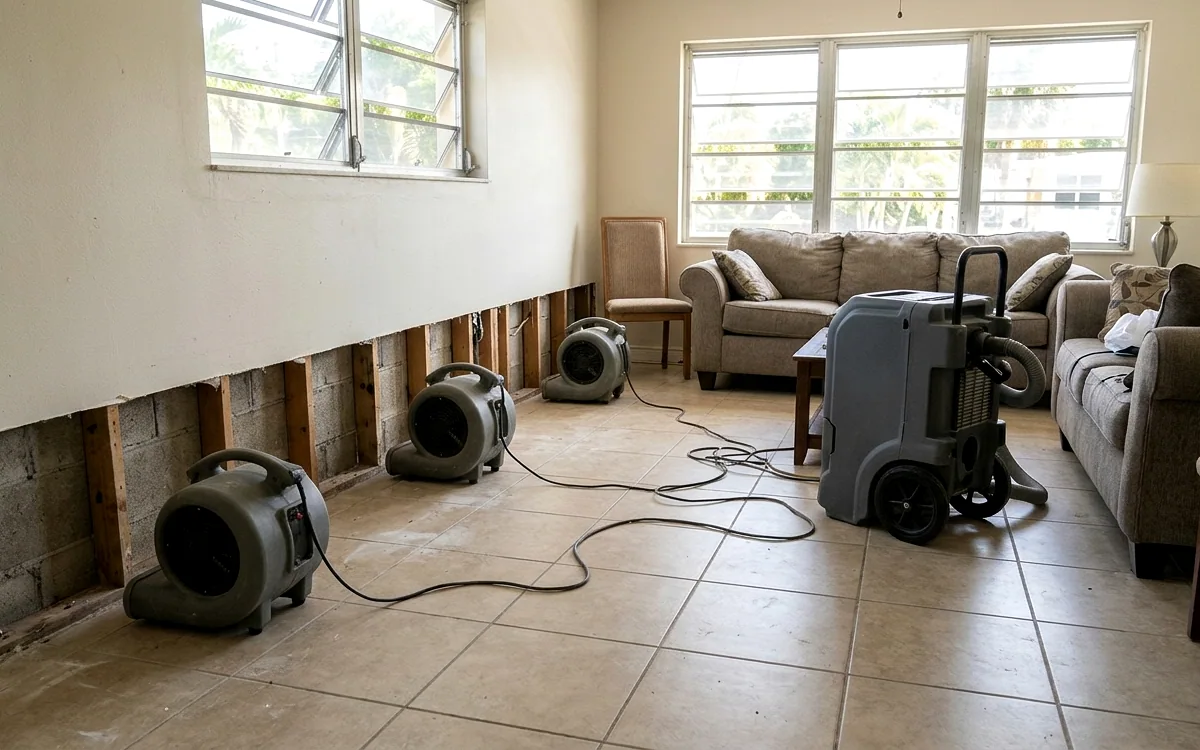
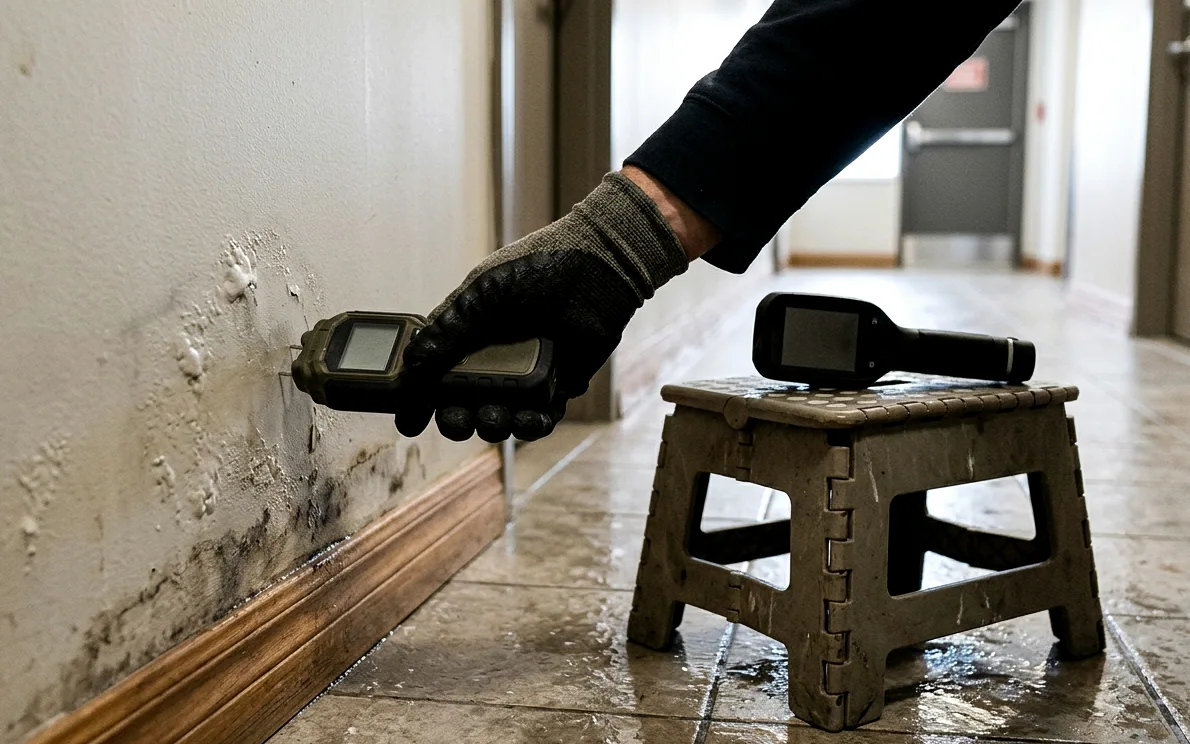
A floor can feel dry to the hand while the bottom of the drywall and the slab underneath still hold water. We map moisture with pin and pinless meters and a thermal camera, then place air movers to push air across wet surfaces and dehumidifiers to pull that water out of the room.
Readings are taken and written down every visit. Equipment gets moved as areas dry, and it comes out once the materials hit their dry targets. That drying log goes into your file, which helps when an adjuster asks how long the job took and why.
Putting the rooms back together
Once the structure is dry, the rebuild is usually simple: new drywall at the cut line, tape, texture and paint matched to the wall, then new baseboard and trim. Cabinets that were dried in place get checked again before toe kicks go back on.
If flooring was lost, we prep the slab or subfloor so the new floor goes down on a dry, flat base. You choose the finishes.
Miami's wet season runs from May 15 to October 15 and brings 60 to 70 percent of the year's rain, with dew points in the 70s almost every day. That damp outdoor air slows drying, which is why we close up the room and rely on dehumidifiers instead of open windows. About 55 percent of the city's housing was built before 1980, so older plumbing and slab floors are part of most jobs.
When to call about water damage restoration
Water spreading across tile
Tile does not absorb much, so water runs under baseboards, cabinets and door jambs, where it soaks in out of sight.
Soft or stained drywall
Drywall that feels spongy or shows a tide line near the floor is wicking water up from below.
Baseboards pulling away
Swollen or separating baseboard trim usually means the wall behind it has been wet for a while.
Musty smell after a leak
A damp, earthy odor days after a leak was mopped up points to moisture still trapped in the structure.
Carpet squishing underfoot
If the carpet is wet, the pad underneath is holding far more water than you can see.
Water from the unit above
Drips at a light fixture or a ceiling stain in a condo often mean water is moving down through the walls as well.
What happens after you call
Call and quick triage
We ask about the source, the floor type and how long the water has been there, and tell you what to shut off while the crew heads over.
Stop the source
The crew confirms the water is off and finds where it came from, or brings in the right trade when a repair is needed first.
Extract standing water
Portable or truck-mounted extractors pull water out of tile, carpet and pad before any drying starts.
Remove what cannot dry
Wet pad, swollen baseboards and drywall that wicked water get cut out at a clean line so the cavity can dry.
Dry and check daily
Air movers and dehumidifiers run while we take readings each visit and move equipment as areas dry.
Repair and close out
Drywall, trim, paint and flooring go back once readings match a dry reference, and you get the drying log for your records.
What water damage restoration usually costs in Miami
These are typical Miami-area ranges for water damage restoration. Every job is priced after we see the water source, the materials and how far the water spread.
| What is priced | Typical range |
|---|---|
| Small clean-water job, part of one room | $1,420 to $3,180 |
| Extraction and drying, clean water, per sq ft | $4.15 to $5.85 per sq ft |
| Extraction and drying, gray water, per sq ft | $6.20 to $8.65 per sq ft |
| Multi-room job with drywall removal and repair | $3,940 to $6,180 |
Water category, the number of rooms, how long the water sat and whether repairs are included all move the price. The final price comes after an on-site look. See every cost range we publish.
Water Damage Restoration: common questions
Can I stay in my home while the drying equipment runs?
Usually, yes. Air movers are loud and make the rooms warm, so many people close off the wet area and use the rest of the home. If the water was Category 3, we ask you to stay out of the work area until it has been cleaned.
Will my tile floor have to come up?
Often it does not. Porcelain and ceramic tile set on a slab can usually stay while the grout lines and slab dry out. Tile comes up when it is loose, hollow sounding, or sitting over a material that cannot dry in place.
How do you decide where to cut the drywall?
We read the wall with a moisture meter and find the highest wet point, then cut a straight line a little above it. A clean, level cut makes the repair faster and keeps the patch from showing once it is painted.
Who is responsible for fixing the leak itself?
The S500 standard treats finding and correcting the water source as the property owner's job, though owners can hire help. In practice we shut the water off, show you where it came from, and the right trade makes the repair before we close anything up.
How long does a typical restoration job take from start to finish?
Drying alone often runs a few days, longer for slabs, plaster or hardwood. Repairs add time depending on what was removed. We give you a timeline after the first set of readings.
Often needed on the same job
Emergency Water Extraction
Truck-mounted and portable extraction to pull standing water out fast.
See the serviceStructural Drying & Dehumidification
Air movers and dehumidifiers set up, logged daily and pulled once dry.
See the serviceFlood Cuts & Drywall Removal
Wet drywall and baseboards cut out at a clean line so walls can dry.
See the serviceWater Damage Repair
Drywall, baseboards, paint and trim put back once the structure is dry.
See the serviceWater where it should not be? Call now.
A person answers every call, day or night. Tell us what got wet and when it started, and we will tell you what happens next.