Closet mold removal for Miami homes and apartments
Your closet smells musty, there are fuzzy spots on the back wall or on a pair of shoes, and clothes that hang there come out smelling damp even after they are washed.
Closets are small, dark and closed most of the day, which makes them one of the easiest places in a Miami home for mold to start. The fix is not just cleaning the shelves. It is finding out why the air in that closet stays wet.
At a glance
- Service
- Closet Mold Removal
- Group
- Mold Removal
- Hours
- Phones answered 24/7
- Office
- 1428 Brickell Avenue, Floor 3, Miami
- Covers
- Miami-Dade and Broward
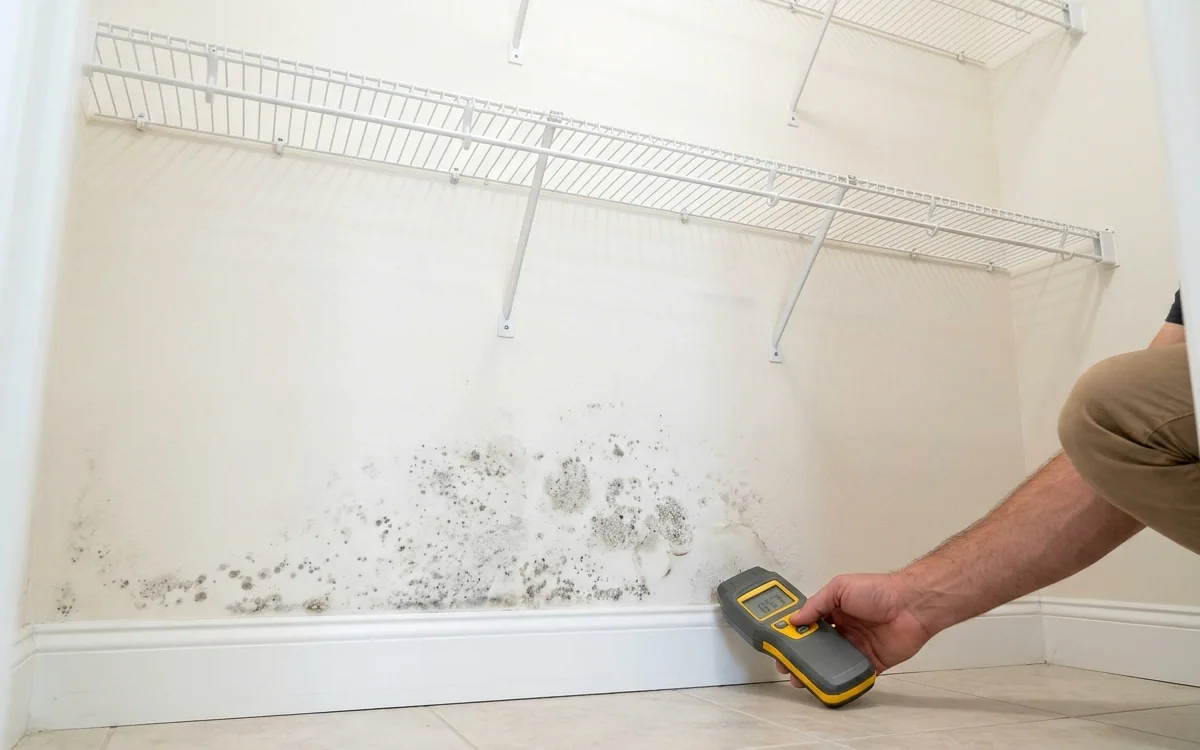
When you call, we set up a visit to check the closet walls, floor and ceiling with moisture meters and a thermal camera. If a wall reads wet, there is likely a leak behind it, and that gets traced first. If the closet is dry and just humid, the work focuses on cleaning, contents and airflow. Mold on fabric and leather spreads quickly, so sooner is better.
Why closets grow mold
A closed closet gets little air movement and little cooled air from the AC. Humidity builds up, and it has nowhere to go when the door stays shut all day.
Closets also share walls with bathrooms, laundry rooms and exterior walls. A slow shower leak or rain getting through stucco often shows up first as mold on the closet side, where nobody looks.
Leak or humidity: finding the cause
We read the closet walls at the floor, mid-height and near the ceiling. A wet patch on one wall usually means water is coming in from the room behind or from outside.
If every surface reads dry but the air is damp, the problem is humidity. That points to airflow, the AC, or a closet that is simply too packed for air to move.
- Shared wall with a shower or tub
- Exterior wall with cracked stucco or a window above
- Air handler or water heater in an adjoining closet
- No supply vent or a closed door all day
- Clothes packed tight against the back wall
Cleaning walls, shelves and rods
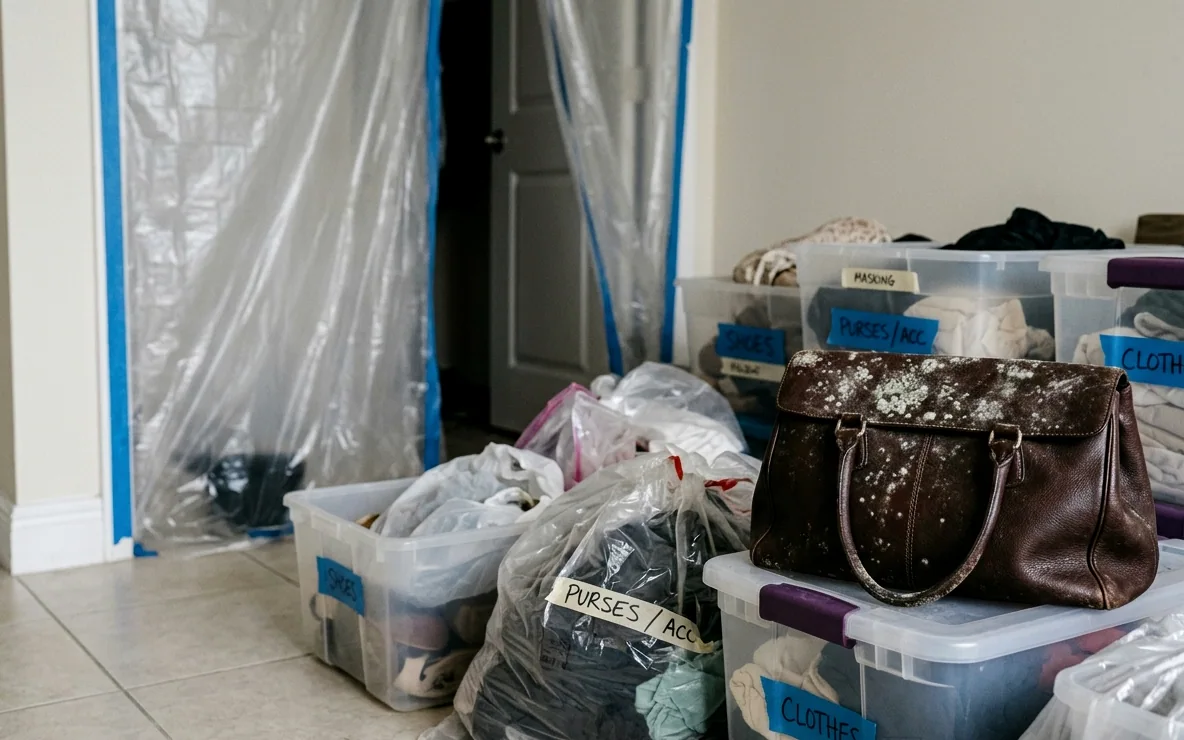
With the closet emptied, we set up containment at the doorway and run a filtered air scrubber. Surface mold on painted drywall and sealed shelving is HEPA vacuumed and wiped clean.
Drywall that is soft, stained through, or wet from a leak is cut out and replaced. Unfinished wood shelving and particleboard that has absorbed mold usually costs less to replace than to try to save.
What happens to your clothes and shoes
Washable clothing with light surface mold often comes back after laundering. Leather shoes, belts, handbags and items that cannot be washed need more careful cleaning, and some will not recover.
We sort contents with you, bag items that need cleaning, and set aside anything that cannot be saved so you can see and document it. For larger closets, contents can be packed out and cleaned off site.
Keeping a closet dry afterward
Small changes help a lot: leave a gap between clothes and the back wall, keep the door open part of the day, and do not store damp items or gym bags inside.
If the closet has no air supply, a louvered door or a small dehumidifier can keep it below the 60 percent humidity the EPA recommends. For homes where every closet struggles, a whole-home dehumidifier may be the better fix.
June is normally Miami's wettest month at about 10.5 inches of rain, and August mornings average about 83 percent relative humidity. A closed closet in those months holds that moisture in, which is why musty closets tend to show up in late summer.
When to call about closet mold removal
Musty smell on clothes
Clothes that smell damp right after coming out of the closet point to humid air inside it.
White fuzz on leather
Pale, powdery growth on shoes, belts or bags is mold, even though it looks like dust.
Spots on the back wall
Dark or gray dots behind hanging clothes often mean the wall is colder or wetter than the room.
Stained baseboard inside
Water marks at the bottom of the closet wall suggest a leak from a bathroom or the outside.
Damp boxes on the floor
Cardboard that feels soft or has gone wavy has been absorbing moisture from the floor or air.
Peeling paint in corners
Bubbled paint in the upper corners can mean a roof or window leak running down inside the wall.
What happens after you call
Empty and inspect
We help clear the closet and read walls, floor and ceiling with meters and a thermal camera.
Sort the contents
Items are sorted into clean, wash, specialty clean and discard, with photos of each group.
Contain the doorway
Plastic sheeting and filtered air keep spores in the closet and out of the bedroom.
Remove and clean
Moldy drywall and shelving come out, and remaining surfaces are HEPA vacuumed and wiped.
Dry and treat
The closet is dried to normal readings and cleaned surfaces are treated to slow regrowth.
Fix the airflow
We recommend the fix for the cause, whether a leak repair, a louvered door or a dehumidifier.
What closet mold removal usually costs in Miami
Closet jobs are usually on the smaller end, and the contents often take more time than the walls. These are typical Miami-area ranges.
| What is priced | Typical range |
|---|---|
| Reach-in closet surface cleaning | $520 to $1,170 |
| Walk-in closet with drywall removal | $1,540 to $3,690 |
| Mold removal priced by affected area | $15.60 to $25.80 per sq ft |
| Contents sorting and cleaning, labor rate | $72.50 to $186.40 per hour |
The amount of clothing and specialty items, a leak in the shared wall, and replacement shelving all change the total. Your final price comes after an on-site look. See every cost range we publish.
Closet Mold Removal: common questions
Can moldy clothes be saved?
Many can. Cotton and synthetic clothing with light growth usually comes clean in a normal hot wash, sometimes two. Leather, suede, wool and delicate fabrics need specialty cleaning, and heavily stained items may not recover.
Why is only one closet in my house affected?
Usually because that closet shares a wall with a shower, sits on an exterior wall that leaks, or has no air supply at all. Finding which one tells us what needs to be fixed so the closet stays dry.
Will a closet dehumidifier be enough?
For a closet that is only humid, a small dehumidifier or desiccant pack can help a lot. If the wall is wet from a leak, no dehumidifier will keep up until the leak is repaired.
Do I need to throw away all my shoe boxes and storage bins?
Cardboard that has mold on it should go, because mold grows into paper fibers. Plastic bins can be cleaned and kept, and anything stored inside them is usually fine if the lid stayed closed.
Should I leave the closet door open from now on?
Leaving it open part of the day helps the AC reach inside, and so does a louvered door. Combined with a small gap between clothes and the wall, it is often enough to keep the closet dry.
Often needed on the same job
Musty Odor Removal
Damp and musty smells traced to the source and removed, not masked.
See the serviceContents Pack-Out & Cleaning
Furniture and belongings moved out, cleaned, stored and brought back.
See the serviceMold Inspection
A walk-through with meters and thermal imaging to find mold and its cause.
See the serviceWindow Leak Water Damage
Rain pushed through window and slider frames into walls and floors.
See the serviceWater where it should not be? Call now.
A person answers every call, day or night. Tell us what got wet and when it started, and we will tell you what happens next.