Mold remediation and drying in South Miami, 33143
South Miami's older homes on tree-lined streets, many built between the 1920s and the 1960s, often hide mold behind walls, under aging roofs and around old plumbing long before anyone smells it.
Mold needs moisture, so every job here starts with finding the water, not just the stain. We locate the source, contain the area, remove the growth and dry the structure so it does not come back. For mold, drying is half the work, which is why both come with one call.
At a glance
- Area
- South Miami
- From our office
- 1428 Brickell Ave, Floor 3
- Phones
- Answered 24/7
- Most calls
- Mold Removal
Yes, we serve all of South Miami, from the older single-family streets to the mid-rise apartments by Sunset Place and the Metrorail. Mold in bathrooms and closets, roof leaks in older homes and the drying that follows are what we handle most here. Call (786) 947-0034 around the clock to speak with someone who can schedule an inspection.
Old South Miami houses and newer apartments
The city grew from a settlement first called Larkins, and much of its housing is single-family homes built from the 1920s through the 1960s. Closer to Sunset Place and the Metrorail, newer mid-rise apartment buildings have filled in. About 60 percent of housing units are owner-occupied.
Older homes tend to have original drain lines, older roof layers and additions from different decades. Each joint between old and new work is a place where water can collect quietly and feed mold.
Where moisture builds up in these homes
Roof leaks are common in older houses, and water soaks insulation and ceiling drywall before a stain ever shows. Bathrooms and kitchens with aging plumbing leak slowly behind tile and cabinets, and closets on exterior walls trap humid air.
Then there is rain. South Miami recorded 17.50 inches during the October 2000 flood, the highest gauge total of that event. Storms like that leave many homes damp at once, and the mold calls follow in the weeks after.
How we handle mold here, step by step
First comes a mold inspection: a visual walk-through with moisture meters and thermal imaging to find growth and the water feeding it. If you want air or surface samples, those are arranged through an independent assessor and lab, kept separate from our removal work.
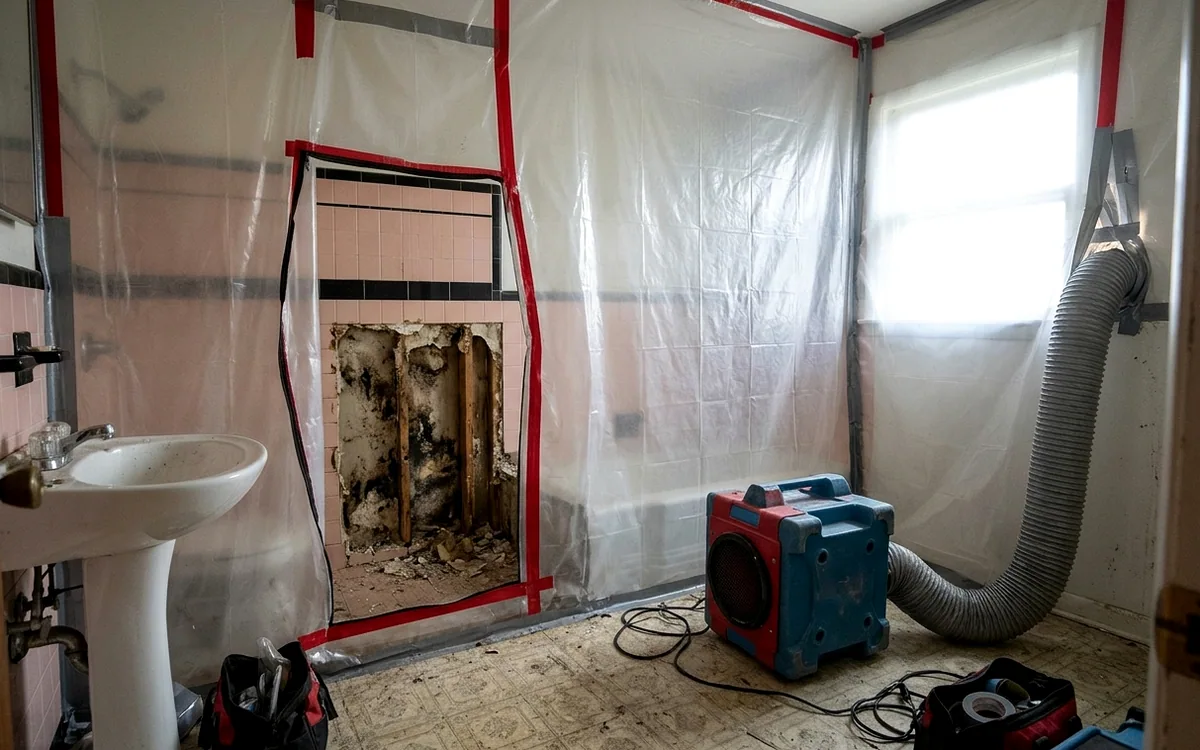
For removal, we set containment with plastic sheeting and negative air, cut out moldy drywall and insulation, clean the framing and treat surfaces. Dehumidifiers then bring materials back to dry readings, because the EPA is clear that mold returns if the moisture problem is not fixed.
Neighborhoods around South Miami we cover
Coral Gables borders the city and we work there often, along with Pinecrest, Glenvar Heights, Coral Terrace and Kendall. US-1 and Red Road connect all of them, and the Palmetto Expressway sits just west.
These areas share a lot of the same mid-century housing, so the problems we find carry over from street to street. One number reaches us from any of them.
Where water and mold start in South Miami
Top rain total in 2000
South Miami's 17.50 inches was the highest gauge total of the October 3-4, 2000 flood, which flooded or isolated about 93,000 residences.
A long storm record
The 1926 Miami hurricane caused extensive damage here, and Hurricanes Andrew in 1992 and Bonnie in 1998 also damaged homes.
Aging roofs and pipes
Many of the city's older homes still carry aging roofs and plumbing, two of the most common sources behind the mold we remove.
Humid wet season
Dew points in the 70s are an almost daily occurrence in the South Florida wet season, so a damp wall here stays damp unless it is actively dried.
Services we run most in South Miami
Mold Removal
Containment, removal and cleaning of mold, with the moisture source fixed.
See the serviceMold Inspection
A walk-through with meters and thermal imaging to find mold and its cause.
See the serviceStructural Drying & Dehumidification
Air movers and dehumidifiers set up, logged daily and pulled once dry.
See the serviceRoof Leak Water Damage
Wet ceilings, insulation and walls under a leaking roof dried and repaired.
See the serviceCloset Mold Removal
Musty closets and mold on walls, shelving and stored clothing.
See the servicePost-Remediation Clearance Testing
Independent verification that a mold job passed before walls close.
See the serviceSouth Miami: questions we hear
Do you test for mold in South Miami and then remove it yourselves?
No. Florida's mold rules keep assessment and remediation separate, so sampling and clearance testing are arranged through an independent assessor and lab. Our inspection is a visual and instrument check to find growth and its cause, and our crews handle the removal and drying.
How do I know if the musty smell in my South Miami home is mold?
A musty smell means moisture is feeding something, often behind a wall, under a sink or in an attic. We trace it with meters and thermal imaging rather than guessing. If visible growth covers more than about 10 square feet, the EPA treats it as a job for professional remediation.
Can I stay in my South Miami house while you remove mold?
Often yes, because containment keeps the work area sealed from the rest of the house. The CDC notes that people with asthma, mold allergies or weakened immune systems can react more strongly, so we talk through whether anyone should stay away from that part of the home.
My South Miami apartment near Sunset Place has mold in the closet. Should I call you or my landlord?
Call both. The landlord or building manager needs to know, and we can explain what we found and what removal involves. We will not open walls without the owner's approval.
Other places our crews cover
Water damage in South Miami? Call our crew lead.
A person answers every call, day or night. Tell us what got wet and when it started, and we will tell you what happens next.