Bathroom mold removal in Miami homes and condos
The grout keeps turning black no matter how often you scrub, the caulk around the tub has gone dark, and the bathroom smells damp even after it has been aired out.
Some bathroom mold is surface growth from steam, and some of it is a sign that water has been getting behind the tile for months. Our job is to tell you which one you have, remove it properly, and deal with the moisture that keeps feeding it.
At a glance
- Service
- Bathroom Mold Removal
- Group
- Mold Removal
- Hours
- Phones answered 24/7
- Office
- 1428 Brickell Avenue, Floor 3, Miami
- Covers
- Miami-Dade and Broward
When you call, we schedule an inspection with moisture meters and a thermal camera, usually within a day. We check the wall behind the shower, the floor around the toilet and the vanity base. If readings show water inside the wall, the job moves faster, because a hidden shower leak can spread to the next room within weeks.
Surface mold or a leak behind the tile
Black spotting on grout lines and the ceiling over the shower is usually surface growth from steam that never fully clears. It is unpleasant but it sits on the outside of the material.
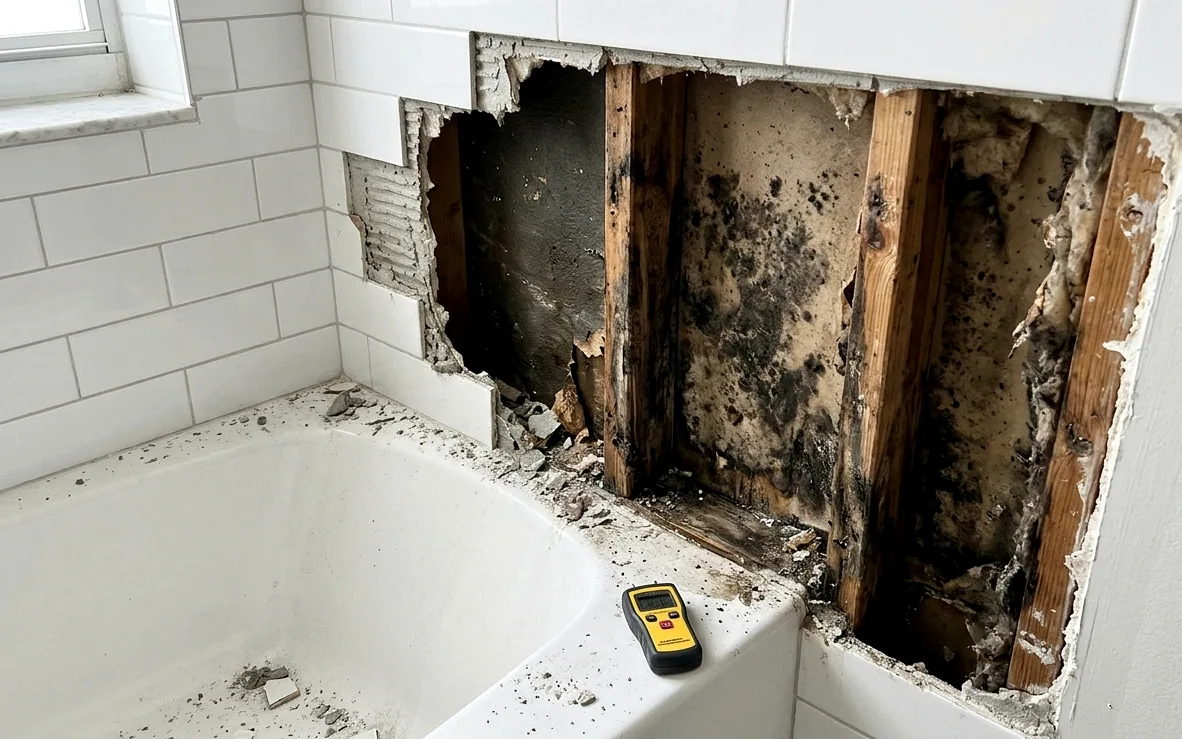
Mold that keeps coming back in the same corner, tiles that sound hollow when tapped, or a soft spot in the wall next to the tub point to something else. That usually means a failed shower pan, a cracked grout joint or a leaking valve body is wetting the wall cavity, and cleaning the face of the tile will never reach it.
Where bathroom water hides
Most bathroom leaks are slow, so they show up as mold before they show up as a puddle. We check every spot where water can get past a finish surface.
Thermal imaging helps here because a wet wall cavity often reads cooler than the dry wall around it.
- Shower pan and the curb at the shower door
- Valve and spout openings in the tile
- Wax ring at the toilet base
- Supply lines and drain under the vanity
- Tub overflow and drain gaskets
- Exhaust fan duct and ceiling above the shower
How we take it out without spreading it
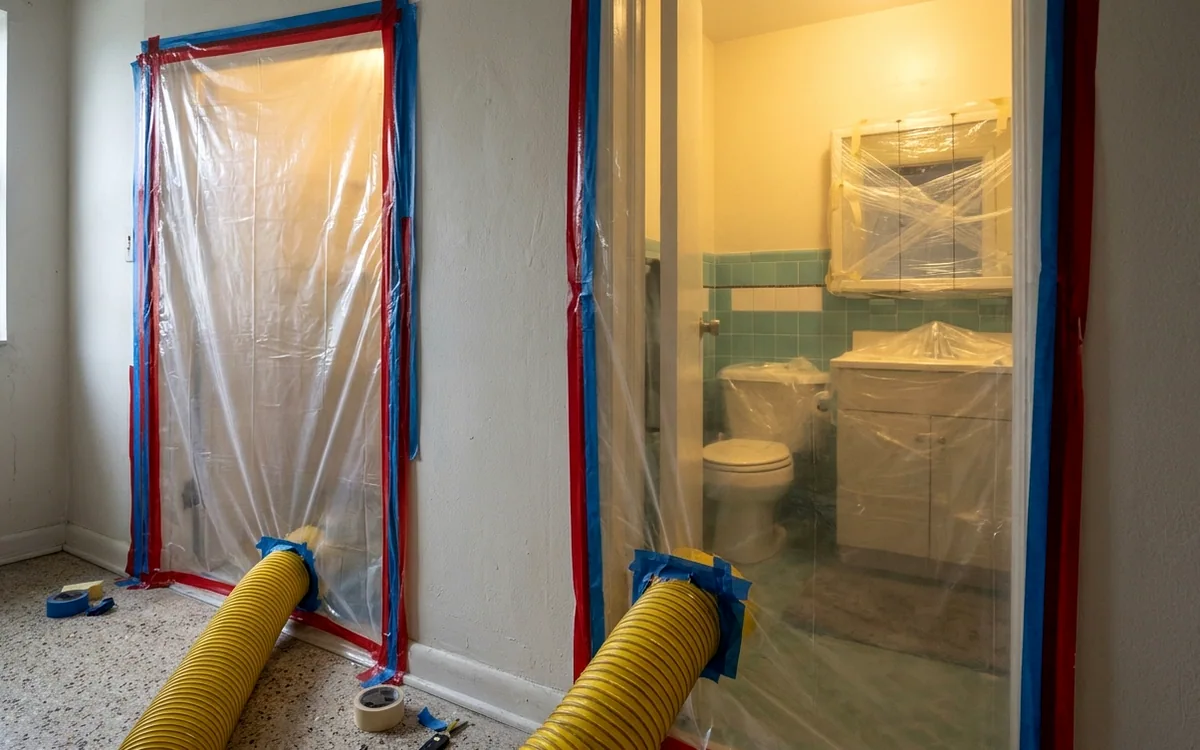
For anything past light surface growth, we close the bathroom off with plastic sheeting and run a filtered air scrubber so spores and dust stay out of the bedroom and hallway. Bathrooms are small, which makes containment simple but means we work in a tight space and protect the vanity and fixtures first.
Moldy drywall, damp backer board and failed caulk are cut out and bagged inside the containment. Studs and framing are HEPA vacuumed and cleaned, then dried before anything new goes back.
Tile, grout and what can stay
Glazed tile itself does not grow mold, but grout and caulk do, and so does the board behind them. If the wall behind the tile reads dry, we can clean the grout, replace the caulk and leave the tile in place.
If the wall is wet, some tile has to come off to reach the source. We take only the section needed and photograph everything so your tile installer or plumber can see exactly what was found.
Keeping steam from starting it again
A bathroom fan that runs for a few minutes and shuts off leaves a lot of moisture behind. Running it for 20 to 30 minutes after a shower, or on a humidity timer, makes a real difference.
We also check where the fan duct ends. A fan that blows into the attic or a ceiling cavity just moves the mold problem upstairs.
Average relative humidity in Miami runs about 82 percent in the morning, so a bathroom here starts the day damp before anyone showers. The EPA recommends keeping indoor humidity below 60 percent, which is hard to do in a small room without a fan that actually vents outside.
When to call about bathroom mold removal
Grout that turns black
Dark lines that return within days of scrubbing suggest moisture sitting behind or beneath the tile.
Peeling paint on ceiling
Bubbled or flaking paint over the shower often has mold growing on the drywall under it.
Loose or hollow tiles
Tiles that move or sound hollow when tapped can mean the setting bed or backer board is wet.
Soft wall beside tub
Drywall that gives under thumb pressure next to the tub or shower has usually been wet for a while.
Damp vanity base
A swollen cabinet floor or musty smell under the sink points to a supply or drain leak.
Stain in next room
A mark on the wall or baseboard behind the shower, in the bedroom or closet, is often the first visible sign.
What happens after you call
Inspect and trace
We take moisture and thermal readings around the shower, toilet and vanity to find where water is getting in.
Set containment
The bathroom is sealed with plastic and kept under filtered negative air during removal.
Remove damaged material
Moldy drywall, wet backer board and failed caulk are cut out and bagged inside the work area.
Clean and dry the cavity
Framing is HEPA vacuumed and cleaned, then dried with air movers and a dehumidifier.
Treat and document
Cleaned surfaces get an antimicrobial treatment, and we hand you photos and readings for the plumber and your records.
What bathroom mold removal usually costs in Miami
Bathroom mold work is priced by how much material has to come out and whether the shower wall needs to be opened. These are typical Miami-area ranges.
| What is priced | Typical range |
|---|---|
| Ceiling or grout surface mold, under 100 sq ft | $530 to $1,380 |
| Wall cavity behind a shower or tub | $1,560 to $4,240 |
| Full bathroom with floor and vanity | $3,470 to $5,860 |
| Priced by area of removed material | $16.20 to $27.90 per sq ft |
Tile removal, a second wall that shares the plumbing, and access in a condo building all move the price. Tile and plumbing repairs are separate, and your final price comes after an on-site look. See every cost range we publish.
Bathroom Mold Removal: common questions
Can I just bleach the black grout myself?
For light surface growth on grout in a small area, cleaning it yourself is reasonable, and the EPA puts the do-it-yourself limit at about 10 square feet. If it comes back quickly or the wall behind feels soft, bleach is not reaching the real problem.
Will you have to remove all my shower tile?
Not usually. We open only the section the moisture readings point to. If the wall behind the tile is dry, the tile can stay and only the grout and caulk are redone.
Does a leaking shower pan cause mold under the floor?
It can. Water from a failed pan often travels along the slab or subfloor and shows up as mold on the baseboard or bottom of the wall outside the shower. We check the floor and adjoining walls for that reason.
Is the bathroom usable during the work?
Not while containment is up, which is usually one to three days for drying and removal. If it is your only bathroom, tell us when you call and we will plan the schedule around it.
Who fixes the shower once the mold is out?
Once the cavity is clean and dry, the wall can be rebuilt. We can handle the drywall, backer board and paint, and the plumbing or tile setting goes to the trade that handles it, with our photos showing what they need to fix.
Often needed on the same job
Black Mold Removal
Dark mold growth on drywall, wood and grout removed under containment.
See the serviceLeak Detection & Moisture Mapping
Thermal imaging and meters to trace hidden water inside walls and floors.
See the serviceWall & Drywall Mold Removal
Mold inside wall cavities and on drywall faces cut out and cleaned.
See the serviceWhole-Home Dehumidifier Installation
Ducted dehumidifiers that hold indoor humidity down in Miami summers.
See the serviceWater where it should not be? Call now.
A person answers every call, day or night. Tell us what got wet and when it started, and we will tell you what happens next.