Flood cuts and wet drywall removal in Miami, FL
Your walls took on water, the drywall feels soft near the floor, and you are wondering whether it can dry where it is or has to come out.
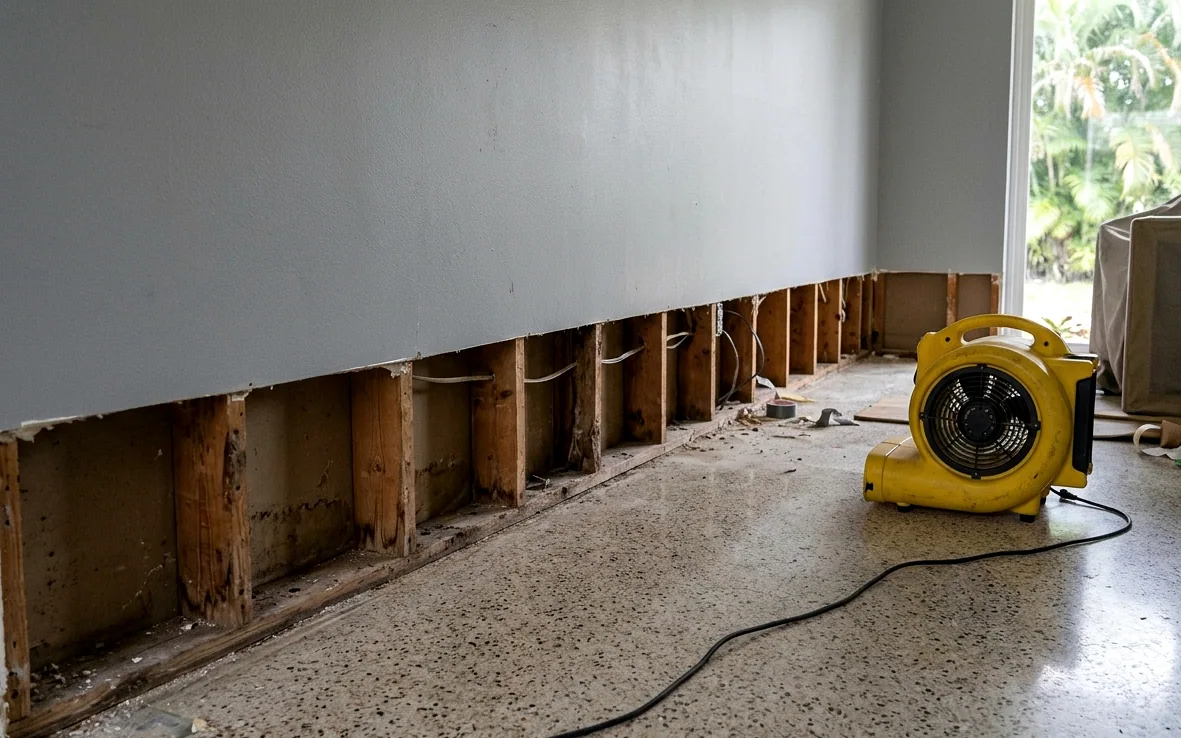
Drywall wicks water upward like a paper towel, and the back side often stays wet long after the face looks fine. A flood cut removes the wet strip at a straight, measured line so air can reach the studs, the insulation and the inside of the wall.
At a glance
- Service
- Flood Cuts & Drywall Removal
- Group
- Drying & Repairs
- Hours
- Phones answered 24/7
- Office
- 1428 Brickell Avenue, Floor 3, Miami
- Covers
- Miami-Dade and Broward
When you call, a project manager asks where the water came from and how long the walls have been wet, then sends a crew. We take moisture readings, mark a cut line above the wet zone, remove the baseboards and drywall, bag the debris and start drying. The EPA advises drying within 24 to 48 hours, so earlier is better.
Why a flood cut is sometimes the faster path to a dry wall
Drywall that sat in clean water for a short time can often be dried in place. Drywall that soaked for days, or sat in gray or black water, usually cannot. The EPA advises discarding swollen wallboard that cannot be dried in place within 48 hours.
Opening the wall also shows you what is behind it. Wet insulation, a corroded fitting or early mold on the back of the paper only shows up once the board comes off. In a home built on a slab, the bottom plate sits right on concrete and stays damp while the cavity stays closed.
How we pick the height of the cut
We read the wall with a pin meter and a non-invasive meter, working up from the floor until the numbers match a dry reference wall. The cut goes above the highest wet reading, usually at 2 or 4 feet, so a standard sheet of drywall patches it cleanly later.
Water category changes the call. With clean water from a supply line we cut only what is wet. With water from a dishwasher, an AC drain or rising floodwater, we cut higher and pull the insulation, because porous materials that held contaminated water are not worth saving.
- 2-foot cuts for shallow, clean water losses
- 4-foot cuts when water wicked higher or insulation is soaked
- Full-height removal when ceiling water ran down the cavity
What comes out and what stays
Baseboards come off first, and we number them if they can be dried and reused. Then the drywall below the line comes out, along with wet insulation and any wet tack strip at the wall edge. Studs, the bottom plate and the concrete stay and get dried.
Cabinets are judged one at a time. A vanity base that is swollen at the toe kick usually goes, while a solid wood cabinet may only need its kick plate pulled so air can get under it. We photograph each item before it leaves the room for your claim file.
Keeping the dust and debris contained
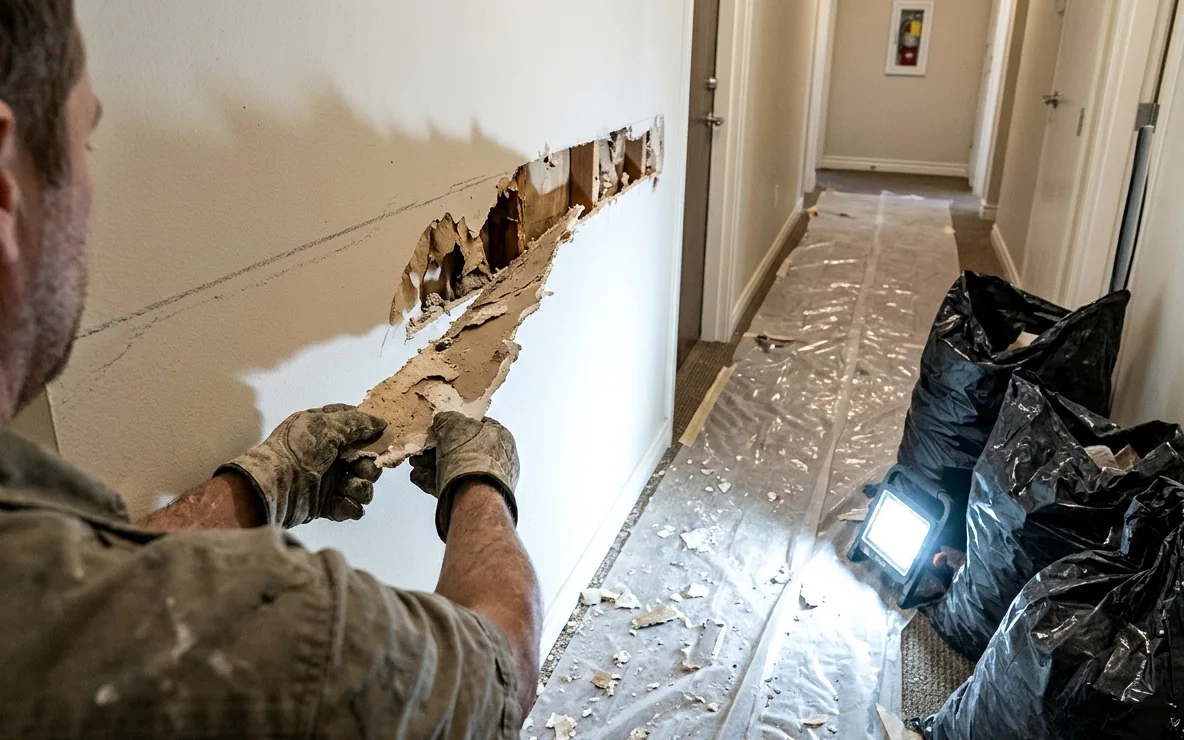
Cutting wet drywall is messy, so we lay floor protection along the path to the door and cover the vents in the work area. In a condo, debris stays in sealed bags and leaves by the service elevator and route the building manager asks for.
When the water was Category 3, the crew wears protective gear and cut materials are bagged right at the wall. Surfaces inside the open cavity are cleaned before drying starts, so contamination is not dried into the studs.
Drying the open wall and getting it ready for repair
Once the wall is open, air movers aim into the cavity and dehumidifiers pull moisture out of the room air. We take readings each day and log them, and the equipment stays until the studs and plate reach the dry reference we set at the start.
When the readings say dry, the wall is ready for new drywall, tape, texture and paint. We can move straight into that rebuild, or you can bring in your own trades with a clean, documented, dry wall.
Florida homes are usually built on concrete slabs because of the high water table and porous limestone ground, so the bottom plate of a wall sits right on concrete that holds moisture. With dew points in the 70s almost every day of the wet season, an open wall in Miami needs dehumidifiers running, not just fans.
When to call about flood cuts & drywall removal
Soft drywall at the base
The wall gives a little when you press near the floor, or the paper face has started to bubble or peel.
Swollen baseboards
MDF baseboard swells and splits at the joints once it soaks up water, a sign the drywall behind it is wet too.
Stain line on the wall
A tan or gray tide mark a few inches up the wall shows how high the water wicked before it stopped.
Musty smell at one wall
Odor that stays in one corner after the floor dried usually points to wet insulation or a wet plate inside the cavity.
The water was dirty
Floodwater, a toilet overflow or a dishwasher backup soaked the wall, so the porous material it touched should come out.
Wet for over two days
The wall has been damp for more than 48 hours and fans alone have not moved the readings.
What happens after you call
Call and triage
We ask about the source, the type of water and how long things have been wet, then send a crew.
Read and mark the wall
Meters map the wet zone and we mark a level cut line above the highest wet reading.
Remove trim and drywall
Baseboards come off, the drywall is scored and cut along the line, and wet insulation is pulled.
Bag and clean
Debris is bagged and carried out, and the open cavity is cleaned, with antimicrobial treatment where the water called for it.
Dry and log
Air movers and dehumidifiers run until daily readings show the studs and plate are dry.
Hand off for repair
You get photos and moisture logs, and the wall is ready for new drywall and finish.
What flood cuts & drywall removal usually costs in Miami
These are typical Miami-area ranges for the work around a flood cut. Most flood cuts are priced as part of the wider water job rather than on their own.
| What is priced | Typical range |
|---|---|
| Extraction and drying with flood cuts, clean water, per sq ft | $4.15 to $5.85 |
| Extraction and drying with flood cuts, gray water, per sq ft | $6.15 to $8.85 |
| Restoration labor for cutting and removal, per hour | $72 to $193 |
| Air movers aimed into open walls, per unit per day | $23 to $34 |
Price moves with the cut height, the length of wall, the water category and how many days the drying takes. You get a final price after we look at the walls in person. See every cost range we publish.
Flood Cuts & Drywall Removal: common questions
How high will you cut my drywall?
We cut above the highest wet reading on the meter, then round up to 2 or 4 feet so a standard sheet patches it cleanly. If water came down from a ceiling, the wet zone can run full height, and then the cut does too.
Can my baseboards be saved after a flood cut?
Solid wood baseboards that only got damp often dry and go back up, so we number them as they come off. MDF baseboards that swelled or split rarely recover and are replaced during the repair.
Do you have to remove the insulation inside the wall?
Wet insulation holds water against the studs and dries very slowly, so it comes out below the cut line. The EPA advises discarding wet insulation that cannot be dried within 48 hours. New insulation goes in once the cavity reads dry.
Can I stay in the house while the walls are open?
Most people stay home during drying after a clean water loss. The equipment makes steady noise and warm air, and the cut rooms are dusty for a day. After a sewage or floodwater loss, we talk through which rooms to keep closed until cleaning is done.
Is a flood cut needed if the water was clean and we caught it fast?
Not always. If the drywall reads wet only near the floor and the leak was caught within a few hours, we may be able to dry the wall in place by drilling small holes behind the baseboard and pushing air into the cavity. The readings decide.
Often needed on the same job
Water Damage Repair
Drywall, baseboards, paint and trim put back once the structure is dry.
See the serviceStructural Drying & Dehumidification
Air movers and dehumidifiers set up, logged daily and pulled once dry.
See the serviceFlood Damage Cleanup
Rising water and street flooding cleaned out, with flood cuts where needed.
See the serviceAntimicrobial Treatment
Treatment of cleaned surfaces after water damage to slow regrowth.
See the serviceWater where it should not be? Call now.
A person answers every call, day or night. Tell us what got wet and when it started, and we will tell you what happens next.