Flood damage cleanup in Miami after rising and street water
Flood water came in from the street or yard, it left mud and a waterline on your walls, and now you are not sure what has to be thrown out and what can be cleaned.
Flood water is a different job from a burst pipe. It is treated as contaminated from the start, so cleanup means removing more material, cleaning every surface it touched and drying the structure before anything is rebuilt.
At a glance
- Service
- Flood Damage Cleanup
- Group
- Water Damage & Flooding
- Hours
- Phones answered 24/7
- Office
- 1428 Brickell Avenue, Floor 3, Miami
- Covers
- Miami-Dade and Broward
When you call (786) 947-0034, we ask how high the water rose, whether it is still coming in and what floors and walls it touched. Once it is safe to enter, a crew pumps out the remaining water, removes wet porous materials, cleans and dries. Start within 24 to 48 hours, the window the EPA gives for drying before mold growth.
Why flood water is handled as Category 3
Under the IICRC S500 standard, rising water from rivers, streams or the street is Category 3, the most contaminated level. It can carry sewage, soil, fuel and lawn chemicals, so anything porous it soaked through is generally treated as unsalvageable.
That changes what we keep. Carpet, pad, upholstered furniture, mattresses and the bottom of the drywall come out. Hard surfaces such as tile, terrazzo, sealed concrete, metal and solid wood can usually be cleaned, disinfected and dried.
Flood cuts and what they are for
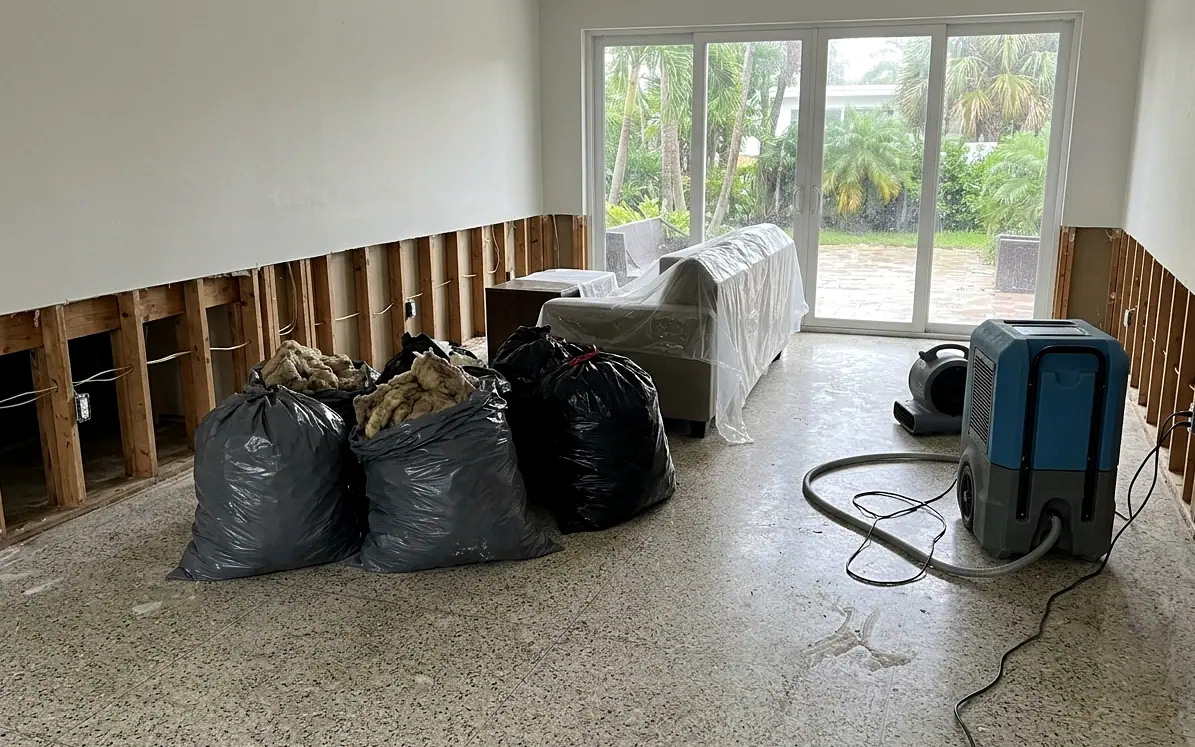
A flood cut is a straight cut through the drywall above the highest wet point, usually somewhere between one and four feet off the floor. Removing that strip takes out the contaminated board and the wet insulation behind it, and opens the wall cavity so air can reach the studs and the back of the outer wall.
We measure before we cut, so the line sits above the wicking and not just above the visible waterline. A level line also makes the repair cleaner, because new drywall goes in as one even strip around the room.
- Cut height set by meter readings, not the waterline alone
- Wet insulation bagged and removed
- Baseboards and door casings pulled where water reached
- Cabinet toe kicks and bottom panels opened
- Studs and slab cleaned before drying starts
Cleaning out mud and silt
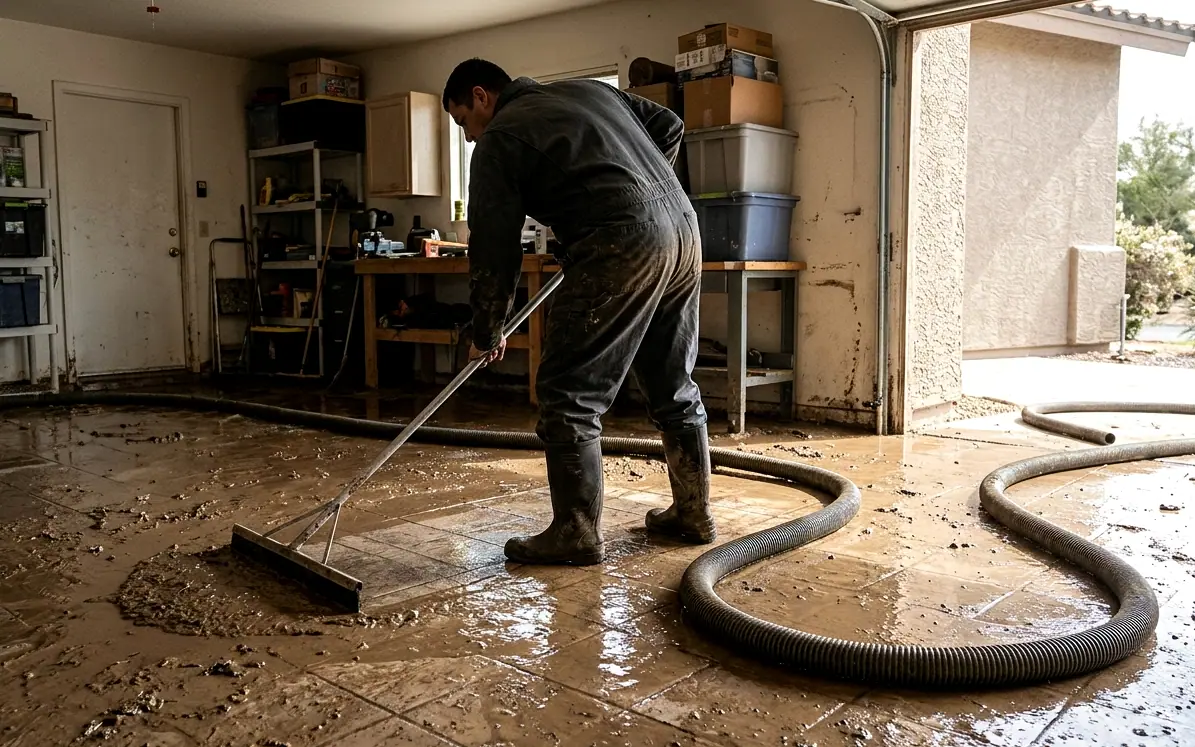
Flood water leaves a layer of fine silt on floors, inside wall cavities and under cabinets. We shovel and squeegee the bulk out, then wash the hard surfaces and apply an antimicrobial to the cleaned materials before drying equipment is set.
Cleaning comes before drying for a reason. Drying a dirty surface bakes the contamination into it, and blowing air across silt spreads it through the house.
Drying a slab home after a flood
Florida homes are usually built on concrete slabs, and flood water soaks into that concrete. A slab holds water tightly and releases it slowly, so it often needs dehumidifiers running for several days after the walls feel dry.
We keep the house closed while drying. Opening windows in a Miami summer lets in humid air that slows the process, so dehumidifiers do the work while air movers keep air flowing across the wall cavities and floor.
Flood insurance and your paperwork
FEMA notes that most standard homeowners policies do not cover flood damage, and flood coverage is bought separately, often through the NFIP. NFIP residential policies cover up to $250,000 for the building and up to $100,000 for contents.
We take photos before anything is removed, measure the waterline and keep daily moisture logs. Hold on to a sample of carpet and pad if your adjuster has not seen them yet, and keep a list of the items that went out to the curb.
Miami-Dade sits close to sea level with groundwater just below the surface, and king tides overfill canals so rain has less room to drain. FEMA's revised maps place about 252,015 county structures in the special flood hazard area. During the June 2024 flood event, preliminary totals reached 21.66 inches in Miami Shores.
When to call about flood damage cleanup
A waterline on the walls
A visible line on drywall or baseboards shows how high the water rose, and the board above it is often wet too.
Mud or silt on floors
A gritty film left behind means the water carried soil and outside contamination into the house.
Water came in under doors
Water that entered at a threshold during heavy rain or a king tide is treated as outside water, even if it looked clear.
Wet ground-floor unit
Lower units and garages in low-lying blocks often take on water when streets flood.
Swollen cabinets and doors
Particleboard cabinet bases and hollow doors swell quickly after sitting in flood water.
Sewer smell after a flood
A sewage odor after heavy rain can mean drains backed up while the streets were full.
What happens after you call
Safe entry check
We confirm the water has stopped rising and check electrical risk before the crew works inside.
Pump and extract
Remaining water is pumped out, then extractors bring the floor down to damp.
Remove porous materials
Carpet, pad, wet drywall, insulation and swollen baseboards are cut out and bagged.
Clean and treat
Silt is removed, hard surfaces are washed, and an antimicrobial goes on cleaned materials.
Dry the structure
Air movers and dehumidifiers run with daily readings until the slab and studs reach dry targets.
Document and rebuild
Photos and logs go to you and your adjuster, and repairs start once the structure is dry.
What flood damage cleanup usually costs in Miami
These are typical Miami-area ranges for flood cleanup. Flood work costs more per square foot than clean-water jobs because more material comes out and every surface is cleaned.
| What is priced | Typical range |
|---|---|
| Black-water extraction and drying, per sq ft | $9.25 to $11.70 per sq ft |
| Category 3 restoration, smaller areas, per sq ft | $7.05 to $7.45 per sq ft |
| Ground-floor condo unit, flood cuts and drying | $3,180 to $6,240 |
| Single-family home, several rooms with flood cuts | $6,370 to $15,820 |
Water height, square footage, how long the water sat and how much drywall and flooring has to come out all move the price. The final price comes after an on-site look. See every cost range we publish.
Flood Damage Cleanup: common questions
How high do you cut the drywall after a flood?
We cut above the highest wet reading on the meter, which is often higher than the visible waterline because drywall wicks water upward. On most residential floods that lands between one and four feet off the floor.
Can my terrazzo floor be saved after flood water?
Usually, yes. Terrazzo is a hard, dense surface that can be cleaned, disinfected and dried. The slab underneath still needs time to dry, so we check readings before any new floor covering goes over it.
Does homeowners insurance pay for flood cleanup?
FEMA says most standard homeowners policies do not cover flood damage, so it usually falls to a separate flood policy. Keep photos, the waterline measurement and a list of removed items for your flood adjuster.
Is it safe to clean up flood water myself?
Flood water is treated as Category 3 and can carry sewage and chemicals. If you must handle it before we arrive, wear rubber boots and gloves, keep children and pets away, and do not touch anything near electrical outlets.
What happens to furniture that sat in flood water?
Upholstered furniture and mattresses soaked by flood water are generally discarded. Solid wood, metal and plastic pieces can often be cleaned and dried. We photograph everything before it goes so your claim has a record.
Often needed on the same job
Storm & Hurricane Water Damage
Wind-driven rain, surge and roof breaches after tropical weather.
See the serviceFlood Cuts & Drywall Removal
Wet drywall and baseboards cut out at a clean line so walls can dry.
See the serviceSewage Backup Cleanup
Category 3 water removed, porous materials cut out, surfaces disinfected.
See the serviceInsurance Claim Documentation
Photos, moisture logs and scope notes organized for your adjuster.
See the serviceWater where it should not be? Call now.
A person answers every call, day or night. Tell us what got wet and when it started, and we will tell you what happens next.