Sewage backup cleanup in Miami homes and condo units
Sewage came up through a toilet, tub or floor drain, the smell is filling the house, and you need it gone safely without spreading it into the rest of the rooms.
Sewage is the most contaminated water a home can take on. Cleanup means keeping it contained, removing what it soaked, cleaning and disinfecting every hard surface it touched, and drying the structure before anything is rebuilt.
At a glance
- Service
- Sewage Backup Cleanup
- Group
- Water Damage & Flooding
- Hours
- Phones answered 24/7
- Office
- 1428 Brickell Avenue, Floor 3, Miami
- Covers
- Miami-Dade and Broward
Call (786) 947-0034 and tell us where the sewage came up, how far it spread and whether the drain is still backing up. Stop using water in the home until the line is cleared. A crew contains the area, removes the waste and soaked materials, cleans and disinfects, then dries. Start the same day if you can.
Why sewage is handled differently
The IICRC S500 standard places sewage and toilet backflow from beyond the trap in Category 3, water that is grossly unsanitary and can carry pathogens. Anything porous that sewage soaked, such as carpet, pad, drywall and insulation, is generally removed rather than cleaned.
Even a gray-water overflow can become Category 3 if it is left too long. Water from a toilet with urine but no feces starts as Category 2, but left untreated for more than about 48 hours it can degrade to Category 3.
Containing the area first
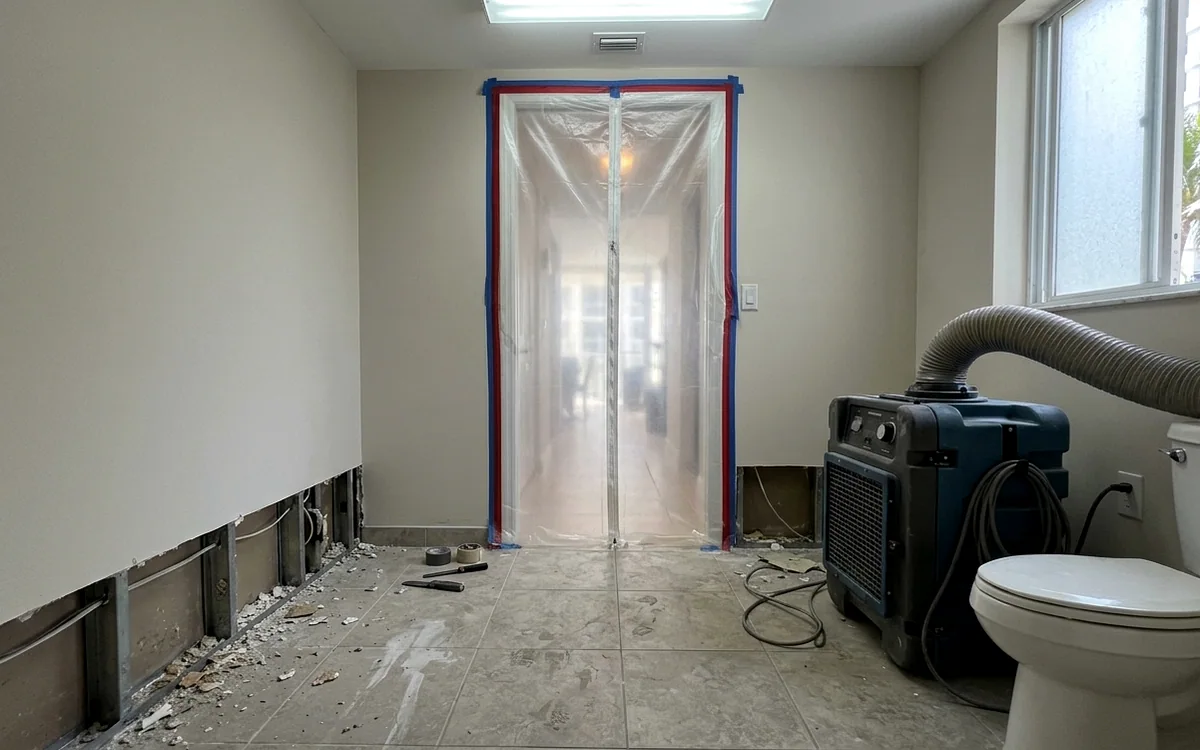
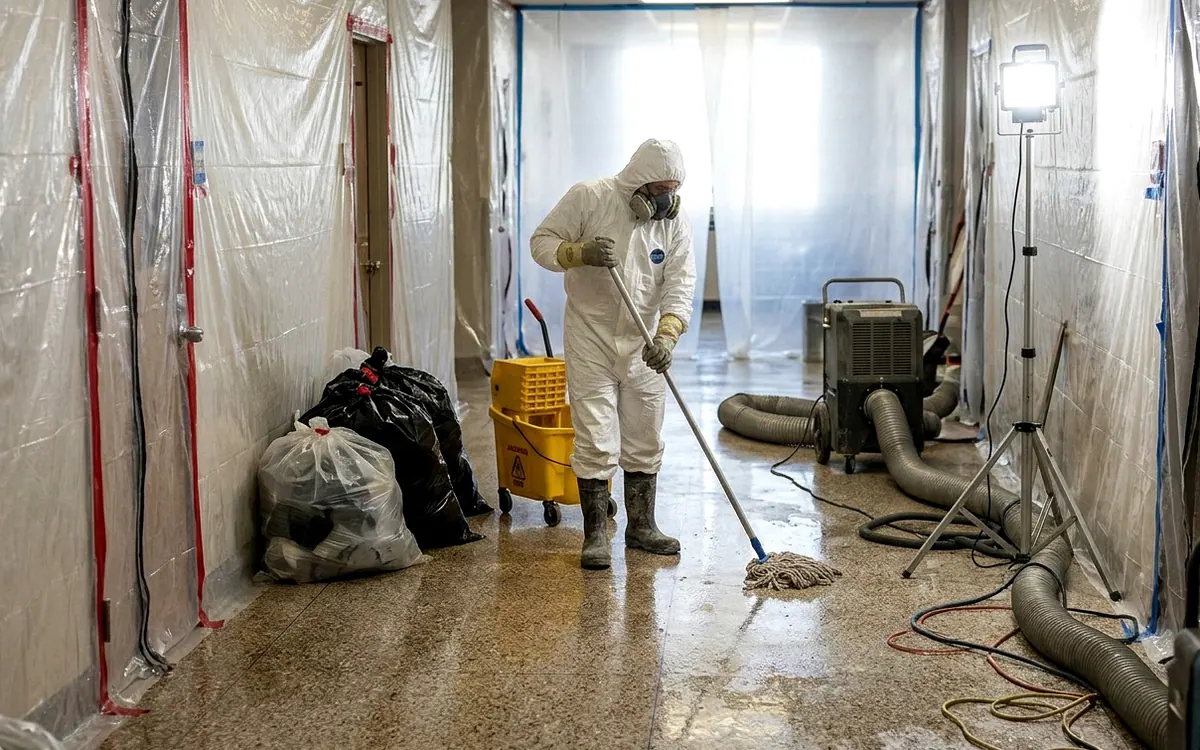
Before anything is removed, we close off the affected rooms with plastic sheeting and set up a clean path in and out. That keeps contaminated debris from being tracked through hallways and keeps air from the work area away from the rest of the home.
Crew members wear protective suits, gloves, boots and respirators, and they change out of them at the edge of the work area. Bagged debris goes straight out of the house rather than through living spaces.
- Plastic sheeting around the affected rooms
- Air scrubbers to filter the air in the work area
- Protective gear removed at the containment edge
- Debris bagged and carried out on a set path
- Children and pets kept out until cleaning is done
What gets removed and what gets cleaned
Carpet, pad, upholstered items, mattresses and the bottom of any drywall the sewage reached come out. We cut the drywall above the highest wet point and remove insulation from the wall cavity behind it.
Tile, sealed concrete, terrazzo, metal and many solid wood pieces can be saved. Those surfaces are scrubbed, rinsed and disinfected, and the slab and wall framing are cleaned before drying equipment goes in.
The line still has to be fixed
A backup means something downstream is blocked or broken, often a main line clog, root intrusion or a collapsed pipe. Cleanup removes the damage, but the line has to be cleared by a plumber or the backup will come right back.
In the meantime, avoid flushing, running the dishwasher or doing laundry. In a condo, a backup in a lower unit may come from a shared stack, so we work with building management on where the line runs and who handles the repair.
Drying and the final check
Once the area is clean, air movers and dehumidifiers dry the slab, framing and any remaining wall surfaces. We take readings daily and keep containment up until the room reaches its dry targets.
Before containment comes down, the room is cleaned again and checked for any remaining debris or odor. Rebuilding starts only after the structure is dry and the drain line has been repaired.
Miami-Dade sits close to sea level with groundwater just below the surface, and king tides overfill canals so rain has less room to drain. During heavy rain events, drain lines can be overloaded at the same time, which is when backups through floor drains and low toilets tend to happen.
When to call about sewage backup cleanup
Toilet water rising
Water coming up in a toilet when another fixture drains is a sign the main line is blocked.
Floor drain overflowing
Laundry room and shower floor drains are often the first place a sewer backup shows up.
Gurgling drains
Bubbling or gurgling in the tub or sink when the toilet flushes points to a line that is partly blocked.
Sewer smell in the house
A strong sewer odor can mean waste has backed up somewhere you cannot see, such as under a cabinet.
Brown water in the tub
Dirty water in a tub or shower that you did not use is sewage coming back up the line.
Backup after heavy rain
Drains can back up when streets and lines are overloaded during a downpour.
What happens after you call
Stop using water
We ask you to hold off on flushing, laundry and dishes until the line is cleared.
Contain the area
Plastic sheeting and air scrubbers keep contamination inside the affected rooms.
Remove waste and water
Sewage and water are pumped and extracted, and solids are bagged and removed.
Cut out porous materials
Carpet, pad, drywall and insulation the sewage reached are removed and carried out.
Clean and disinfect
Hard surfaces, the slab and framing are scrubbed, rinsed and disinfected.
Dry and check
Drying equipment runs with daily readings, then the room is checked before containment comes down.
What sewage backup cleanup usually costs in Miami
These are typical Miami-area ranges for sewage backup cleanup. Sewage work costs more than clean-water jobs because of containment, protective gear, removal and disinfection.
| What is priced | Typical range |
|---|---|
| Sewage cleanup, per sq ft | $7.35 to $14.60 per sq ft |
| Single bathroom backup, contained and cleaned | $2,140 to $4,380 |
| Bathroom plus hallway or bedroom, flood cuts | $4,270 to $8,930 |
| Large backup across several rooms | $8,840 to $14,760 |
How far the sewage spread, how long it sat, how much drywall and flooring must come out, and access in a condo building all move the price. The final price comes after an on-site look. See every cost range we publish.
Sewage Backup Cleanup: common questions
Is a toilet overflow the same as a sewage backup?
Not always. Water from a toilet bowl with urine but no feces starts as Category 2, while backflow from beyond the trap is Category 3. Category 2 water left for more than about 48 hours can degrade to Category 3, so speed still matters.
Can I keep my tile floor after a sewage backup?
Usually, yes. Tile and grout can be scrubbed and disinfected, and the slab under them dried. Tile comes up only if it is loose or hollow and sewage got underneath it.
Do I need to leave my home during sewage cleanup?
If the backup is contained to one bathroom and you have another working toilet, many families stay. Children, older relatives and anyone with a weakened immune system should keep away from the work area until cleaning is finished.
What if the sewage came from the unit above me?
In a condo, a backup can come from a shared stack or a neighbor's line. We clean up your unit and work with building management on finding the source, and the association and unit owners then sort out who repairs the line.
Will the sewer smell go away after cleanup?
Yes, once the soaked materials are removed and the surfaces are cleaned and dried. A smell that lingers usually means a wet spot was missed or the line is still leaking, so we recheck before closing out the job.
Often needed on the same job
Flood Damage Cleanup
Rising water and street flooding cleaned out, with flood cuts where needed.
See the serviceFlood Cuts & Drywall Removal
Wet drywall and baseboards cut out at a clean line so walls can dry.
See the serviceAntimicrobial Treatment
Treatment of cleaned surfaces after water damage to slow regrowth.
See the serviceMusty Odor Removal
Damp and musty smells traced to the source and removed, not masked.
See the serviceWater where it should not be? Call now.
A person answers every call, day or night. Tell us what got wet and when it started, and we will tell you what happens next.