Hardwood floor drying and cupping repair in Miami
Your wood floor got wet from a leak or overflow, and the boards are starting to cup, crown or gap, and you want to know if they can be saved.
Wood floors absorb water slowly and give it up slowly, which puts them in the hardest drying class. Many can be saved if drying starts early and runs long enough, using equipment made for wood rather than just room fans.
At a glance
- Service
- Hardwood Floor Drying
- Group
- Drying & Repairs
- Hours
- Phones answered 24/7
- Office
- 1428 Brickell Avenue, Floor 3, Miami
- Covers
- Miami-Dade and Broward
Call as soon as the boards get wet. We extract the surface water, measure moisture in the wood and the slab or subfloor under it, and set floor drying mats over the wet area. Daily readings track progress. Starting within 24 to 48 hours gives the floor the best chance, and sanding or replacing boards waits until the wood is fully dry.
Cupping, crowning and buckling
Cupping is when board edges rise higher than the middle. It happens because the bottom of the board is wetter than the top. Crowning is the opposite, and it usually comes from sanding a floor before it was fully dry.
Buckling is the worst case, where boards lift off the floor entirely. Some cupping goes back down as the wood dries, but buckled boards usually need replacing.
How floor drying mats work
Drying mats sit flat on the floor and are sealed at the edges. A high-pressure blower pulls air through them, drawing moisture up and out of the wood and the material beneath.
The mats are paired with a dehumidifier so the water pulled from the floor leaves the room. On some floors we also use air movers across the surface to help the top layer dry evenly.
What decides if a floor is saved
Not every wood floor comes back, and we tell you honestly what the readings and the boards show.
- Water category: clean water floors are far more likely to be saved
- Time wet: floors dried within a day or two do much better
- Floor type: solid wood often recovers better than thin engineered layers
- Installation: floors glued to concrete dry differently than floors over plywood
- Damage level: cracked, delaminated or buckled boards are replaced
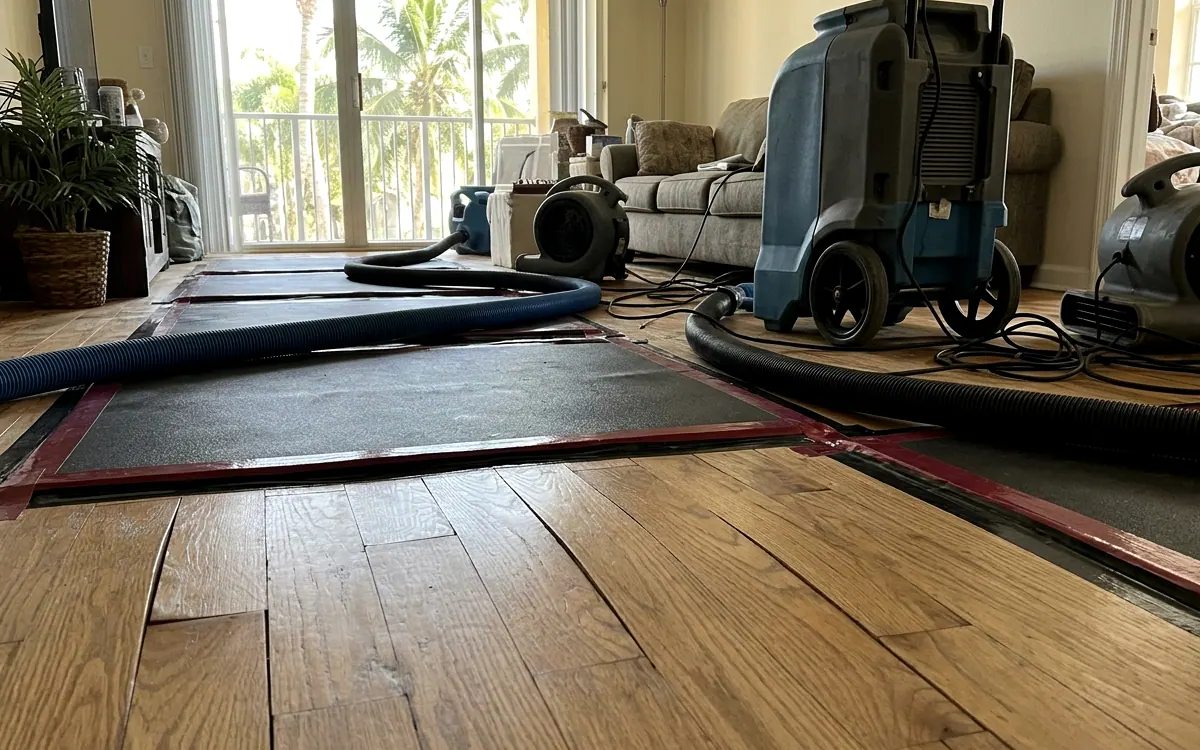
Wood floors on concrete slabs
Most Miami homes are built on slabs, so wood floors here are often glued down or floated over concrete. The slab can hold water long after the boards look dry.
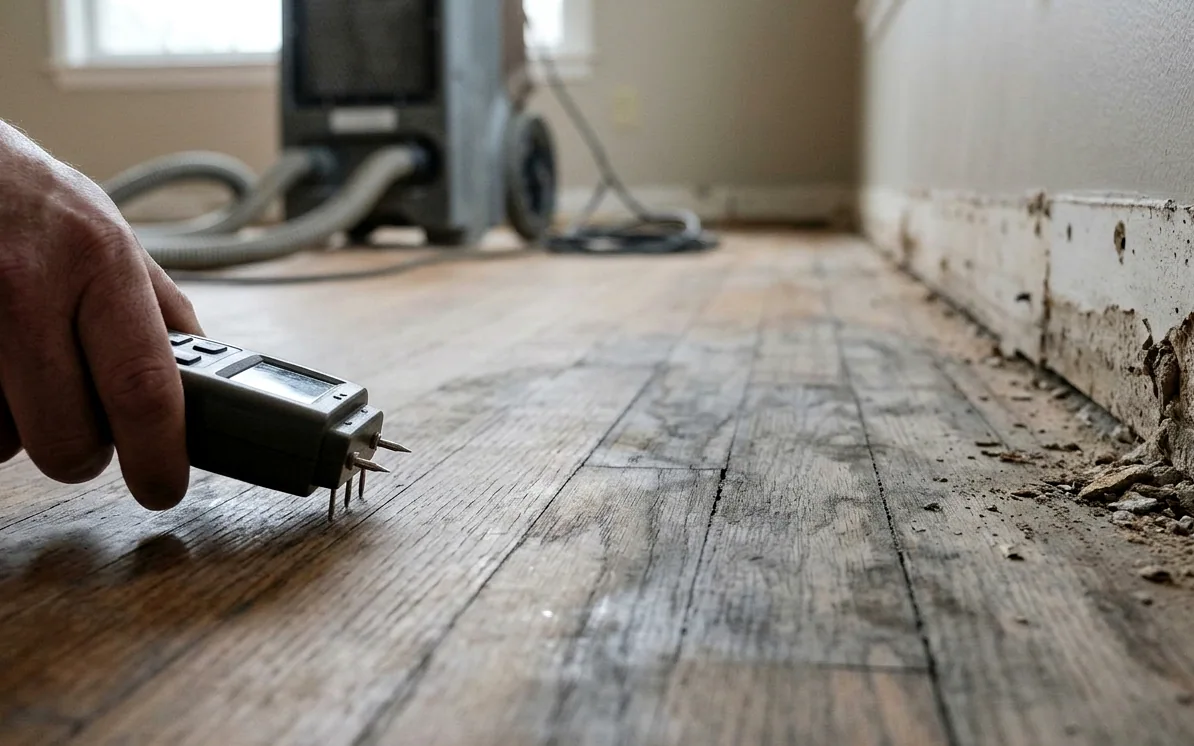
We read moisture in both the wood and the concrete. If the slab is still wet, the floor will keep cupping, so drying continues until both are back to normal levels.
Refinishing after drying
Once the wood and the slab are dry, mild cupping often settles flat or nearly flat. A flooring contractor can then sand and refinish the floor if needed.
Sanding too early is a common mistake. It flattens the raised edges while they are still swollen, and when they dry the boards crown in the other direction.
If some boards cannot be saved, a flooring contractor can often weave in matching pieces rather than replacing the whole room. Keeping any leftover boxes from the original install makes that match much easier.
Florida homes sit on concrete slabs because of the high water table and porous limestone, so many Miami wood floors are glued directly to concrete that can hold moisture for a long time. With dew points in the 70s almost daily in the wet season, wood here needs dedicated drying rather than open windows.
When to call about hardwood floor drying
Raised board edges
Edges that rise above the center of each board are the first sign of cupping.
Dark stains along seams
Gray or black lines between boards show where water sat in the joints.
Gaps opening up
New gaps between boards can appear as the floor dries unevenly after a leak.
Soft or spongy spots
Floor areas that give underfoot may have wet subfloor or loose glue beneath.
Finish turning cloudy
A white or cloudy look in the finish means water has gotten into the coating.
Boards lifting at walls
Floor rising near baseboards can mean swelling has run out of room to expand.
What happens after you call
Extract surface water
Water sitting on and between the boards is pulled up right away.
Measure wood and slab
We take readings in the boards, the subfloor or slab, and a dry area for comparison.
Remove baseboards
Trim comes off so air reaches the floor edges and the base of the wall.
Lay drying mats
Floor drying mats are sealed over the wet zone and connected to a blower.
Run and record
The mats, dehumidifier and air movers run while we log readings every day.
Assess for refinishing
Once dry, we review the floor with you and a flooring contractor sands, repairs or replaces boards as needed.
What hardwood floor drying usually costs in Miami
Hardwood drying takes more days and more specialized equipment than most floors. These are typical Miami-area ranges for the drying side of the job.
| What is priced | Typical range |
|---|---|
| Water extraction and drying, clean water, per sq ft | $3.90 to $5.65 per sq ft |
| Desiccant dehumidifier, per day | $158 to $243 |
| Air mover, per unit per day | $24.50 to $33.90 |
| Typical hardwood floor drying job, one to two rooms | $1,190 to $2,870 |
Price depends on floor area, wood type, whether it is glued to concrete and how many days the floor takes to dry. The final price is set after an on-site look. See every cost range we publish.
Hardwood Floor Drying: common questions
Will cupped hardwood flatten on its own?
Mild cupping often flattens as the wood and the floor below dry out. If the floor still cups after drying, sanding or board replacement may be needed.
Can engineered wood floors be dried like solid wood?
Sometimes. Engineered floors with a thick wear layer often dry well. Thinner products can delaminate when wet, and then the layers separate and boards are replaced.
Why does wood floor drying take longer than drywall?
Wood holds water tightly and releases it slowly, so it is in the specialty drying class. Drying too fast with heat can crack the boards, so the process is steady rather than rushed.
When should I call the flooring contractor?
After our final readings show the wood and the slab are dry. Sanding or installing boards before then often leads to crowning or new cupping a few weeks later.
Can you dry only part of the floor?
Yes. Drying mats go over the wet zone with some overlap into dry areas. Readings across the rest of the room confirm the water did not spread further.
Often needed on the same job
Structural Drying & Dehumidification
Air movers and dehumidifiers set up, logged daily and pulled once dry.
See the serviceSlab Leak Water Damage
Leaks under the slab that lift tile and wet flooring from below.
See the serviceWater Damage Repair
Drywall, baseboards, paint and trim put back once the structure is dry.
See the serviceLeak Detection & Moisture Mapping
Thermal imaging and meters to trace hidden water inside walls and floors.
See the serviceWater where it should not be? Call now.
A person answers every call, day or night. Tell us what got wet and when it started, and we will tell you what happens next.