Emergency water extraction in Miami, any hour of the night
There is standing water across your floor right now, it is creeping under doors and cabinets, and every hour it sits means more of the house soaks it up.
Extraction is the first and most important hour of any water job. Pulling the bulk water out mechanically removes far more moisture than fans ever will, and it shortens every step that comes after.
At a glance
- Service
- Emergency Water Extraction
- Group
- Water Damage & Flooding
- Hours
- Phones answered 24/7
- Office
- 1428 Brickell Avenue, Floor 3, Miami
- Covers
- Miami-Dade and Broward
Call (786) 947-0034 and tell us how deep the water is, what floor it is on and where it came from. A crew comes with portable extractors, and a truck-mounted unit when the job and access allow it. The goal is to get water off the floor the same day, because the EPA advises drying within 24 to 48 hours.
Why extraction comes before anything else
Liquid water is the easy part to remove and the most damaging part to leave behind. An extractor lifts water out of carpet, pad and grout lines in minutes. Fans and dehumidifiers left to do that same work would take days, and the drywall and cabinets would keep wicking water up the whole time.
Good extraction also makes the drying plan smaller. Less water left in the room means fewer air movers, fewer days of equipment rental and a better chance that carpet, cabinets and baseboards can be saved.
Truck-mounted and portable units
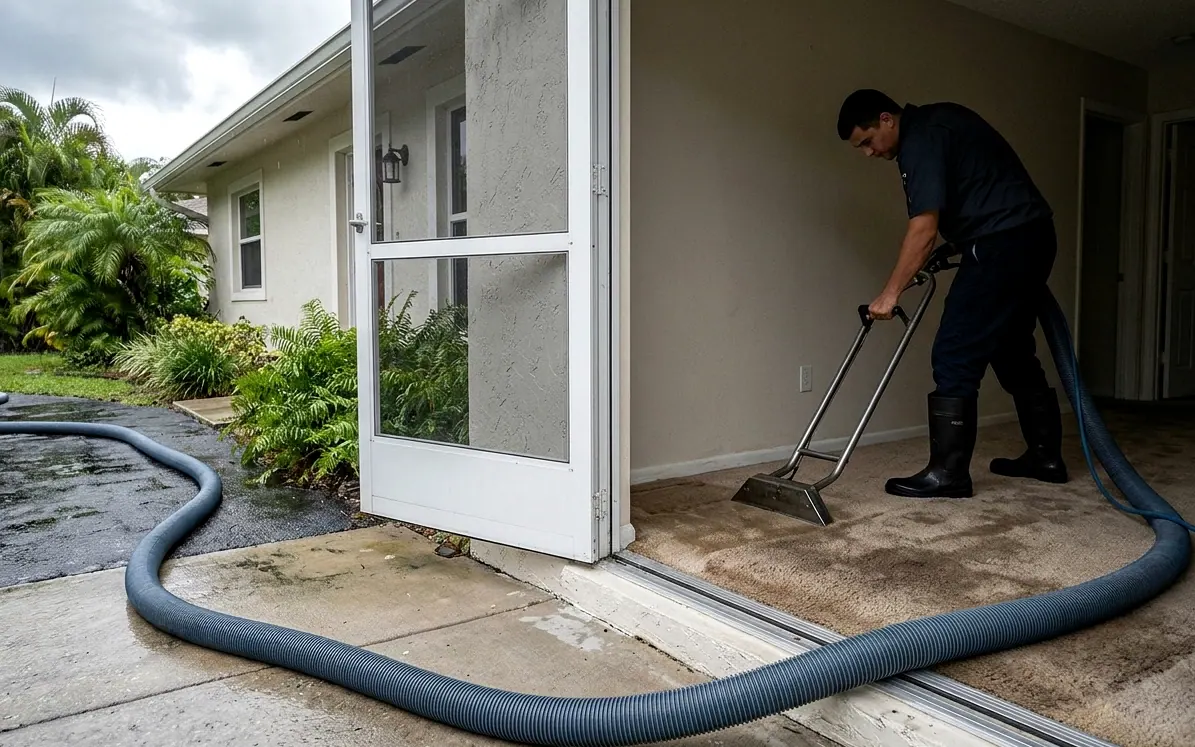
A truck-mounted extractor has strong suction and a large holding tank, which makes it the right tool for a single-family home with several rooms of wet carpet. The hoses run from the truck through a door, so the noise and exhaust stay outside.
In a high-rise unit, the truck usually cannot get close enough, so we bring portable extractors up in the service elevator. They are smaller but built for the same job, and they let us work a condo on the 30th floor the same way we work a ground floor ranch home.
- Truck-mounted units for large, ground-level losses
- Portable extractors for condos and tight access
- Weighted extraction tools that squeeze water out of carpet pad
- Submersible pumps when water is deeper than a few inches
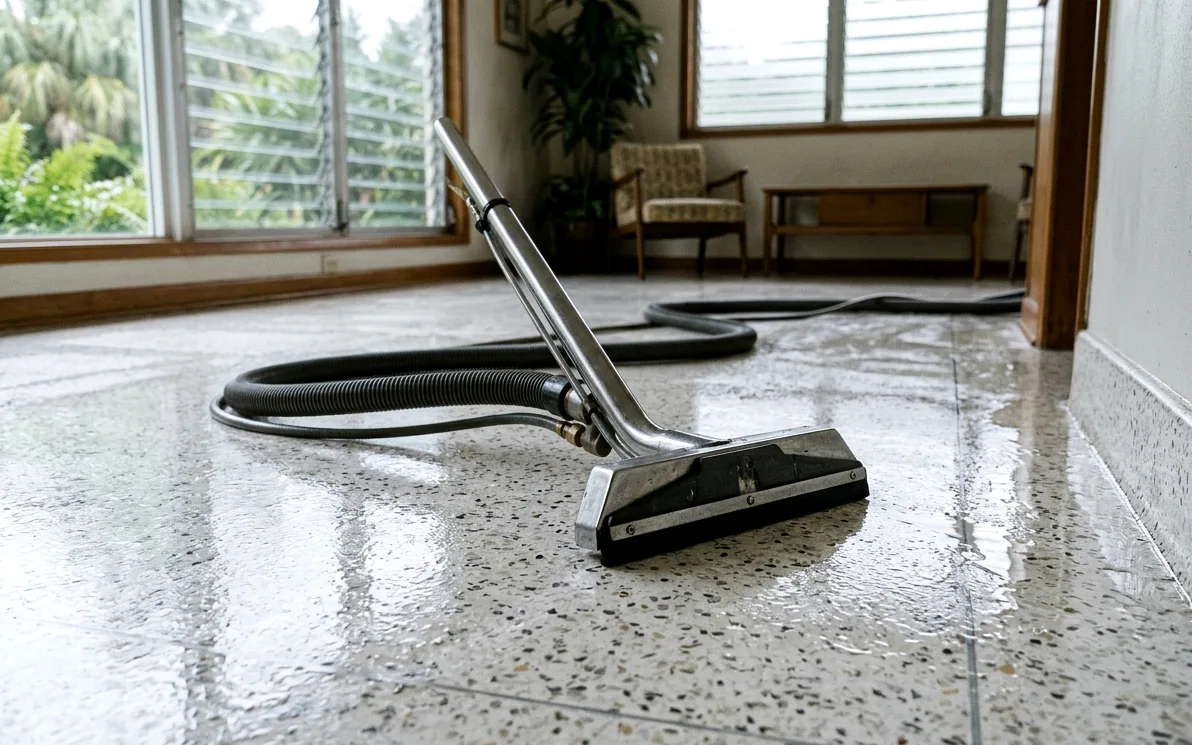
- Squeegee wands for tile, terrazzo and sealed concrete
Getting water out of carpet, tile and terrazzo
Each floor type gives up water differently. Carpet and pad act like a sponge, so we use weighted tools that press down and pull water out at the same time. Pad soaked by clean water can sometimes stay, but pad soaked by gray or black water comes out.
Tile and terrazzo look dry quickly, but water sits in grout lines, under loose tiles and along the edges of the room. Terrazzo was common in mid-century Florida homes and is often found under old carpet, and it holds up well when extracted and dried promptly.
What you can do while we are on the way
Shut off the water at the fixture valve or the main if you can reach it safely. If water is near outlets or power strips, stay out of that area and switch off the breaker if the panel is in a dry spot.
Move small furniture, rugs and anything on the floor to a dry room. Put foil or plastic under the legs of heavy furniture you cannot move, and take photos of the water before anything is cleaned up, because those photos help later with an insurance claim.
What happens right after extraction
Once the floor is clear, we read the room with moisture meters and a thermal camera to see where water traveled under walls and cabinets. That map decides where air movers and dehumidifiers go and whether any baseboard or drywall needs to come off.
Extraction alone does not finish the job. The slab, wall bottoms and cabinet bases still hold water after the floor looks dry, so drying equipment is set the same visit and checked daily until readings reach their dry targets.
Miami-Dade sits close to sea level with groundwater just below the surface, so heavy rain often has nowhere to drain and pushes in at thresholds and sliders. June and September are normally the wettest months at Miami International Airport, with about 10.5 and 10.2 inches of rain.
When to call about emergency water extraction
Water pooling on the floor
Any visible standing water needs mechanical extraction, since towels and mops leave most of it behind in grout and carpet.
Carpet that squishes
When pressing on carpet pushes water up around your foot, the pad underneath is saturated.
Water under cabinets
Water that has run under kitchen or bathroom cabinets soaks the toe kicks and bottom panels if it is not pulled out fast.
Overflowing appliance or fixture
A washer, dishwasher, toilet or tub that ran over can put a lot of water down in a short time.
Water at the front door
Rain or street water that came in at a threshold spreads across tile quickly and can reach several rooms.
Water coming through the ceiling
Water dripping from above often lands on the floor of more than one room and needs extraction below as well as drying above.
What happens after you call
Phone triage
We confirm the water is shut off, ask about depth and flooring, and tell you what to move before the crew arrives.
Safety check
The crew checks for electrical risk, slip hazards and the water category before anyone starts working in it.
Bulk water out
Pumps handle deep water first, then extractors take the floor down to damp.
Detail extraction
Weighted tools go over carpet and pad, and wands work along baseboards, grout lines and under toe kicks.
Moisture mapping
Meters and a thermal camera show where water traveled, so we know what else is wet.
Drying setup
Air movers and dehumidifiers go in the same visit, and we return daily to take readings.
What emergency water extraction usually costs in Miami
These are typical Miami-area ranges for emergency extraction and the drying that follows. The final number depends on the water, the floor and how far it spread.
| What is priced | Typical range |
|---|---|
| After-hours emergency call fee | $65 to $185 |
| Clean-water extraction, per sq ft | $3.85 to $4.20 per sq ft |
| Gray-water extraction, per sq ft | $4.65 to $6.35 per sq ft |
| Extraction plus three days of drying, one to two rooms | $1,460 to $3,270 |
Water category, square footage, floor type and access, such as a high-rise elevator or a long hose run, all move the price. The final price comes after an on-site look. See every cost range we publish.
Emergency Water Extraction: common questions
How deep does water have to be before you bring a pump?
If water is more than an inch or two deep across a room, a submersible pump moves it faster than an extractor wand. We pump down the bulk water first and then switch to extractors to take the floor down to damp.
Can you extract water from a condo on a high floor?
Yes. We bring portable extractors up through the service elevator and work with building management on access and elevator padding. The equipment is smaller than a truck unit, but it is built for the same job.
Should I use my shop vac before you get there?
If the water is clean and there is no electrical risk, a shop vac can help keep it from spreading. Do not use one on sewage or flood water, and do not stand in water near outlets or plugged-in devices.
Will extraction save my carpet?
It depends on the water category and how long it sat. Carpet soaked by a clean supply line and extracted quickly can often be dried and kept. Carpet and pad soaked by sewage or flood water need to come out.
Why do you still need fans after the water is gone?
Extraction removes liquid water, but the slab, wall bottoms and cabinet bases still hold moisture. Air movers and dehumidifiers pull that out over the next few days so mold does not start inside the materials.
Often needed on the same job
Water Damage Restoration
Extraction, drying and repair after any water event in a home or unit.
See the serviceWet Carpet & Pad Drying
Carpet saved or removed based on water category, pad, and time wet.
See the serviceStructural Drying & Dehumidification
Air movers and dehumidifiers set up, logged daily and pulled once dry.
See the serviceFlood Damage Cleanup
Rising water and street flooding cleaned out, with flood cuts where needed.
See the serviceWater where it should not be? Call now.
A person answers every call, day or night. Tell us what got wet and when it started, and we will tell you what happens next.