Structural drying and dehumidification for Miami homes
The standing water is gone, but the walls, floors and framing are still wet inside, and in Miami's humid air they will not dry fast enough on their own.
Structural drying is the part of water damage work most people never see. It is the planned use of air movers and dehumidifiers to pull water out of drywall, wood, concrete and cabinets until they reach normal dry levels for your home.
At a glance
- Service
- Structural Drying & Dehumidification
- Group
- Drying & Repairs
- Hours
- Phones answered 24/7
- Office
- 1428 Brickell Avenue, Floor 3, Miami
- Covers
- Miami-Dade and Broward
When you call, we come out, measure moisture in every affected room, and set up air movers and dehumidifiers sized to the wet area. We return each day to take readings, adjust or remove equipment and log the results. Drying should start within 24 to 48 hours of the water event to keep mold from taking hold.
What drying actually means
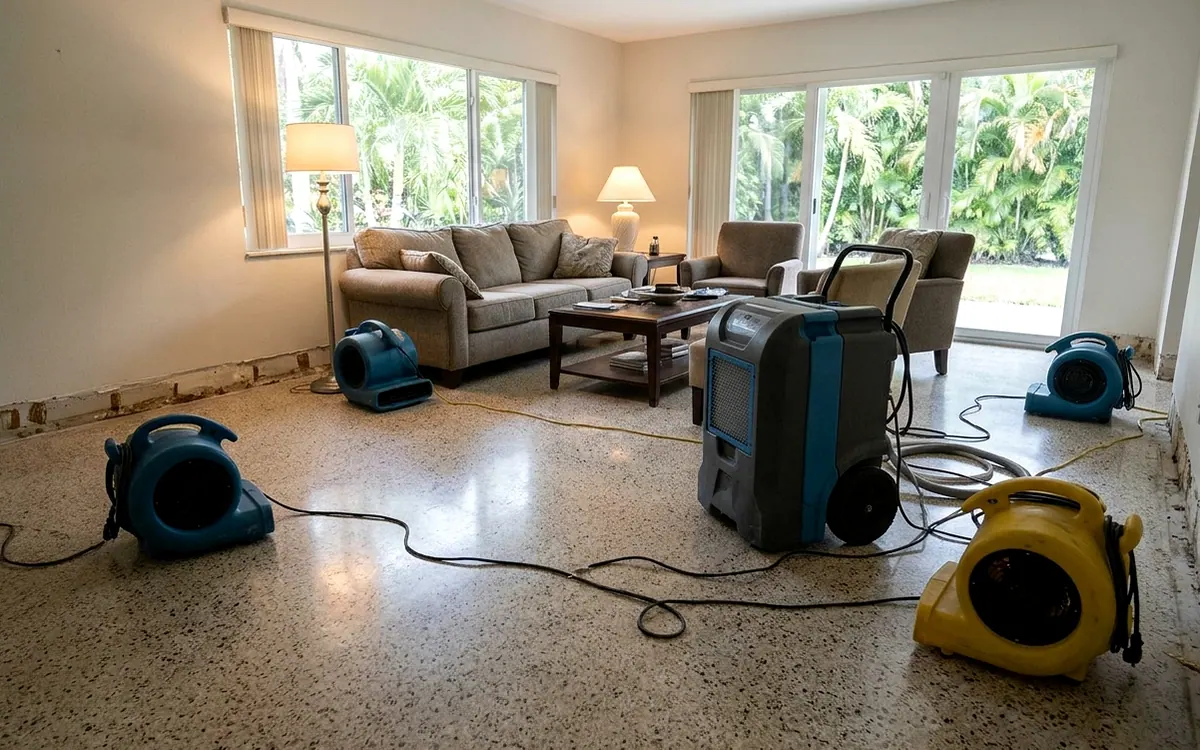
Drying is not just running fans. Air movers push air across wet surfaces so water evaporates into the room. Dehumidifiers then pull that moisture out of the air so it does not soak back into the building.
Without a dehumidifier, fans in a closed house simply raise the humidity. In Miami, opening windows usually makes it worse, because the outdoor air is already heavy with moisture.
Sizing equipment to the job
The drying approach in the IICRC S500 standard sorts jobs by how much water is present and how quickly it should evaporate. That class tells us how many air movers and how much dehumidifier capacity a room needs.
- Class 1: part of a room, little absorbed water
- Class 2: a full room of wet carpet and pad, walls wet less than 24 inches up
- Class 3: water from overhead, ceilings, walls and floors saturated
- Class 4: hardwood, plaster, concrete and stone that hold water tightly
LGR and desiccant dehumidifiers
Low grain refrigerant (LGR) dehumidifiers are the workhorse for most homes and condos. They pull a lot of water out of warm, humid air and keep running well as the room gets drier.
Desiccant dehumidifiers use a drying wheel instead of cold coils. We bring them in for dense materials like concrete or hardwood, or for spaces where very dry air speeds the job up.
Daily readings and when we stop
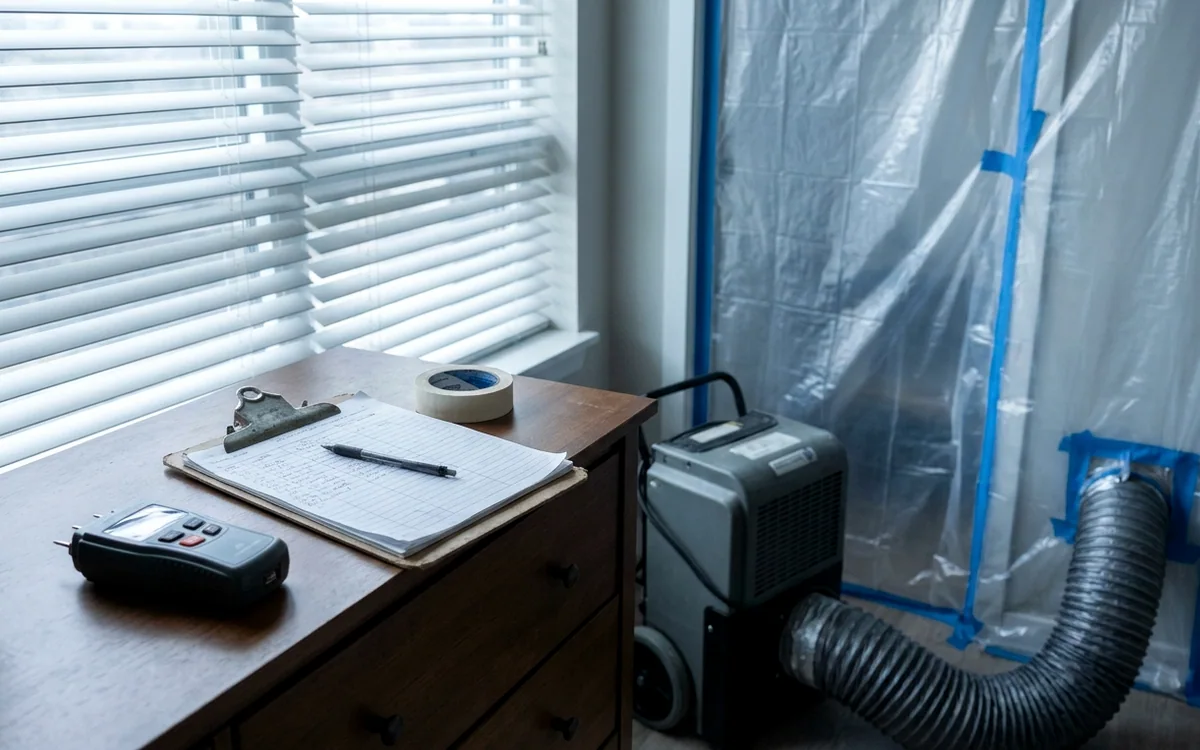
Every visit, we take readings at the same marked points and compare them with dry areas of your home. We also log temperature and humidity in the room and the air coming off the dehumidifier.
Equipment comes out when the numbers say the materials are dry, not after a set number of days. Those logs also go to your insurer as proof that drying was done properly.
Living with the equipment
Drying equipment is loud and puts out heat, and it needs to run day and night. We place it so you can still move through the house and tell you which breakers it runs on.
Please do not turn equipment off or move it between visits. Each unit is placed and angled on purpose, and a few hours off can set the drying back.
Miami averages about 82 percent relative humidity in the morning, and the NWS notes dew points in the 70s almost daily during the wet season. The EPA recommends keeping indoor humidity below 60 percent, so after a leak here, a dehumidifier does most of the real drying work.
When to call about structural drying & dehumidification
Walls feel cool and damp
Drywall that is cool to the touch after a leak is often still holding water.
Baseboards pulling away
Trim separating from the wall can mean the drywall behind it has swelled with water.
Room smells musty
A damp smell days after the water was mopped up shows moisture is still in the materials.
Paint or wallpaper bubbling
Blisters on wall finishes appear when water inside the wall pushes outward.
Windows fogging inside
Condensation on the inside of glass points to very high humidity in the room.
Floors still soft
Laminate, vinyl or carpet that stays soft or spongy has water trapped below it.
What happens after you call
Initial moisture survey
Every affected room is metered and the readings are marked so we can track them each day.
Prepare the space
Baseboards come off, wet pad or soaked drywall is removed, and furniture is moved off wet areas.
Set the equipment
Air movers, dehumidifiers and any floor or wall drying systems are placed for the room's size and class.
Close the drying area
Doors and sometimes plastic sheeting keep the dried air where it is needed.
Monitor every day
We log readings, adjust equipment and remove units as rooms reach their dry targets.
Final dry check
Last readings are recorded and shared before any repairs begin.
What structural drying & dehumidification usually costs in Miami
Drying is usually priced by equipment used each day plus labor and the area dried. These are typical Miami-area ranges that depend on the job.
| What is priced | Typical range |
|---|---|
| Air mover, per unit per day | $22.75 to $34.40 |
| LGR dehumidifier, per unit per day | $86 to $124 |
| Desiccant dehumidifier, per unit per day | $153 to $247 |
| Drying-focused job, one to three rooms | $1,165 to $2,940 |
Cost moves with the number of rooms, how much equipment is needed and how many days the materials take to dry. The final price is set after an on-site look. See every cost range we publish.
Structural Drying & Dehumidification: common questions
Can I just run my AC instead of a dehumidifier?
Your AC helps, but it is not built to pull the amount of water a soaked room releases. A restoration dehumidifier removes far more water per day and keeps working as the air gets drier.
How much electricity does drying equipment use?
It adds to your bill while it runs. We spread equipment across circuits to avoid tripping breakers, and the readings help us pull units out as soon as each room is dry.
Why do you keep the doors closed while drying?
A closed room lets the dehumidifier work on a small amount of air. With the doors open, it tries to dry the whole house and the wet room takes longer.
Do I need to leave home during drying?
Most people stay. The equipment is noisy and warm, so some families sleep in another room. For gray or black water jobs, we may ask you to keep out of the work area.
What dry reading are you aiming for?
We compare wet materials to the same materials in an unaffected part of your home. When the wet areas match those dry readings, the drying goal is met.
Often needed on the same job
Water Damage Restoration
Extraction, drying and repair after any water event in a home or unit.
See the serviceEmergency Water Extraction
Truck-mounted and portable extraction to pull standing water out fast.
See the serviceLeak Detection & Moisture Mapping
Thermal imaging and meters to trace hidden water inside walls and floors.
See the serviceInsurance Claim Documentation
Photos, moisture logs and scope notes organized for your adjuster.
See the serviceWater where it should not be? Call now.
A person answers every call, day or night. Tell us what got wet and when it started, and we will tell you what happens next.