Kitchen and cabinet mold removal in Miami
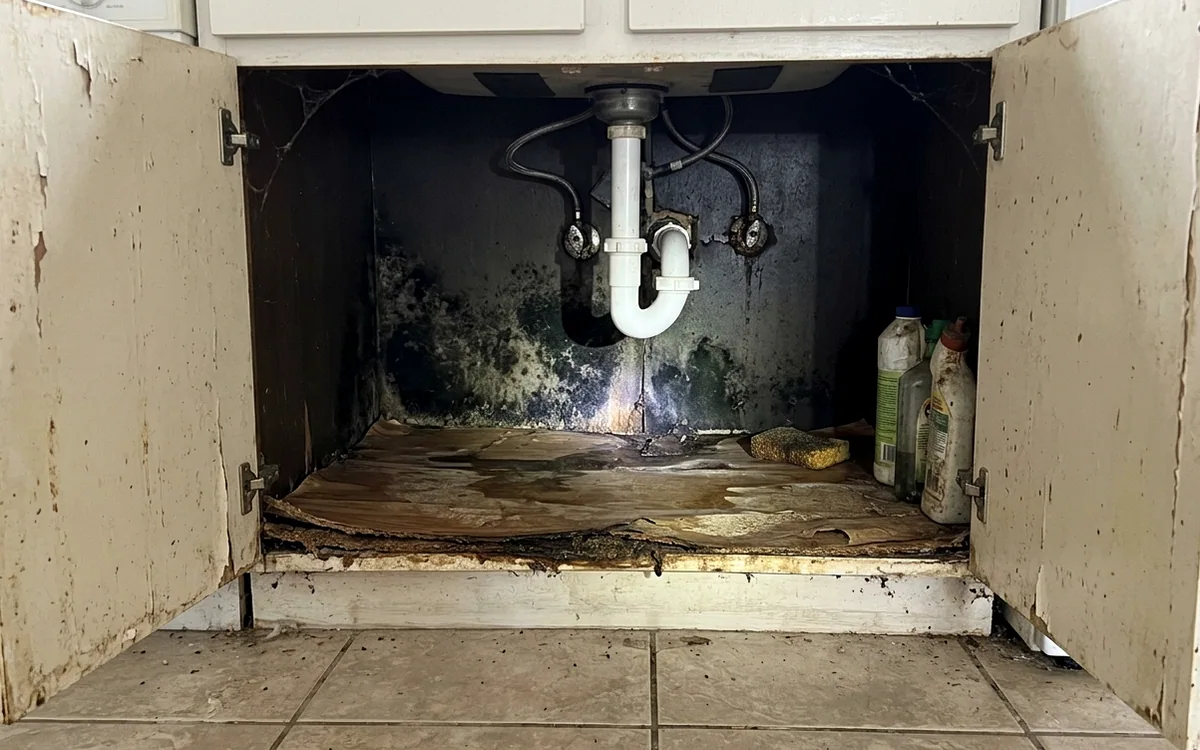
You pulled everything out from under the kitchen sink and found a warped cabinet floor, a dark stain spreading along the back panel, and a smell that does not go away with cleaning.
Kitchen mold usually starts small and out of sight, under the sink, behind the dishwasher or beneath the refrigerator. By the time you see it, the leak has often been running for weeks, so we look past the cabinet box to the wall and floor behind it.
At a glance
- Service
- Kitchen & Cabinet Mold Removal
- Group
- Mold Removal
- Hours
- Phones answered 24/7
- Office
- 1428 Brickell Avenue, Floor 3, Miami
- Covers
- Miami-Dade and Broward
When you call, we schedule a visit to check the sink base, the wall behind the cabinets and the floor under the dishwasher and refrigerator. If the leak is still active, shut the water at the valve under the sink and call. A drip under a cabinet can keep the wall behind it wet enough for mold within a couple of days.
The usual sources in a kitchen
Kitchen leaks come from a handful of places, and most of them drip slowly enough that nobody notices for a while. The water soaks into the cabinet floor, then wicks into the wall and under the flooring.
IBHS findings cited by Tower Hill Insurance attribute 44 percent of sink-related water losses to faulty supply lines, which is one reason the sink base is the first place we look.
- Sink supply lines and shutoff valves
- Drain trap and garbage disposal seals
- Dishwasher supply and drain hoses
- Refrigerator ice maker line
- Window or wall leaks behind upper cabinets
Why cabinets hold onto mold
Most cabinet boxes are particleboard or MDF covered in a thin laminate. Once that core swells, it does not dry back flat, and mold grows into the raw edges and the unfinished backs where you cannot clean it.
Solid wood cabinets and plywood boxes are more forgiving. If they dried quickly and the growth is only on the surface, they can often be cleaned and kept.
Opening the wall behind the cabinets
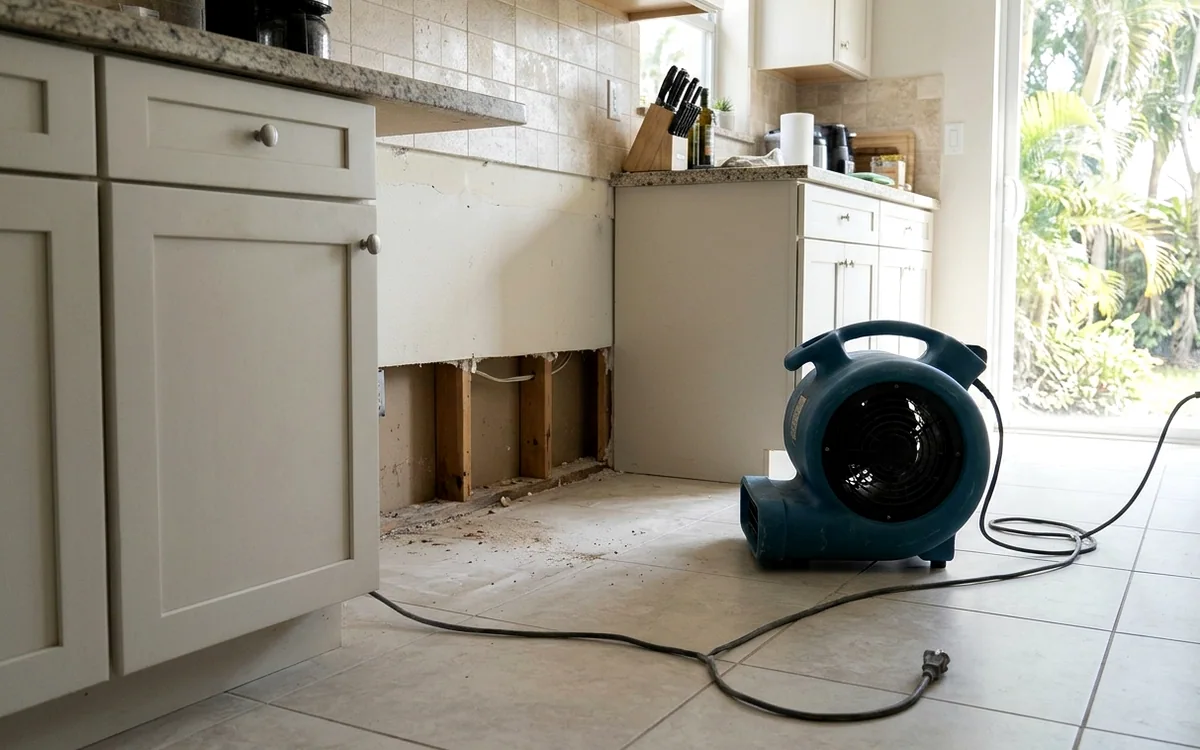
The drywall behind a sink base sees the same water the cabinet did, and it is usually worse because it never gets air. We pull the toe kick and, when readings call for it, the cabinet back panel to check the wall and the bottom plate.
Wet or moldy drywall behind the cabinets is cut out at a clean line. Sometimes this can be done without removing the cabinet at all, by working through the open back of the sink base.
Removing cabinets only when needed
If the moisture runs behind several cabinets or under the countertop, the base cabinets may need to be detached and pulled forward. We disconnect them carefully so the countertop and doors can go back on if the boxes are sound.
Swollen particleboard boxes usually have to be replaced. We document which ones failed so your contractor or claim adjuster can see the reason.
Drying under kitchen flooring
Water that sat under a dishwasher or refrigerator often spreads under tile, laminate or vinyl plank. Laminate and vinyl trap moisture underneath, and the slab below stays wet.
We check the floor across the kitchen with a meter and dry it with air movers and dehumidifiers. Where flooring traps water and cannot dry in place, a section may need to come up.
With about 55 percent of Miami's homes built before 1980, many kitchens still have older shutoff valves and supply lines that are past their best. Add morning humidity around 82 percent, and a dark sink cabinet becomes a place where a small drip turns into mold quickly.
When to call about kitchen & cabinet mold removal
Swollen sink cabinet floor
A bubbled or soft cabinet bottom under the sink means water has been sitting there.
Musty smell when opened
A damp, earthy odor that hits when you open the sink base points to growth you cannot see.
Dark marks at toe kick
Staining along the bottom edge of base cabinets often means water spread under them.
Lifting floor near dishwasher
Laminate or vinyl that peaks or separates in front of the dishwasher signals a slow leak below.
Water stains on back panel
Rings or dark streaks on the inside back of a cabinet show water came from the wall side.
Mold behind the refrigerator
Spots on the wall or floor behind the fridge usually trace to the ice maker supply line.
What happens after you call
Find the leak
We test the sink base, appliance lines and nearby walls with meters and a thermal camera.
Stop and isolate
Water to the leaking line is shut off and the kitchen work zone is closed off with plastic.
Remove what failed
Swollen cabinet floors, moldy back panels and wet drywall are cut out and bagged.
Clean the framing
Studs and bottom plates are HEPA vacuumed and cleaned of all visible growth.
Dry the area
Air movers and a dehumidifier run until walls and subfloor return to normal readings.
Prepare for rebuild
We treat cleaned surfaces and hand over photos and moisture logs for the repair and claim.
What kitchen & cabinet mold removal usually costs in Miami
Kitchen jobs vary most by whether cabinets have to come out. These are typical Miami-area ranges for the mold and drying work.
| What is priced | Typical range |
|---|---|
| Single sink base and wall behind it | $540 to $1,460 |
| Run of base cabinets with drywall removal | $1,620 to $4,380 |
| Kitchen floor drying, priced by area | $4.20 to $5.85 per sq ft |
| Mold removal priced by affected area | $15.40 to $26.70 per sq ft |
Cabinet detach and reset, flooring removal and dishwasher or refrigerator moves all affect the total. New cabinets and countertops are separate, and your final price comes after an on-site look. See every cost range we publish.
Kitchen & Cabinet Mold Removal: common questions
Can I keep my cabinets if there is mold inside?
Often, yes, if the boxes are solid wood or plywood and they did not swell. Particleboard that has puffed up or crumbles at the edges usually has to be replaced, because the core cannot be cleaned.
Do you have to take the countertop off?
Usually not. We work through the open sink base or pull a cabinet forward without disturbing the top. Stone countertops only come off if the cabinet beneath has to be fully replaced.
What does a dishwasher leak do to the floor?
Dishwasher water is gray water, and it tends to spread under the unit and the floor nearby without being seen. If it sat for more than a couple of days, the flooring beneath often has to be checked and dried or partly removed.
Is it safe to keep cooking while you work?
In most cases the work zone is sealed off and the rest of the kitchen stays usable, though the sink or dishwasher may be out for a few days. We will tell you what is off limits at the start.
Should I replace the supply lines afterward?
If the leak came from a supply line, replacing the lines on that fixture is sensible. Braided stainless lines and a working quarter-turn shutoff valve make the next leak smaller and easier to stop.
Often needed on the same job
Appliance Leak Water Damage
Washer hoses, dishwashers and ice maker lines that leak under floors.
See the serviceMold Removal
Containment, removal and cleaning of mold, with the moisture source fixed.
See the serviceWater Damage Repair
Drywall, baseboards, paint and trim put back once the structure is dry.
See the serviceInsurance Claim Documentation
Photos, moisture logs and scope notes organized for your adjuster.
See the serviceWater where it should not be? Call now.
A person answers every call, day or night. Tell us what got wet and when it started, and we will tell you what happens next.