Emergency water removal in Miami Lakes, 33014
When the lakes in Miami Lakes run right to the rim during a long rain, low yards, garages and ground floors along the water can take in water, and it needs to come out the same day.
Standing water does its worst damage in the first day or two, soaking into drywall, baseboards and cabinet bases and setting up mold. Our crews arrive with extraction units, pumps and drying equipment, pull the water out and start drying right away. Then we check walls and floors with meters so nothing wet gets left behind.
At a glance
- Area
- Miami Lakes
- From our office
- 1428 Brickell Ave, Floor 3
- Phones
- Answered 24/7
- Most calls
- Emergency Water Extraction
Yes, we cover Miami Lakes, including West Lakes, Royal Oaks and the townhomes and apartments around Main Street. We are called here most for standing water after heavy rain, burst pipes, water heater and appliance leaks, and AC overflows. Call (786) 947-0034 at any hour; a person answers and gets a crew moving.
A planned town built around lakes
Miami Lakes was master-planned by the Graham family's company, Sengra, starting in 1962, on land that belonged to state senator Ernest 'Cap' Graham. Homes and townhomes curve along the lakes, and apartments cluster near Main Street. Just under six in ten homes here are lived in by their owners.
Living on the water is the draw, but it also means many properties sit close to the level of the lakes they face. The town's elevation is only about 7 feet, which leaves little room between a full lake and a back door.
How water reaches homes in Miami Lakes
Most of the town lies in or near a FEMA Special Flood Hazard Area, and stormwater drains into the lakes and the C-8, or Biscayne, Canal. When those fill during a multi-day storm, water backs up into streets and low lots instead of draining away.
Inside, the emergencies are familiar: a burst supply line under a sink, a washer hose that splits, a water heater tank that lets go in a garage. Those usually start as clean water, but the EPA's 24 to 48 hour drying window applies just the same.
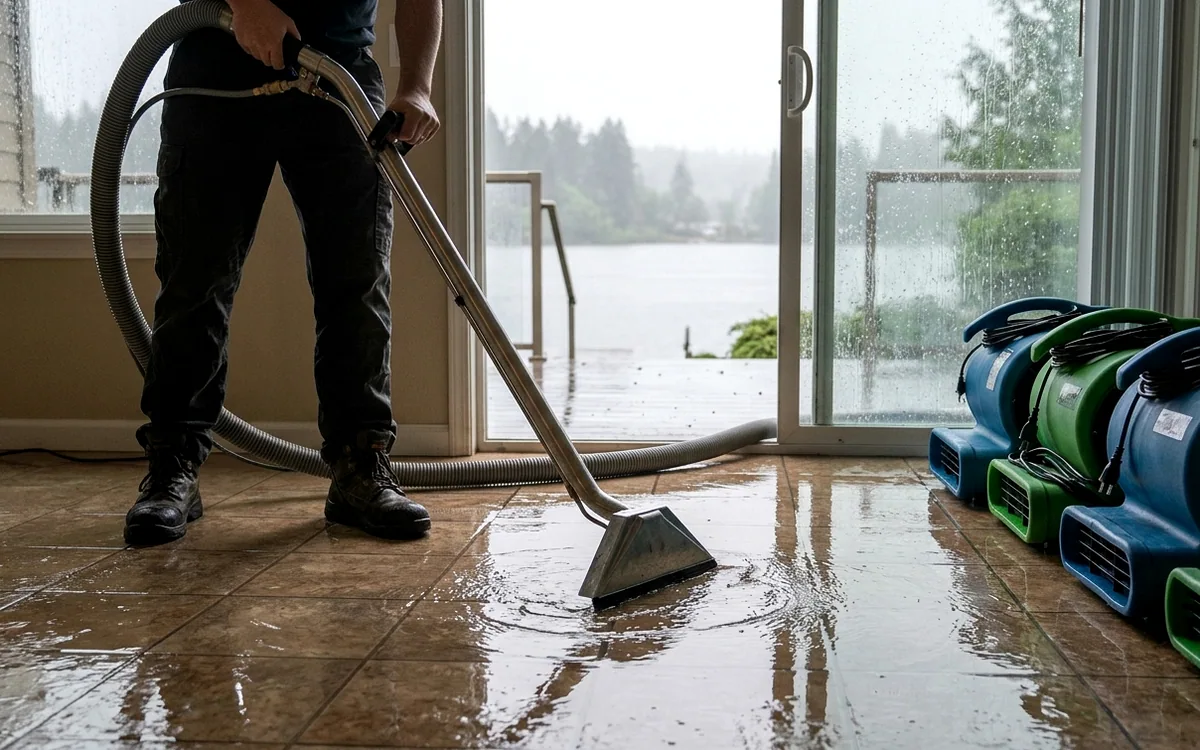
What an emergency visit looks like
We confirm the water is shut off or the flood has stopped rising, then extract with truck-mounted or portable units. Wet carpet pad usually comes up, and we measure moisture in walls to find how high it wicked. Air movers and dehumidifiers go in on the same visit.
Floodwater from streets or lakes is Category 3, so porous materials it touched are removed and surfaces disinfected. Clean water from a supply line gives us more room to dry carpet, cabinets and drywall in place.
Close by: Hialeah, Miami Gardens and more
Miami Lakes sits along the Palmetto Expressway and I-75, which puts Hialeah, Hialeah Gardens, Miami Gardens, Country Club and Opa-locka within a short drive. We handle the same kinds of calls in all of them.
When a storm soaks the whole northwest corner of the county, as the late May 2020 rains did, we triage by standing water and time wet. You get a straight answer on timing when you call.
Where water and mold start in Miami Lakes
Lakes at the rim
In late May 2020, flooding lingered in West Lakes and Royal Oaks, and the mayor said the town's lakes were right at the rim.
Flood hazard area
Most of the town lies in or near a FEMA Special Flood Hazard Area, draining to its lakes and the C-8 Canal.
Eta's shallow rivers
During Tropical Storm Eta in November 2020, some streets turned into shallow rivers, and one resident said water flowed into her house.
Low ground
The town sits about 7 feet above sea level, and Miami-Dade's groundwater lies just below the surface, so heavy rain drains slowly.
Services we run most in Miami Lakes
Emergency Water Extraction
Truck-mounted and portable extraction to pull standing water out fast.
See the serviceFlood Damage Cleanup
Rising water and street flooding cleaned out, with flood cuts where needed.
See the serviceBurst Pipe Water Damage
Split supply lines and failed fittings, from shutoff to dry-out.
See the serviceWater Heater Leak Cleanup
Tank failures in closets and garages cleaned up before they spread.
See the serviceWet Carpet & Pad Drying
Carpet saved or removed based on water category, pad, and time wet.
See the serviceAppliance Leak Water Damage
Washer hoses, dishwashers and ice maker lines that leak under floors.
See the serviceMiami Lakes: questions we hear
How fast should water be removed from my Miami Lakes home?
As soon as possible. The EPA advises drying wet materials within 24 to 48 hours to prevent mold, and Category 2 water left more than about 48 hours can degrade to Category 3. Call us when you find it, day or night.
My Miami Lakes townhome flooded from the lake side during heavy rain. Is that flood or a regular leak?
Water rising from outside is treated as flood, and FEMA notes most homeowners policies do not cover flood without a separate policy. A burst pipe inside the home is a different kind of claim. We note the source and the water path in our records for your adjuster.
Should I try to shop-vac the water out of my Miami Lakes house first?
If it is clean water and safe to reach, removing what you can helps, but shut off power to wet areas first. Leave water from outside or from a sewer backup alone, since that is Category 3. Either way, the water inside walls and under flooring needs meters and drying equipment.
Do you come to Miami Lakes during a storm like Eta?
Yes, once it is safe to drive and enter the home. Phones are answered 24/7 through the storm, and we schedule visits by how much water is standing and how long it has been there.
Other places our crews cover
Water damage in Miami Lakes? Call our crew lead.
A person answers every call, day or night. Tell us what got wet and when it started, and we will tell you what happens next.