Emergency roof tarping and board‑up in Miami, FL
Wind tore shingles or tile off your roof, a window blew in or a slider broke, and rain is still finding its way into the house tonight.
The first job after a storm is stopping more water, because every hour of rain through an open roof or window adds to what has to be dried. We cover roof openings with heavy tarps fastened on wood battens and close broken windows and doors with plywood. Once the house is closed up, we turn to the water already inside.
At a glance
- Service
- Emergency Tarping & Board-Up
- Group
- Drying & Repairs
- Hours
- Phones answered 24/7
- Office
- 1428 Brickell Avenue, Floor 3, Miami
- Covers
- Miami-Dade and Broward
When you call, we ask what is open, how big it is and whether water is coming in right now. A crew comes with tarps, plywood, fasteners and extraction gear. We photograph the opening, cover it, then start pulling water and drying. A tarp is temporary, so your roofer still makes the permanent repair.
Why stopping the water comes before drying
Drying a room while rain still comes through the ceiling only moves the problem around. A tarp or board-up turns an open structure back into a closed one, so the dehumidifiers can actually pull the moisture down.
It also helps your claim file. Photos of the opening before and after the cover show the adjuster what happened, when it happened and what was done to limit further damage.
How a roof tarp goes on
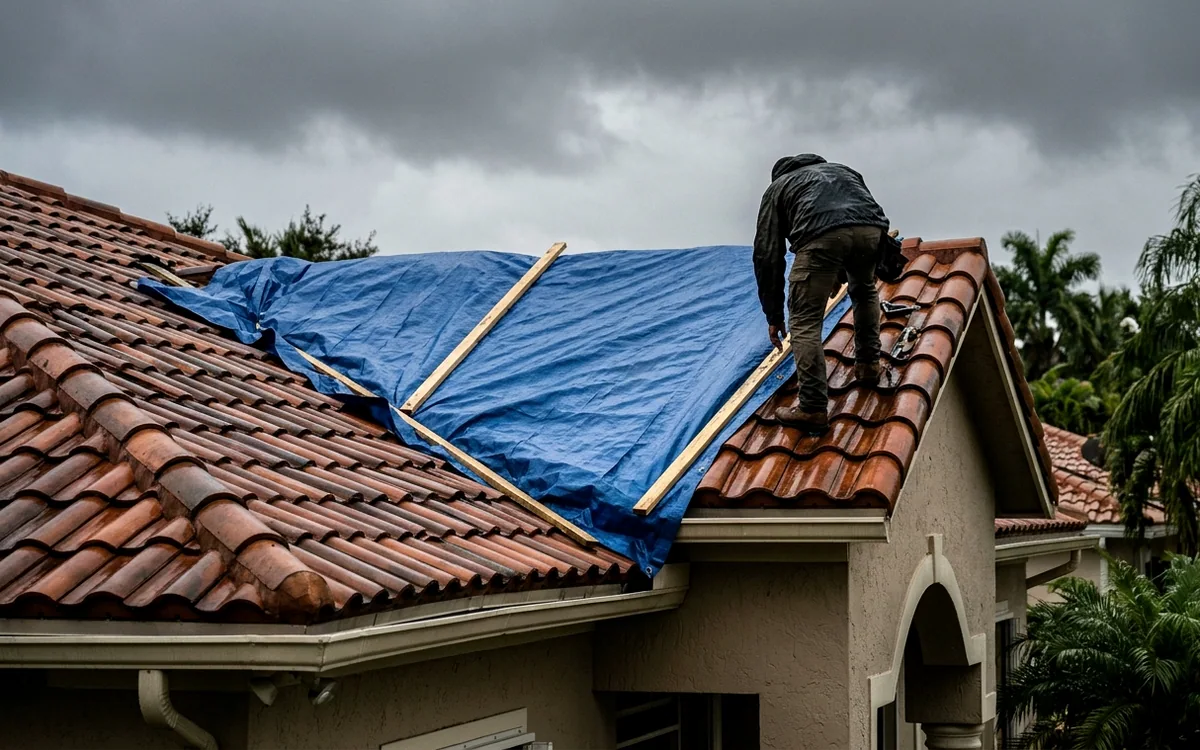
We size the tarp to run well past the damaged area and over the ridge where the roof shape allows, so water sheds over it instead of under it. The edges are wrapped around wood battens and fastened, which holds far better in wind than nails driven through loose plastic.
On clay barrel tile and concrete tile roofs, the crew steps carefully and may lift loose tiles to seat the tarp. On flat and low-slope roofs, the tarp is weighted and sealed at the edges so ponding water does not slip underneath.
- Heavy-duty tarp sized past the damage
- Edges wrapped on wood battens and fastened
- Ridge overlap where the roof shape allows
- Photos before and after for your adjuster
Boarding up broken windows, sliders and doors
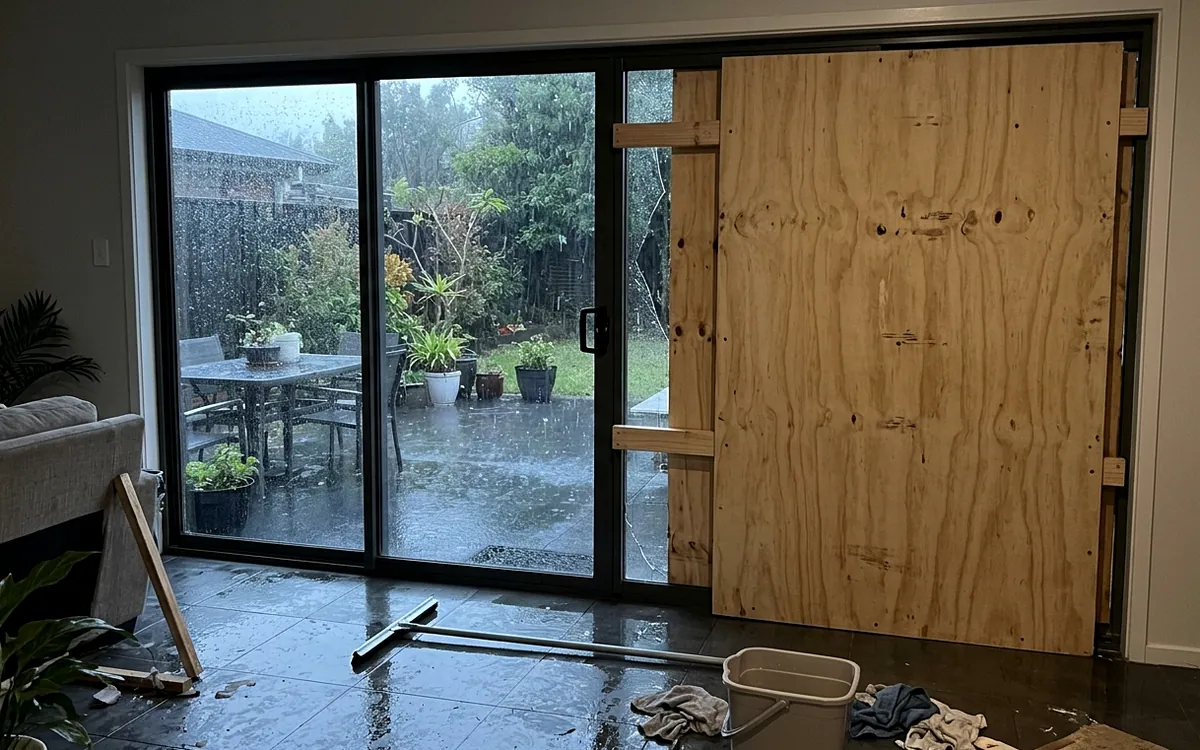
Broken glass is cleared from the frame and the floor first. We then cut plywood to fit the opening and fasten it to the frame or the surrounding block, so the cover holds against wind-driven rain.
Large sliders take more than one sheet and extra bracing. If a door is damaged but still swings, we can board just the glass portion and leave it usable so you can still get in and out.
What happens to the water already inside
Once the house is closed, we move to extraction and drying. Rainwater from a clean source is Category 1, but water that sat on floors, ran through attic insulation or picked up debris may be dirtier and is handled that way.
Wet attic insulation, soaked ceiling drywall and wet carpet are checked with meters, and anything that cannot dry in place comes out. Equipment goes in the same day so the 24 to 48 hour drying window the EPA describes is not lost.
A tarp is a bridge to the roofer
A tarp is a temporary cover, not a repair. It buys time while you line up a roofer and your claim moves forward, and after a big storm that wait can stretch out.
If another band of weather is coming, we can come back to check the tarp and re-secure any edge the wind has loosened. When your roofer is ready, the tarp comes off as part of their work.
Miami-Dade and Broward sit in Florida's High-Velocity Hurricane Zone, and the Atlantic season runs June 1 to November 30 with a peak around September 10. For hurricane losses, Florida law dates the loss to landfall and a new claim must be noticed within 1 year, so photograph the opening before it is covered.
When to call about emergency tarping & board-up
Missing tiles or shingles
You can see bare underlayment or decking from the yard after high wind.
Ceiling dripping in a storm
Rain is coming through a light fixture, a vent or a ceiling seam during or right after a storm.
Broken window or slider
Glass is cracked or gone and rain is blowing into the room.
Tree limb on the roof
A branch punctured the roof or knocked flashing loose, and the hole is open to the sky.
Damaged entry door
A door no longer closes or latches, leaving the house open to rain and unwanted entry.
More weather on the way
Another rain band is forecast and the opening has nothing over it yet.
What happens after you call
Call with what is open
Tell us whether it is the roof, a window or a door, roughly how big, and if water is coming in now.
Crew arrives with materials
Tarps, battens, plywood, fasteners and extraction equipment come on the first truck.
Photograph the damage
We document the opening and the rooms below before covering anything.
Cover the opening
The roof is tarped on battens, or the glass opening is boarded and fastened.
Extract and start drying
Standing water is pulled, and air movers and dehumidifiers go into the wet rooms.
Hand off to your roofer
You get photos and notes, and the cover stays in place until the permanent repair.
What emergency tarping & board-up usually costs in Miami
These are typical Miami-area ranges for the emergency visit and the drying that usually follows a storm breach. Tarping and board-up are mostly labor and materials.
| What is priced | Typical range |
|---|---|
| After-hours emergency call fee | $62 to $187 |
| Crew labor for tarping or board-up, per hour | $78 to $197 |
| Drying overhead water after a roof breach (Class 3) | $1,065 to $2,945 |
| Air movers in wet rooms, per unit per day | $24 to $33 |
Roof pitch, tile type, the size of the opening and how much water got inside change the price most. We give a final price after we see the damage. See every cost range we publish.
Emergency Tarping & Board-Up: common questions
Will a tarp hold up through another storm?
A tarp fastened on battens and lapped over the ridge holds much better than one nailed through the plastic, but it is still temporary. Strong wind can work an edge loose, so we can return to re-secure it before the next band of weather.
Can you tarp a clay barrel tile roof without breaking more tiles?
Tile roofs need careful footing, and some loose or cracked tiles may be lifted and set aside to seat the tarp. We photograph the tile before we start so its condition is on record for your roofer and adjuster.
Should I wait for the adjuster before covering the roof?
There is no need to leave the opening uncovered. Take your own photos, then let us cover it and document it as well. The adjuster sees the damage in the photos, and the tarp can be lifted for a closer look.
Can you board up a broken window in my condo unit?
We close broken glass from inside the unit and set up access with building management. Exterior facade and window systems on a tower belong to the association, so we work alongside the building's own contractor on those.
What should I do with soaked attic insulation after a roof breach?
Leave it until we can read it. The EPA advises discarding wet insulation that cannot be dried within 48 hours, and soaked insulation also holds water against the ceiling drywall below. Damp edges may dry in place with airflow.
Often needed on the same job
Storm & Hurricane Water Damage
Wind-driven rain, surge and roof breaches after tropical weather.
See the serviceRoof Leak Water Damage
Wet ceilings, insulation and walls under a leaking roof dried and repaired.
See the serviceWindow Leak Water Damage
Rain pushed through window and slider frames into walls and floors.
See the serviceEmergency Water Extraction
Truck-mounted and portable extraction to pull standing water out fast.
See the serviceWater where it should not be? Call now.
A person answers every call, day or night. Tell us what got wet and when it started, and we will tell you what happens next.