Antimicrobial treatment after water damage in Miami
The water is out and the wet materials are gone, but the framing, slab and cabinet bases were soaked, and you want to lower the chance of mold or bacteria growing back before anything is closed up.
Antimicrobial treatment is a step in the cleanup, not a replacement for it. It is applied to surfaces that have already been cleaned, so it can do its job on bare material instead of sitting on top of dirt and growth. Then the area is dried and checked.
At a glance
- Service
- Antimicrobial Treatment
- Group
- After the Cleanup
- Hours
- Phones answered 24/7
- Office
- 1428 Brickell Avenue, Floor 3, Miami
- Covers
- Miami-Dade and Broward
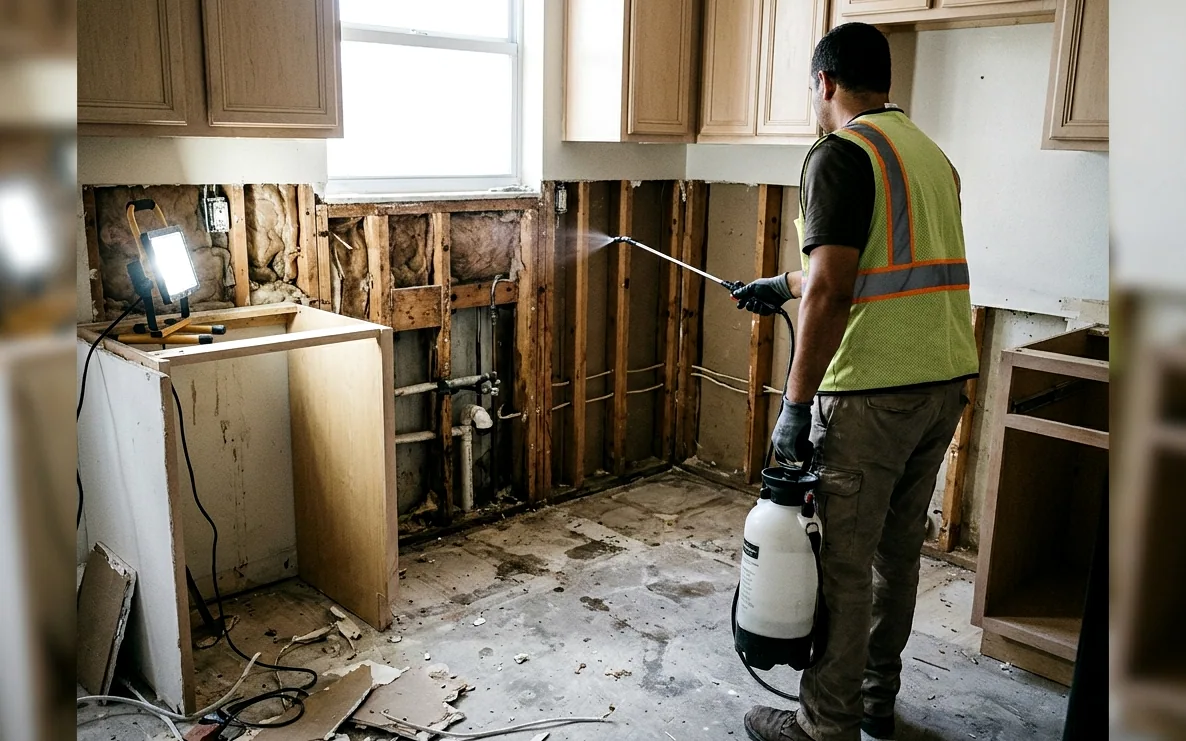
When you call, we ask what kind of water was involved and what has been removed so far. The crew cleans the exposed surfaces first, applies an antimicrobial suited to the material and water category, then dries the area with air movers and dehumidifiers. Treatment is best done while walls are open, before drywall, cabinets or flooring go back.
What antimicrobial treatment does
An antimicrobial is a product applied to surfaces to reduce bacteria and slow mold growth. After a water loss, it is used on studs, subfloor, slab, cabinet bases and the backs of walls once they are exposed and cleaned. Its job is to make the cleaned surface a poorer place for growth while it dries.
It does not dry anything, and it does not fix a leak. The EPA says the key to mold control is moisture control, so drying still decides whether growth comes back.
Clean first, then treat
Treating a dirty surface wastes product and leaves growth in place underneath. We remove debris, wet insulation and loose material, then clean the surface by wiping or HEPA vacuuming. Only then does the antimicrobial go on.
The EPA says moldy surfaces should not be painted or caulked until cleaned and dry. The same logic applies here: treatment and sealing come after cleaning, never as a way to skip it.
- Remove wet and damaged material
- Clean or HEPA vacuum exposed surfaces
- Apply antimicrobial to the cleaned areas
- Dry and log readings until dry targets are met
When treatment makes the most sense
Treatment matters most after gray or black water. Category 2 water includes washing machine discharge, dishwasher overflow and AC condensate, and Category 3 includes sewage and rising floodwater. Category 2 water left for more than about 48 hours can degrade to Category 3.
For a clean supply line leak caught quickly, treatment may be optional. We explain on site whether it adds value for your job instead of adding it to every bill.
Choosing products for occupied homes
We pick products by surface and situation, and follow the label for dilution, contact time and ventilation. If someone in the home has asthma, mold allergies or a weakened immune system, tell us on the call. The CDC notes those groups can react more strongly to mold, and they may want to stay out of the room during application.
We tell you what was applied and where. That information goes into the job record along with the photos and moisture readings.
Treatment does not replace drying
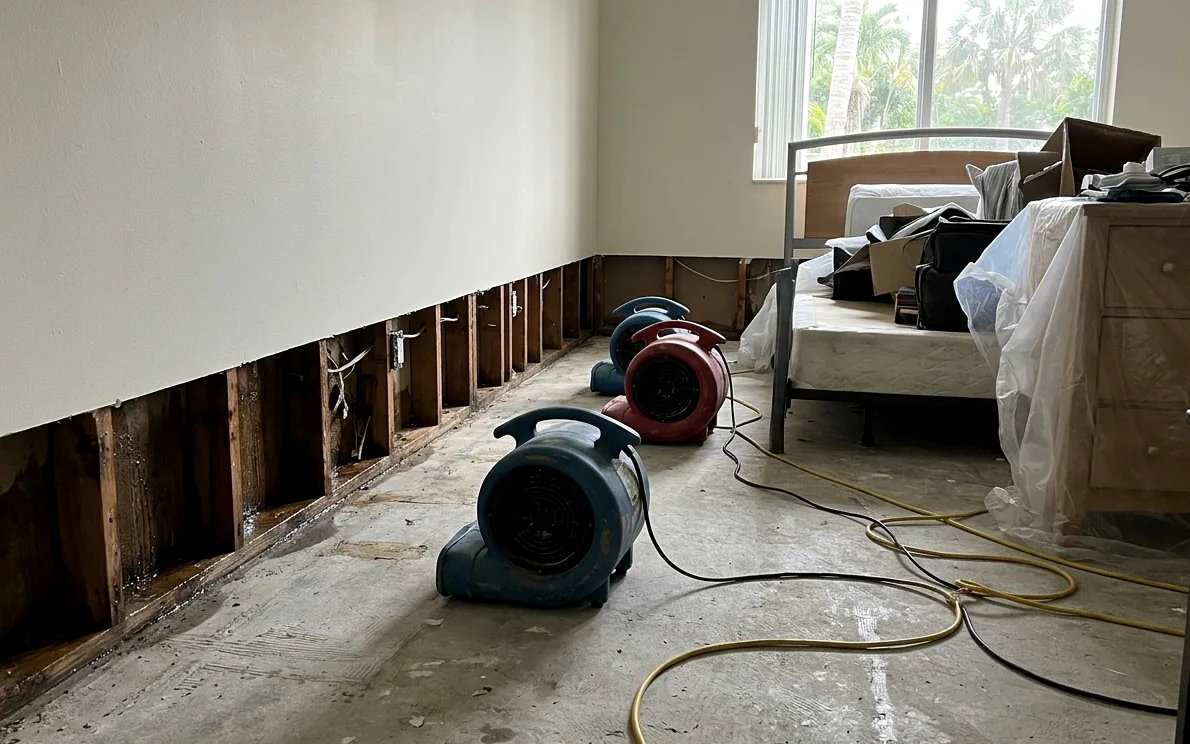
A treated surface that stays wet can still grow mold. That is why drying equipment keeps running after treatment and we log readings daily. The CDC recommends drying flooded areas within 24 to 48 hours.
Walls, cabinets and flooring go back only after the materials reach dry targets. Closing a damp wall, treated or not, invites the problem back.
The NWS notes that dew points in the 70s are an almost daily occurrence during the South Florida wet season, which runs May 15 to October 15. In that kind of air, exposed framing and slab pick up moisture readily, so cleaning, treatment and steady dehumidification go together here.
When to call about antimicrobial treatment
Gray water exposure
Washer, dishwasher or AC condensate water soaked into framing or slab calls for cleaning and treatment.
Sewage reached the room
After Category 3 water, exposed surfaces need thorough cleaning and treatment before rebuild.
Walls are open now
Flood cuts expose studs and the backs of drywall, which is the right moment to treat.
Water sat for days
Water left more than about 48 hours raises the chance of growth on structural materials.
Cabinet bases were wet
Particleboard and wood under sink and kitchen cabinets hold moisture and benefit from cleaning and treatment.
After mold removal
Once growth is cut out and surfaces cleaned, treatment helps slow regrowth while the area dries.
What happens after you call
Confirm water category
We identify whether the water was clean, gray or black, since that shapes the cleaning.
Remove damaged material
Wet insulation, drywall and pad that cannot be saved are cut out and bagged.
Clean exposed surfaces
Studs, slab and cabinet bases are wiped or HEPA vacuumed until clean.
Apply the treatment
The antimicrobial goes on by sprayer or wipe, following the label for the surface.
Dry and verify
Air movers and dehumidifiers run, and readings are logged until the area is dry.
What antimicrobial treatment usually costs in Miami
Antimicrobial treatment is usually part of a larger drying or mold job, and is priced by area, labor and equipment. These are typical Miami-area ranges.
| What is priced | Typical range |
|---|---|
| Gray water cleanup and drying including treatment, per sq ft | $4.35 to $6.15 |
| Black water cleanup and drying including treatment, per sq ft | $7.10 to $7.45 |
| Application labor, per hour | $72 to $193 |
| Air mover after treatment, per unit per day | $22.50 to $34.25 |
Price moves with the water category, the size of the exposed area and how long drying runs. The final price is set after an on-site look. See every cost range we publish.
Antimicrobial Treatment: common questions
Is antimicrobial treatment the same as mold removal?
No. Mold removal means cutting out or cleaning off the growth. Antimicrobial treatment is applied afterward to cleaned surfaces to slow growth while they dry.
Should I leave the house while you apply the antimicrobial?
For most rooms you can stay in another part of the home. If anyone has asthma, mold allergies or a weakened immune system, we suggest they stay away from the work area during application and let it air out first.
Can you spray antimicrobial on wet drywall instead of removing it?
Spraying swollen or moldy drywall does not save it. The EPA advises discarding wet wallboard that cannot be dried in place within 48 hours, and treatment is applied to what remains after that.
Does a clean water leak need antimicrobial treatment?
Not always. If the leak was clean supply water and drying started quickly, treatment may add little, and we will say so. It matters more after gray or black water or when water sat for days.
Will I know which product was used in my home?
Yes. We note the product and the areas treated in your job record, and we can show you the label.
Often needed on the same job
Sewage Backup Cleanup
Category 3 water removed, porous materials cut out, surfaces disinfected.
See the serviceFlood Cuts & Drywall Removal
Wet drywall and baseboards cut out at a clean line so walls can dry.
See the serviceStructural Drying & Dehumidification
Air movers and dehumidifiers set up, logged daily and pulled once dry.
See the serviceMold Removal
Containment, removal and cleaning of mold, with the moisture source fixed.
See the serviceWater where it should not be? Call now.
A person answers every call, day or night. Tell us what got wet and when it started, and we will tell you what happens next.