Ceiling water damage repair in Miami homes and condos
There is a stain, a bulge or an active drip in your ceiling, and you need to know where the water is coming from and whether the ceiling is about to come down.
A wet ceiling is a symptom, not the source. The water might come from a roof, an AC unit in the attic, a bathroom above or a neighbor's unit, and the fix depends on finding which one before the ceiling is repaired.
At a glance
- Service
- Ceiling Water Damage
- Group
- Leaks Inside the Home
- Hours
- Phones answered 24/7
- Office
- 1428 Brickell Avenue, Floor 3, Miami
- Covers
- Miami-Dade and Broward
Call (786) 947-0034 and tell us where the stain is, whether it is dripping and what is above it. We trace the water source, open the ceiling where drywall cannot dry, dry the cavity and the rooms below, and repair once readings are dry. A sagging ceiling should be handled the same day, before it falls.
Finding what is above the stain
In a single-family home, a ceiling stain usually comes from the roof, an air handler or its drain pan in the attic, or a bathroom on the floor above. In a condo, it is often the unit upstairs: a toilet seal, a shower pan, a washer hose or an AC drain line.
We read the ceiling and the area around it with a moisture meter and a thermal camera to see how big the wet area is and which way it is spreading. That pattern often points straight at the source.
- Roof leaks over top floors and single-story homes
- AC drain pans and condensate lines in the attic
- Toilet, tub and shower leaks from the floor above
- Washer hoses and supply lines in the unit upstairs
- Window and balcony leaks running along a slab
When the ceiling has to come down
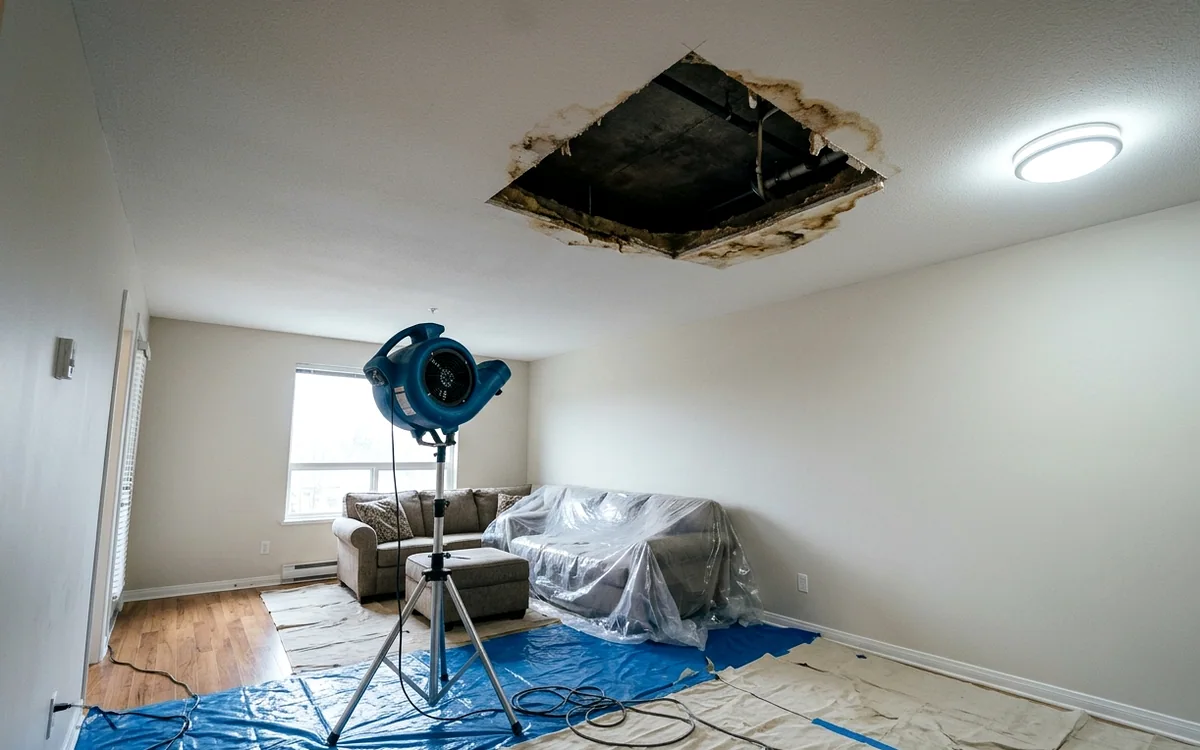
Ceiling drywall loses strength when it soaks. A small stain from a short leak can sometimes dry in place, but drywall that sags, cracks at the seams or stays wet after a day or two is cut out. The EPA advises discarding wet ceiling tiles and wallboard that cannot be dried in place within 48 hours.
We cut out to the edge of the wet area in a clean square so the patch blends in. Opening the ceiling also lets air reach the joists and insulation above, which is the only way that cavity dries.
Condo ceilings and the unit above
Water from the unit above is one of the most common condo calls. Under Section 718.111(11), the association insures and repairs the condo property as originally installed, while items that serve only one unit, such as floor, wall and ceiling coverings, fall to the unit owner's policy.
A Florida law firm's reading of that statute is that, for a sudden leak, drywall and what lies behind it generally falls to the association, and interior finishes fall to the owner. We document the source, the wet area and the drying so management and both owners have the same record.
Popcorn and textured ceilings
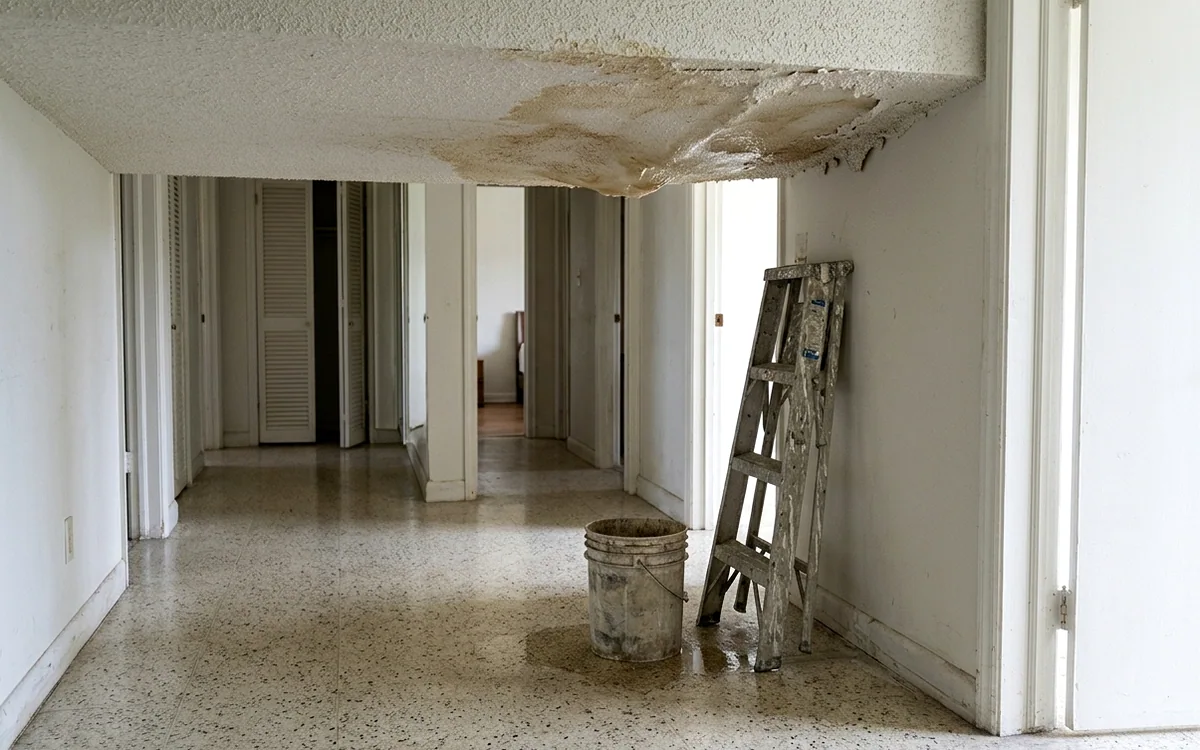
Many older homes have textured or popcorn ceilings. Water makes that texture loosen and fall in patches, and a repaired section has to be retextured to match the rest of the ceiling.
We cut back to solid, dry texture and patch with a matching finish once the drywall is dry. On a large ceiling, it is sometimes cleaner to retexture the whole room so the patch does not show.
Drying the room below
Water coming through a ceiling lands on whatever is below it: carpet, furniture, a bed, a desk. We extract the floor, move contents to a dry area and dry the walls under the leak, which often take water down from the top.
Air movers and a dehumidifier run in the room and aim up into the opened ceiling. Readings are taken daily, and repairs start once the joists, the drywall edges and the floor read dry.
Miami-Dade County has about 313,352 condominium units, and in the Miami metro area, most condo units in larger associations were built before 1990. Aging plumbing stacks and older AC equipment in those buildings make leaks from the unit above a frequent cause of ceiling damage.
When to call about ceiling water damage
Yellow or brown rings
Stains with a darker outer edge are from water that dried and came back, often from a repeat leak.
Bulging drywall
A bubble or sag means water is sitting on top of the drywall and the ceiling could give way.
Cracks along the seams
Tape lines that split or open up after a leak show the drywall is wet and losing strength.
Drips at vents or fixtures
Water at a ceiling vent or light means it is following ducts or wires from a leak above.
Texture falling off
Popcorn or knockdown texture coming loose in patches is a sign the drywall behind it is soaked.
Stain under the AC closet
A wet spot below an air handler or attic AC unit usually comes from a clogged drain line or overflowing pan.
What happens after you call
Protect the room
We move furniture and electronics out from under the leak and drain a sagging ceiling in a controlled spot.
Trace the source
Meters and a thermal camera follow the water back to the roof, attic, unit above or plumbing.
Stop the water
The source is shut off or covered, and the right trade is brought in for the repair.
Open the ceiling
Wet drywall and insulation are cut out in a clean square to the edge of the wet area.
Dry above and below
Air movers and a dehumidifier dry the ceiling cavity, walls and floor with daily readings.
Patch and finish
New drywall goes in, then tape, texture and paint matched to the rest of the ceiling.
What ceiling water damage usually costs in Miami
These are typical Miami-area ranges for ceiling water damage. Small ceiling jobs sit near the low end, and large openings with insulation and floor drying run higher.
| What is priced | Typical range |
|---|---|
| Small stain, drying only, one room | $185 to $390 |
| Ceiling section cut out, dried and patched | $1,040 to $2,960 |
| Ceiling and wall drying with insulation removal | $1,520 to $3,870 |
| Large overhead leak, several rooms | $2,890 to $5,940 |
The size of the wet area, ceiling height, texture matching and whether the floor below also needs drying all move the price. The final price comes after an on-site look. See every cost range we publish.
Ceiling Water Damage: common questions
Is a sagging ceiling dangerous?
It can be. Water pooled on drywall is heavy, and the ceiling can give way without much warning. Keep people out from under it, move belongings away, and if it is safe, poke a small hole at the lowest point to drain it into a bucket.
Who pays for my ceiling if the water came from the unit upstairs?
In Florida condos, it depends on the association documents, the cause and both owners' policies. A common reading of Section 718.111(11) is that drywall and what is behind it go to the association for a sudden leak, while finishes go to the owner. We document everything so management and the adjusters can sort it out.
Can you match my popcorn ceiling after the repair?
Yes. We patch the drywall, then apply a texture that matches the existing ceiling. On a big ceiling with an obvious patch, retexturing the whole room sometimes gives a cleaner result.
Why does the stain keep coming back after I paint over it?
Paint covers the stain but not the leak. If the source above is still dripping, the drywall gets wet again and the stain bleeds through. The EPA also advises against painting moldy surfaces until they are cleaned and dry.
Could the water in my ceiling be from my AC?
Yes. Air handlers in attics and closets drain condensate through a line, and when that line clogs, the pan overflows. A stain near the AC closet or under the attic unit is often a drain line problem rather than the roof.
Often needed on the same job
Roof Leak Water Damage
Wet ceilings, insulation and walls under a leaking roof dried and repaired.
See the serviceCondo Water Damage
Unit-to-unit leaks in high-rises, worked alongside building management.
See the serviceAC Drain Line Leak Damage
Clogged condensate lines and air handler overflows that soak floors and walls.
See the serviceWater Damage Repair
Drywall, baseboards, paint and trim put back once the structure is dry.
See the serviceWater where it should not be? Call now.
A person answers every call, day or night. Tell us what got wet and when it started, and we will tell you what happens next.