Condo mold remediation in Miami towers and mid‑rise buildings
You found mold in your condo unit, around the AC closet, behind a vanity or along a wall shared with the unit next door, and you are not sure whether to call the building or a remediation company.
Mold in a condo is a contained job inside a shared building. We remove the growth and fix the moisture inside your unit, keep spores and debris out of hallways and neighboring units, and work within the association's rules from start to finish.
At a glance
- Service
- Condo Mold Remediation
- Group
- Condos & Commercial
- Hours
- Phones answered 24/7
- Office
- 1428 Brickell Avenue, Floor 3, Miami
- Covers
- Miami-Dade and Broward
When you call, we set an inspection time and contact building management to clear access and the service elevator. We find the growth and the moisture behind it, then plan containment that keeps the corridor and neighbors clean. Mold that is tied to an active leak or a shared wall should be handled within days, before it spreads into the next unit.
Where mold starts in a condo unit
Condo units are tight, often with the air handler, water heater and laundry packed into small closets. That puts the biggest sources of water and humidity right next to each other.
Shared walls and floors also matter. A slow leak in the unit above or next door can wet your drywall for weeks before anyone notices.
- Air handler closet and condensate drain
- Water heater closet
- Bathroom walls behind showers and vanities
- Ceilings below the unit above
- Walls shared with a neighbor's kitchen or bath
- Window and slider frames on the exterior wall
Testing is separate from our work
Florida keeps mold assessment and mold remediation separate on the same project. If you or the association want air or surface sampling, or clearance testing at the end, that is arranged through an independent assessor and lab.
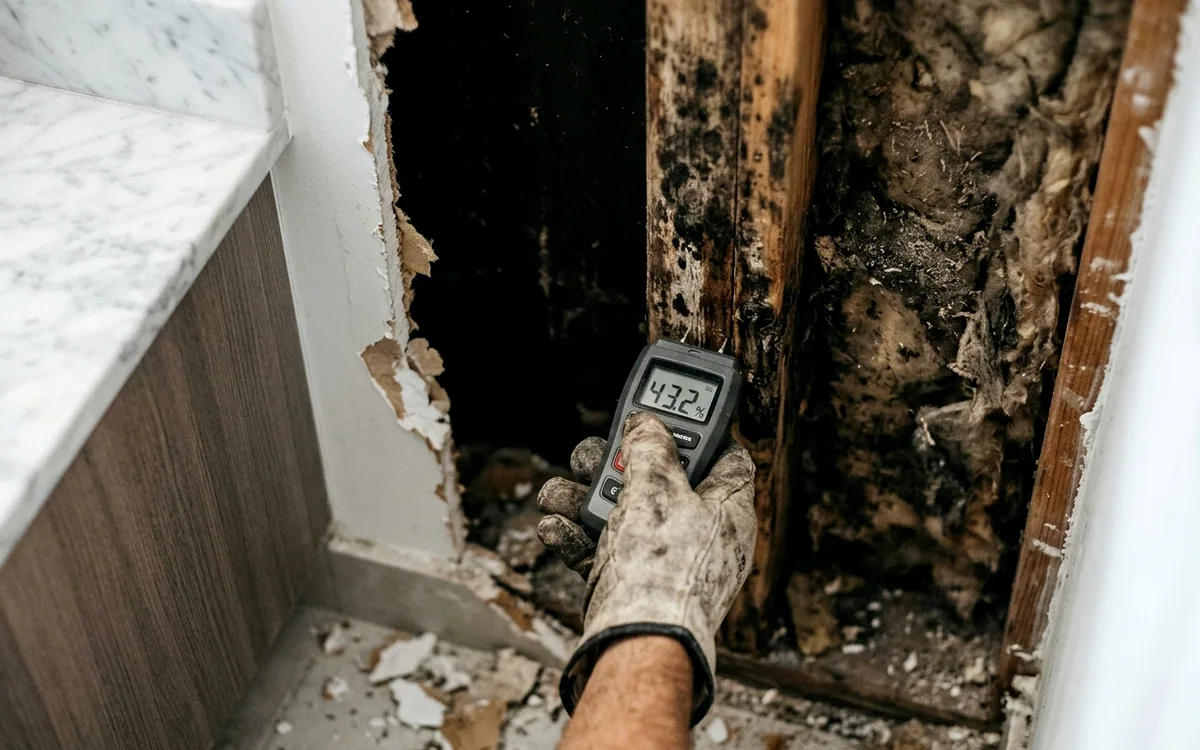
Our own inspection uses meters, a thermal camera and a visual walk-through to find the growth and its cause. Many associations ask for an independent clearance report before walls are closed, and we schedule around the assessor's visit.
Containment that protects the building
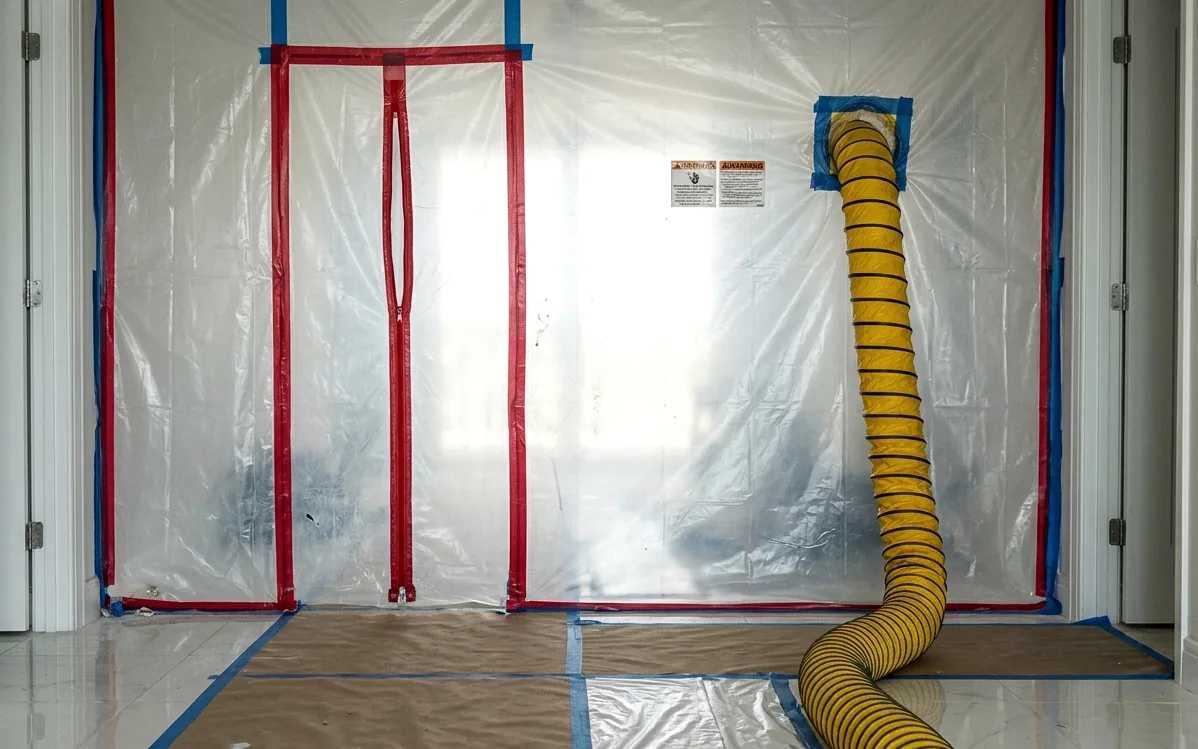
We build containment inside your unit with plastic sheeting and a zip door, and run filtered air scrubbers so the work area stays under negative pressure. For larger areas, the EPA's guidance calls for full containment with double sheeting and an airlock, and we follow that approach.
The unit door to the hallway stays closed during removal. Bagged debris is sealed inside containment, wiped down and carried out through a protected path to the service elevator.
Association and owner: who handles what
In general terms, Section 718.111(11) points the association to the condominium property as originally installed and the unit owner to items that serve only that unit, such as finishes, cabinets, countertops and appliances. Where the moisture came from also matters: an owner whose negligence caused the damage can be responsible for it.
Coverage questions belong with your adjuster. This is a general picture, not legal advice. We provide photos, moisture readings and a clear scope so the manager, both owners and the adjusters are looking at the same facts.
Building rules, elevators and neighbors
We work within the building's contractor hours, reserve the service elevator, pad it, and lay floor protection in the corridor. Most buildings want advance notice, and we handle that with the manager.
If the mold sits on a shared wall, we let the manager know so the neighboring unit can be checked. Fixing one side and leaving a wet wall on the other usually means the mold returns.
In the Miami metro area, 75 percent of condo units in associations of 20 to 49 units were built before 1990, so many buildings carry older plumbing and AC closets. Morning humidity around 82 percent keeps those closets damp, which is where condo mold most often begins.
When to call about condo mold remediation
Musty smell at the AC closet
A damp odor near the air handler is often the first sign of mold in a condo unit.
Spots on a shared wall
Growth on a wall you share with another unit may mean water is coming from their side.
Dark ring around vents
Black spots on the ceiling around supply vents are common in humid high-rise units.
Stains under the unit above
Ceiling stains that return after painting suggest an ongoing leak from upstairs.
Mold on window sills
Growth on sills and slider tracks points to rain getting in or condensation on the glass.
Swollen vanity or cabinet base
A puffed-up cabinet floor in a bathroom or kitchen usually means a slow plumbing leak.
What happens after you call
Coordinate with management
We clear access, elevator times and any building paperwork before the crew arrives.
Inspect and find the source
Meters and thermal imaging locate the growth and the moisture, including on shared walls.
Build containment
Plastic walls, a zip door and filtered negative air seal the work area inside the unit.
Remove and clean
Moldy drywall and materials are cut out and bagged, and framing is HEPA vacuumed and cleaned.
Dry and treat
The area is dried to normal readings and cleaned surfaces get an antimicrobial treatment.
Independent clearance
If you or the association want clearance testing, an independent assessor checks the area before walls close.
What condo mold remediation usually costs in Miami
Condo mold jobs are priced by the area of growth, the containment needed and building access. These are typical Miami-area ranges for one unit.
| What is priced | Typical range |
|---|---|
| Small area, 10 to 100 sq ft with limited containment | $540 to $1,460 |
| Closet, bathroom or one room in a unit | $1,620 to $4,870 |
| Several rooms with full containment | $3,940 to $8,760 |
| Mold removal priced by affected area | $16.10 to $28.70 per sq ft |
The size of the containment, building access rules and the rebuild all move the total. Independent testing is billed by the assessor, and our final price comes after an on-site look. See every cost range we publish.
Condo Mold Remediation: common questions
Do I have to tell the association about mold in my unit?
Check your condo documents, but telling management is usually the right step, especially if the mold is on a shared wall or came from a leak in another unit. It also clears the way for building access and any neighbor checks.
Can the association require clearance testing?
Many do, and it is a reasonable request. Clearance testing is done by an independent assessor, separate from our remediation, and we schedule the work so walls stay open until the assessor has checked.
Will mold spores get into the hallway during removal?
Containment and negative air are set up to prevent that. The unit door stays closed, debris is bagged and sealed inside the work area, and the corridor is protected along the path to the elevator.
What if the mold is coming from my neighbor's unit?
We document the readings and photos on your side and let management know. The neighbor's unit then needs its own check, because the source has to be fixed for your side to stay clean.
Can I stay in my condo during remediation?
Often, yes, if the work area is a closet, bathroom or single room and the rest of the unit is usable. For larger jobs or anyone with asthma or a weakened immune system, staying elsewhere for a few days may be more comfortable.
Often needed on the same job
Condo Water Damage
Unit-to-unit leaks in high-rises, worked alongside building management.
See the servicePost-Remediation Clearance Testing
Independent verification that a mold job passed before walls close.
See the serviceAC Air Handler Mold Cleaning
Mold in air handler closets, on coils and around supply vents.
See the serviceMold Removal
Containment, removal and cleaning of mold, with the moisture source fixed.
See the serviceWater where it should not be? Call now.
A person answers every call, day or night. Tell us what got wet and when it started, and we will tell you what happens next.