Attic mold removal for Miami homes and townhouses
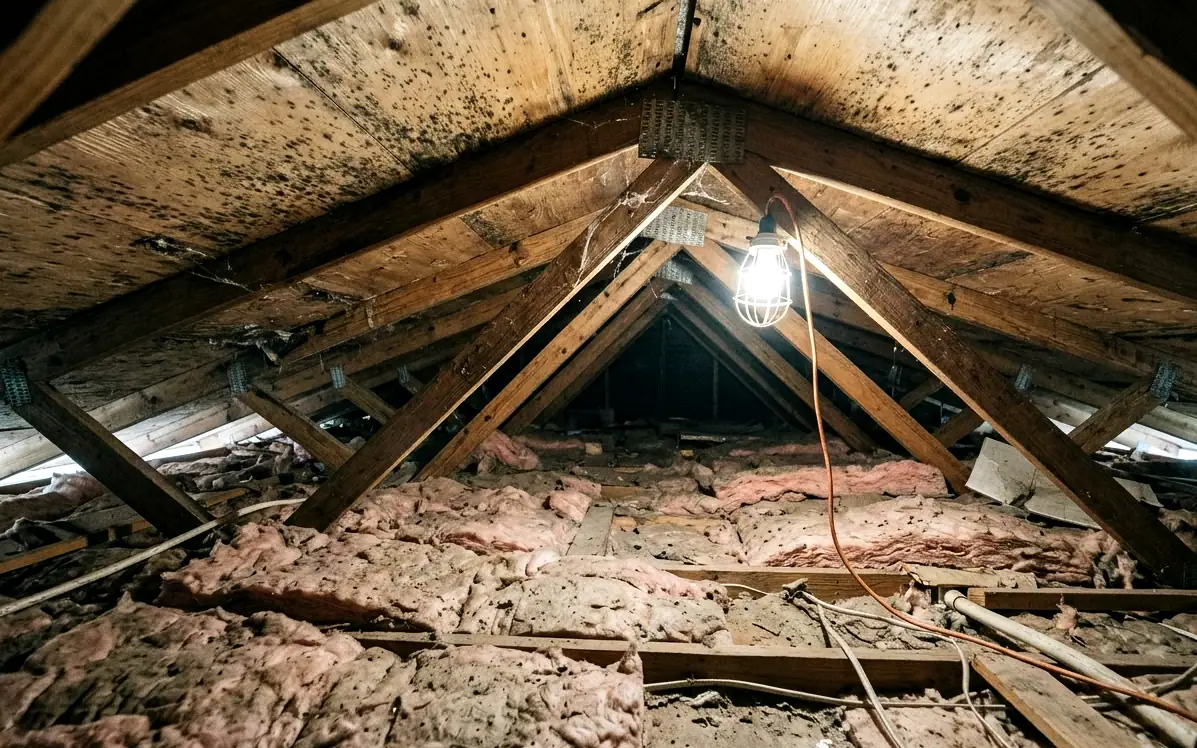
You went up into the attic for a box or a repair and found gray or black spotting across the roof decking, a damp smell, and insulation that feels heavier than it should.
Attic mold almost always traces back to one of two things: water coming through the roof, or warm humid air that has nowhere to go. We find which one it is, remove the growth from the wood, and fix the conditions so the next rainy season does not bring it back.
At a glance
- Service
- Attic Mold Removal
- Group
- Mold Removal
- Hours
- Phones answered 24/7
- Office
- 1428 Brickell Avenue, Floor 3, Miami
- Covers
- Miami-Dade and Broward
When you call, we set a time to walk the attic with moisture meters and a thermal camera, often the same day. If the decking is still wet from a recent leak, drying starts first. Mold on dry wood is not an emergency in hours, but it should be handled within days, before the wet season stretches it across more rafter bays.
Why mold settles on attic wood
Roof decking is plywood or wood plank, and wood holds moisture well. A slow leak around a vent boot, a cracked tile or a worn flashing line can keep one patch damp for weeks without ever showing a stain on the ceiling below.
The second cause is air. When attic vents are blocked by insulation or the bath fan dumps steam into the attic instead of outside, humid air sits against the underside of the roof. On a hot afternoon followed by a cooler night, that moisture settles on the wood and mold follows.
What we look at before anything gets cleaned
We map moisture across the decking and rafters so we know whether the wood is wet now or only stained from an old event. Wet wood means a live leak, and cleaning it before the leak is stopped is wasted work.
We also check how the attic breathes: soffit vents, ridge or gable vents, and where every exhaust duct actually ends.
- Moisture readings on decking, rafters and top plates
- Thermal scan for cold or damp spots
- Insulation condition and depth
- Bath and kitchen exhaust duct endpoints
- Soffit and ridge vent airflow
How attic mold comes off the wood
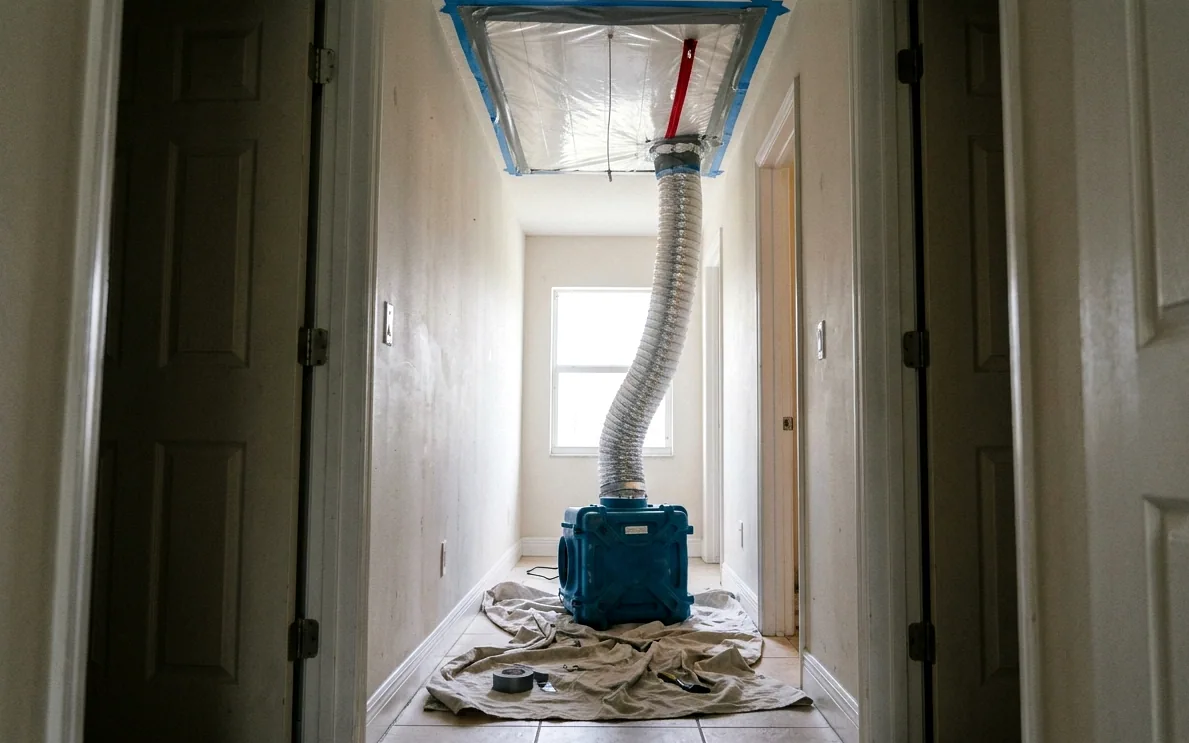
We set containment at the attic hatch so dust and spores do not fall into the hallway or bedroom below, and we run filtered air scrubbers during the work. Mold on structural wood is removed by HEPA vacuuming, then scrubbing or sanding the stained surface until the growth is gone.
Cleaned wood is dried and treated with an antimicrobial. We do not spray a coating over live mold to hide it, because the EPA notes that moldy surfaces should not be painted or sealed until they are cleaned and dry.
When insulation has to come out
Fiberglass batts and blown insulation that got wet and stayed wet usually cannot be saved. The EPA advises discarding insulation that cannot be dried within 48 hours, and moldy insulation tends to keep the smell long after the wood is clean.
We bag the removed insulation inside containment and carry it out through the protected path. New insulation goes in only after the decking reads dry and the vent paths are clear.
Fixing what caused it
If a roof leak started the problem, the roof repair needs to happen before or alongside the cleanup. We can set an emergency tarp to hold things over, and we document the leak location for your roofer.
If the cause was trapped air, the fix might be clearing soffit vents, rerouting a bath fan duct to the outside, or adding ventilation. The point is simple: cleaning without a fix just resets the clock.
Miami mornings average about 82 percent relative humidity, and dew points in the 70s are close to a daily event in the wet season, so attic wood here rarely gets a dry break. With about 55 percent of the city's homes built before 1980, many attics also have older vent layouts that were never sized for that load.
When to call about attic mold removal
Spotted roof decking
Gray, green or black speckling across the underside of the plywood, often heaviest near the eaves or around a vent.
Musty upstairs rooms
A damp smell in the top floor or near the attic hatch that gets stronger on hot afternoons.
Rusty roofing nails
Nail tips poking through the decking with rust or water drops on them point to moisture settling on cold metal.
Matted or stained insulation
Batts that look flattened, darker in patches, or feel damp to the touch.
Ceiling stains below
A brown ring on a bedroom or hallway ceiling often means water got through the attic first.
Frost-like white fuzz
White or pale growth on rafters is still mold, even if it does not look like the dark kind.
What happens after you call
Attic walk-through
We inspect with meters and a thermal camera, photograph every affected bay, and find the moisture source.
Stop the water
A live roof leak gets tarped or flagged for repair, and wet wood is dried before cleaning begins.
Contain the hatch
Plastic sheeting, a zip door and filtered negative air keep attic dust out of the living space.
Remove and clean
Damaged insulation comes out, and the decking and rafters are HEPA vacuumed, scrubbed or sanded.
Dry and treat
Cleaned wood is dried to normal readings and treated to slow regrowth.
Close it up right
Vents are cleared, ducts are corrected and new insulation goes in once the attic reads dry.
What attic mold removal usually costs in Miami
Attic jobs are priced by how many rafter bays are affected and how much insulation has to come out. These are typical Miami-area ranges, not quotes.
| What is priced | Typical range |
|---|---|
| Small patch around one leak point (10 to 100 sq ft) | $560 to $1,430 |
| Partial attic, several rafter bays | $1,640 to $5,780 |
| Full attic decking and rafters | $6,320 to $14,460 |
| Priced by area of treated decking | $15.80 to $28.40 per sq ft |
Tight crawl space, insulation removal and the vent or duct corrections all move the number. Your final price comes after we have been up in the attic and looked. See every cost range we publish.
Attic Mold Removal: common questions
Do I need a new roof if the attic has mold?
Usually not. Mold on decking is a surface problem on the wood, and most decking can be cleaned in place. Replacement only comes up when the plywood is soft, delaminated or rotted from a long leak.
Can attic mold get into the rooms below?
Spores and smell can travel through ceiling penetrations like light fixtures, the attic hatch and gaps around ducts. That is why we seal the hatch and run filtered air during the work rather than opening the attic to the house.
Is it the bathroom fan that caused this?
It often is. A fan duct that ends loose in the attic, or one that has fallen off its roof cap, blows warm wet air straight onto the decking. We trace every exhaust duct during the inspection so you know for sure.
Should the attic be sealed or vented in Miami?
Both designs exist, and the right answer depends on how your house was built and where the air handler sits. We look at what you have now and explain what is causing the moisture before suggesting any change.
How long will the attic be off limits?
Most partial attic jobs take one to three days once the source is fixed. Full attics with insulation removal take longer, and you can stay in the home while containment is up.
Often needed on the same job
Roof Leak Water Damage
Wet ceilings, insulation and walls under a leaking roof dried and repaired.
See the serviceMold Inspection
A walk-through with meters and thermal imaging to find mold and its cause.
See the serviceEmergency Tarping & Board-Up
Roof tarps and window boards to stop more water getting in after a storm.
See the serviceMusty Odor Removal
Damp and musty smells traced to the source and removed, not masked.
See the serviceWater where it should not be? Call now.
A person answers every call, day or night. Tell us what got wet and when it started, and we will tell you what happens next.