Water categories and classes, and why they change the job
Two leaks can soak the same amount of floor and still need very different work. The difference is what was in the water, and the restoration industry sorts it into three categories.
Written from what our crews see on Miami jobs, for homeowners, condo owners and property managers.
At a glance
- Written by
- Winston Albright
- Role
- Guides Editor and Restoration Project Lead
- Updated
- November 2026
- Reading time
- 6 minutes
- Category measures contamination, from clean (1) to gray (2) to grossly unsanitary (3).
- AC condensate and washing machine water are Category 2, even when they look clear.
- Category 2 water left for about 48 hours can degrade to Category 3.
- Class is a separate scale for how much water is present and how hard it will be to dry.
Category is about what is in the water
The IICRC S500 water damage standard, now in its fifth edition from 2021, sorts water into three categories by contamination level. The category tells you how much harm the water could do to people and how far the cleanup has to go.
It has nothing to do with how much water there is. A cup of sewage on a carpet is a bigger concern than a bucket of clean water from a supply line. Getting the category right on the first visit shapes every decision that follows, from what gets removed to what protection the crew wears.
The category is set by the source and by what the water touched on its way through the home. That is why the first questions we ask on the phone are where the water came from and how long it has been sitting. The answers often tell us the likely category before we arrive, so the crew brings the right gear and the right plan.
The standard also assumes the property owner, not the restorer, is responsible for finding and correcting the water source. In practice we help trace it, because no category or drying plan means much while water is still coming in.
Category 1: clean water
Category 1 is water from a source that poses no substantial harm. Common examples are a broken supply line, a sink or tub overflow without contaminants, and rainwater. A split hose on a refrigerator ice maker line or a burst pipe under a sink usually starts as Category 1.
This is the best case. Carpet, pad, drywall and many furnishings can often be dried in place if the work starts fast. Disinfection is usually not needed, though surfaces still get cleaned before the room goes back together.
Clean water does not stay clean forever, though. Once it runs across dirty flooring, sits in a wall cavity, or picks up debris, it starts to carry contamination of its own.
Category 2: gray water
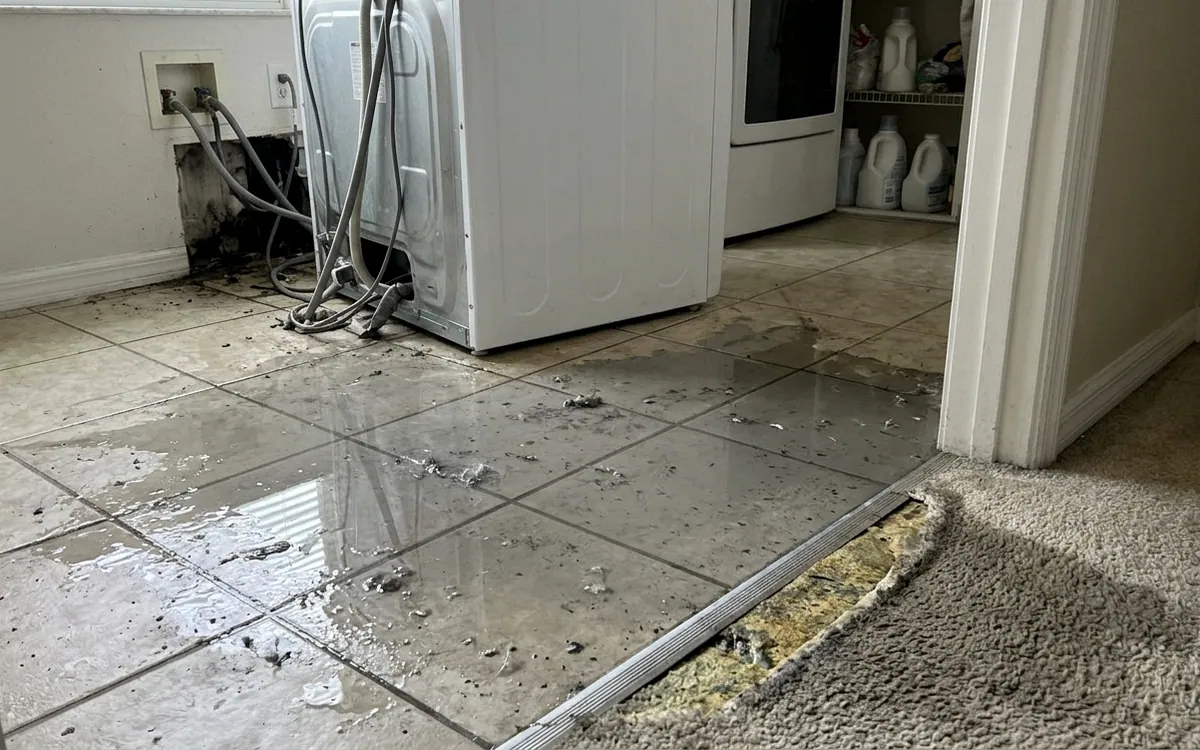
Category 2 water carries significant contamination that could cause discomfort or illness. The usual examples are dishwasher or washing machine discharge, a toilet overflow with urine but no feces, and sump pump failure. AC condensate and fire sprinkler water are also listed as Category 2.
That last point surprises many Miami condo owners, because AC drain line overflows are one of the most common leaks we see in high-rise units. The water looks clear, but it has run through a pan and line that grow slime and bacteria.
With Category 2, wet carpet pad is usually removed rather than dried, surfaces are cleaned and treated, and crews wear gloves and basic protection. Category 2 water left untreated in a structure for more than about 48 hours can degrade to Category 3.
Category 3: black water
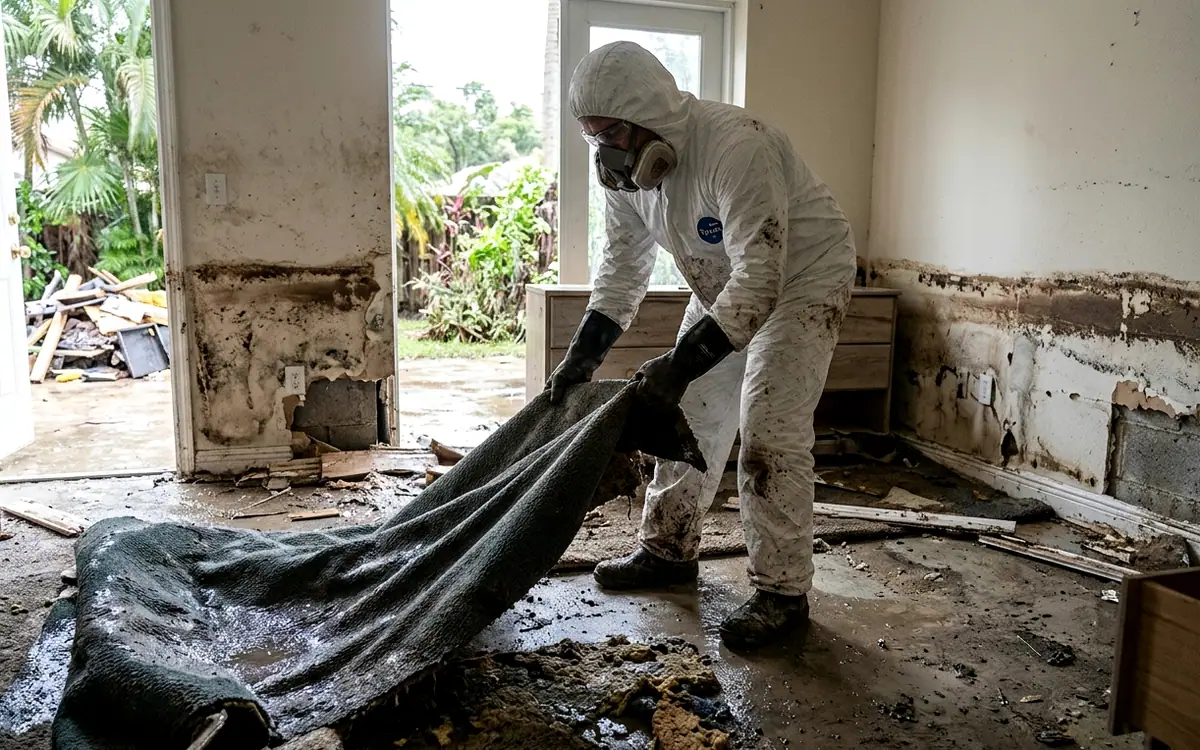
Category 3 water is grossly unsanitary and can contain pathogens. Sewage backups, toilet backflow from beyond the trap, and rising water from rivers or streams all fall here. Floodwater that comes into a home from the street is treated the same way, because it has run across roads, yards and drains.
In Miami, Category 3 shows up after heavy rain and storm events, when street water reaches garages and ground floors, and when a sewer line backs up through a floor drain or a tub. The work changes sharply. Porous materials the water touched, such as carpet, pad, drywall, insulation and many upholstered items, are generally removed and discarded.
Hard surfaces like tile, concrete and sealed cabinetry are cleaned and disinfected. People in the home, especially children, older adults and anyone with breathing problems, should stay out of the affected area until it is cleaned.
Work areas are usually closed off from the rest of the home so foot traffic does not carry contamination into clean rooms, and the crew wears boots, gloves and protective suits.
- Sewage backing up through drains, tubs or toilets
- Toilet water from beyond the trap
- Street or yard floodwater entering the home
- Category 2 water that sat untreated for about two days
Class is about how much water and how fast it dries
Class is a separate scale. While category describes contamination, class describes how much water is present and how fast it is expected to evaporate. It tells us how much drying equipment the job needs on the first day.
One job has both a category and a class. A dishwasher leak that wet one kitchen floor may be Category 2, Class 1. A burst pipe in the unit above that soaked your ceiling, walls and carpet may be Category 1, Class 3. Each label answers a different question. Category tells the crew how to handle the water and what to remove; class tells them how many air movers and dehumidifiers to bring and roughly how long they will run.
Class 4 deserves a note for Miami homes. Many local houses sit on concrete slabs with terrazzo or tile on top, and older homes are often concrete block. These dense materials hold water tightly and need longer drying, sometimes with heat or floor mats, even when the water itself was clean.
- Class 1: the least water, affecting only part of a room or low-absorbing materials.
- Class 2: at least a full room of wet carpet and pad, wicking under 24 inches up the walls.
- Class 3: the most water, often from overhead, with most surfaces saturated.
- Class 4: specialty drying for hardwood, plaster, brick, concrete and stone.
Why the category matters for you
The category drives what can be saved, how long the job takes and how it is priced. As a general reference, HomeGuide lists water extraction and drying at about $4 to $6 per square foot for clean water, $6 to $9 for gray water and $9 to $12 for black water. Those are typical national ranges, and the real price on your job depends on what we find on site.
It also matters for your claim. Adjusters look at the source of the water and the category when they go over the scope of work, so photos of the source and notes on when the water was found are worth keeping.
If you are not sure what kind of water you are dealing with, treat it as the worse category until someone checks it. Call us at (786) 947-0034, 24/7, and we will identify the source, set the category and class, and explain what that means for each room.
Reader questions
The water from my washer looked clean. Why is my carpet pad being removed?
Washing machine discharge is listed as Category 2 water, because it carries soap, lint and whatever came off the clothes. Pad acts like a sponge and is hard to clean once it soaks up gray water. The carpet itself can sometimes be cleaned and kept.
Can the category get worse if I wait to call?
Yes. Category 2 water left untreated in a structure for more than about 48 hours can degrade to Category 3. Even clean water picks up contamination as it sits in carpet and wall cavities, so early drying keeps more materials in the savable range.
Is street floodwater in my garage really the same as sewage?
It is handled the same way, because rising floodwater is listed with sewage as Category 3. It has run across roads, lawns and storm drains and can carry bacteria and chemicals. Drywall and other porous materials it touched are usually cut out and replaced.
More guides from our crews
AC drain line leaks in Miami condos
In a Miami condo, the air conditioner runs most of the year and pulls gallons of water out of the air. When the small drain line that carries that wat
Read the guideCan wet drywall be saved after a leak?
Wet drywall does not always have to come out. Whether it can be dried in place depends on what kind of water soaked it, how long it has been wet, and
Read the guideThe first 24 hours after water damage at home
The first day after a leak or flood decides how much of your home can be dried and kept. These are the steps that matter most, in the order we would t
Read the guideWater where it should not be? Call now.
A person answers every call, day or night. Tell us what got wet and when it started, and we will tell you what happens next.