Your hurricane season water damage plan, before and after the storm
Most storm damage we see in Miami homes is water damage: rain driven through windows, roof breaches and street water at the door. A plan made in May is worth far more than one made the day a storm is named.
Written from what our crews see on Miami jobs, for homeowners, condo owners and property managers.
At a glance
- Written by
- Winston Albright
- Role
- Guides Editor and Restoration Project Lead
- Updated
- November 2026
- Reading time
- 6 minutes
- Hurricane season runs June 1 to November 30, with the peak around September 10.
- Standard homeowners policies usually exclude flood, and NFIP coverage typically starts 30 days after purchase.
- A pre-season video of every room makes a storm claim much easier to support.
- After the storm, stop more water getting in, photograph everything, and start drying within 24 to 48 hours.
Know the season and its peak
The official Atlantic hurricane season runs from June 1 to November 30. The climatological peak falls around September 10, and most tropical activity happens between mid-August and mid-October. An average season, based on 1991 to 2020, produces 14 named storms, 7 hurricanes and 3 major hurricanes.
The season overlaps with South Florida's wet season, which the National Weather Service defines as May 15 to October 15. That period typically brings 60 to 70 percent of the year's rain. So even in a year with no direct hit, summer storms and tropical rain test every roof, window and drain around your home.
That makes late spring the right time to plan. Insurance changes need lead time, and repairs to roofs and windows are easier to book before the first storm of the year.
Rain alone can do serious damage. During the June 10 to 14, 2024 South Florida flood event, preliminary totals reached 21.66 inches in Miami Shores and 19.96 inches near Hollywood. No hurricane was needed for streets, garages and ground floors to take water.
Check your coverage before a storm is named
This is the step people put off, and the one that costs the most when skipped. FEMA states that most standard homeowners policies do not cover flood damage, so flood coverage has to be bought separately. Water that rises from the ground or the street is generally a flood claim, while rain that comes in through a wind-damaged roof or window is generally handled under the homeowners or condo policy.
An NFIP flood policy typically takes effect 30 days after purchase, with limited exceptions. If you wait until a storm is on the map, it is almost always too late for that storm. NFIP residential policies cover up to $250,000 for the building and up to $100,000 for contents.
In Miami-Dade, flood insurance is mandatory for federally backed mortgages in zones AE, AH, AO and VE. Zone X is moderate-to-low risk, where coverage is recommended but not required. FEMA's revised maps place about 252,015 Miami-Dade structures in the special flood hazard area, about 45,420 more than before, so it is worth checking your zone again. This is general information, not insurance advice; your agent can tell you what your own policies cover.
- Find your flood zone on the county's flood map
- Read your hurricane deductible, which is often a percentage
- Confirm whether you have flood coverage and when it starts
- Condo owners: check your HO-6 and the association's policy
- Save policy numbers and claim phone lines offline
Prepare the house in the weeks before
Miami-Dade and Broward are in Florida's High-Velocity Hurricane Zone, which carries stricter building code rules than the rest of the state. Even so, older homes and older openings need attention. About 55 percent of Miami's housing units were built before 1980.
Walk your home with water in mind. Look for gaps around window and slider frames, loose or missing roof tiles, clogged gutters and downspouts, and drains near the garage or patio that are blocked with leaves. Make sure shutters or panels are on hand, labeled and easy to install.
Take a slow video of every room, closet and the exterior before the season starts. Open cabinets and closets as you film. A pre-storm record of your home's condition makes a claim far easier to support later.
- Clear gutters, downspouts and yard drains
- Reseal gaps around windows and sliding doors
- Check roof tiles and flashing after any spring storm
- Test shutters, panels and their hardware
- Film every room before June
The day before landfall
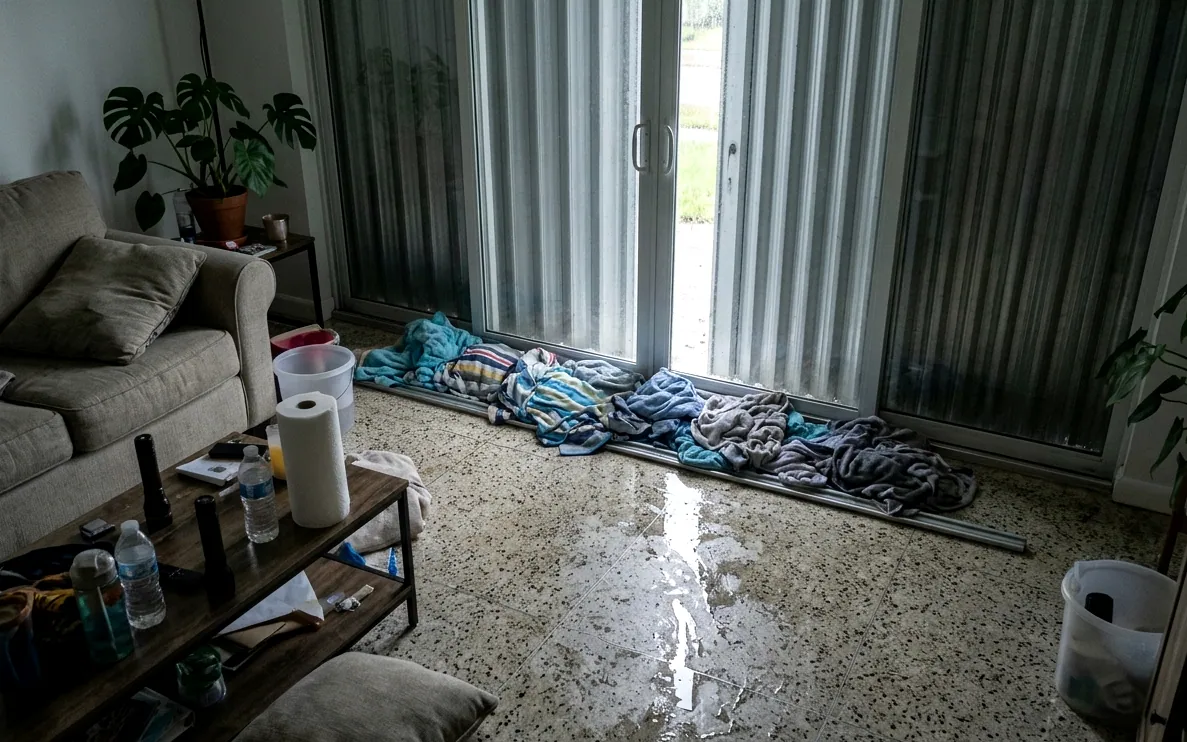
Once a storm is coming, focus on keeping water out and keeping belongings off the floor. Move rugs, electronics, documents and stored boxes off ground-level floors and away from exterior walls and windows. In a garage that has taken water before, put items on shelves or blocks.
Lay towels along the base of sliders and windows that have leaked in the past. Know where your main water shutoff and electrical panel are, and keep a flashlight beside them. If you live in a high-rise, find out from management how the building handles elevators, generators and water service during the storm.
Keep your phone charged and a battery pack ready. After a storm, phone lines are often the only way to reach anyone, so save our number, (786) 947-0034, where you can find it without searching.
The first steps after the storm
When it is safe, check the home room by room. Look at ceilings for stains or sagging, walls under windows for wet drywall, and floors near exterior doors. Floodwater from outside is Category 3 under the IICRC approach, so treat it as contaminated: wear boots and gloves and keep children out.
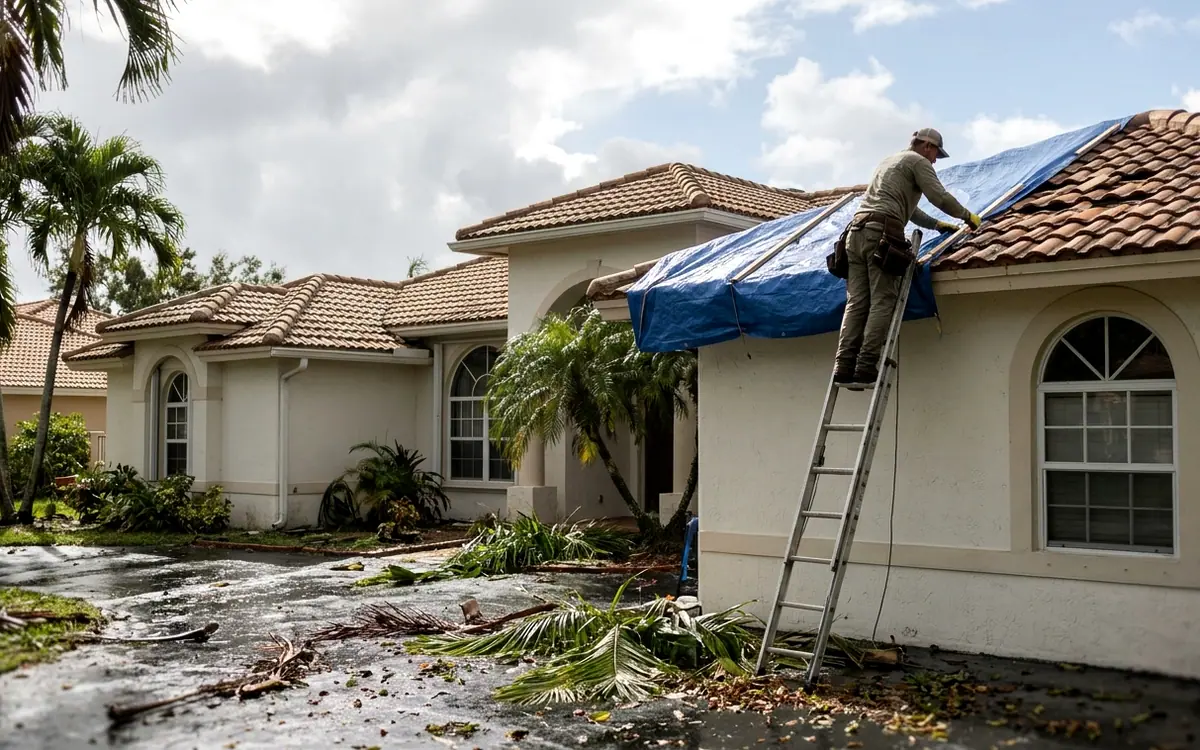
Photograph everything before cleaning up: water lines on walls, wet flooring, roof damage you can see from the ground, and damaged belongings. If a roof or window is open to the weather, temporary tarping or board-up stops more water coming in, and it is usually expected by insurers as a step to prevent further damage.
Then start drying. The EPA advises drying water-damaged areas within 24 to 48 hours to prevent mold growth. After a widespread storm, many homes need help at once, so calling early matters.
Claims and dates to keep in mind
Florida's claim deadlines run from the date of loss. For hurricane and other weather losses, the date of loss is the hurricane's landfall date or the date NOAA verifies the weather event. A new or reopened residential property claim must be noticed to the insurer within 1 year, and a supplemental claim within 18 months.
Keep a simple folder or phone album for the storm: your pre-season video, after-storm photos, receipts for tarps, fans, hotel stays and repairs, and the drying logs from your restoration crew. Moisture readings and daily logs show the adjuster what was wet and how long it took to dry.
If your home took water in a storm, call us at (786) 947-0034. The line is answered 24/7, and we can tarp, extract, dry and document the damage so your claim starts with a clear record. For legal or coverage questions, talk to your agent or an attorney.
Reader questions
Rain came in through my sliding door during the storm. Is that a flood claim?
Usually not. Water that comes through a wind-damaged opening or a failed seal is generally looked at under the homeowners or condo policy, while water rising from the ground is generally flood. Policies differ, so ask your agent and photograph the door, the track and the wet floor.
A storm is a week away. Can I still buy flood insurance in time?
An NFIP policy typically takes effect 30 days after purchase, with limited exceptions, so a new policy bought a week out usually will not cover that storm. It can still protect you for the rest of the season, which runs to November 30.
Should I start pulling out wet drywall myself after a hurricane?
Photograph everything first, and wear boots, gloves and a mask if the water came from outside, since floodwater is treated as contaminated. Cutting drywall at a clean, level line makes the repair easier later. If more than a room or two is wet, drying equipment will be needed anyway.
More guides from our crews
AC drain line leaks in Miami condos
In a Miami condo, the air conditioner runs most of the year and pulls gallons of water out of the air. When the small drain line that carries that wat
Read the guideCan wet drywall be saved after a leak?
Wet drywall does not always have to come out. Whether it can be dried in place depends on what kind of water soaked it, how long it has been wet, and
Read the guideThe first 24 hours after water damage at home
The first day after a leak or flood decides how much of your home can be dried and kept. These are the steps that matter most, in the order we would t
Read the guideWater where it should not be? Call now.
A person answers every call, day or night. Tell us what got wet and when it started, and we will tell you what happens next.