Florida water damage claim deadlines and the records that matter
Florida shortened its property claim deadlines at the end of 2022, and many homeowners still go by the old rules. Here is the general timeline, and the records that make a water damage claim easier to support.
Written from what our crews see on Miami jobs, for homeowners, condo owners and property managers.
At a glance
- Written by
- Winston Albright
- Role
- Guides Editor and Restoration Project Lead
- Updated
- November 2026
- Reading time
- 6 minutes
- A new or reopened Florida residential property claim must be noticed within 1 year of the date of loss.
- Supplemental claims must be noticed within 18 months, down from 3 years before SB 2-A.
- Assignments of benefits under policies issued on or after January 1, 2023 are void, so the claim stays in your name.
- Photos, the failed part and daily drying logs are the records adjusters most often ask for.
A note before the dates
This guide is general information from a restoration company, not legal or insurance advice. Policies differ, the facts of each loss matter, and the law can change. For questions about your own claim, talk to your insurer, your agent or a Florida attorney.
What we can share is what we see on water damage jobs every week: the deadlines people miss, the records adjusters ask for, and the steps that keep a claim moving. The dates below come from the Florida Statutes and the Senate's summary of the 2022 reform law.
The 1-year notice deadline
Under Section 627.70132 of the Florida Statutes, a new or reopened residential property claim is barred unless notice is given to the insurer within 1 year of the date of loss. That clock starts on the day the damage happened, not the day you noticed the full extent of it or got a repair estimate.
This used to be 2 years. SB 2-A, signed on December 16, 2022, cut the notice deadline from 2 years to 1 year. Many people still repeat the old number, so it is worth checking the date on any older advice you have read.
For a slow leak, the date of loss can be harder to pin down. That is one more reason to report water damage to your insurer promptly once you find it, rather than waiting to see how bad it gets.
Reporting early does not lock you into a final number. You can give notice, start drying to limit the damage, and let the full scope come together as the job goes. Most policies also expect you to take reasonable steps to stop the damage from getting worse, so waiting to act can cause problems of its own.
The 18-month supplemental window
A supplemental claim is a request for more money on a claim that was already filed, usually because more damage turned up once walls were opened or repairs began. In Florida, a supplemental property claim must be noticed within 18 months of the date of loss.
SB 2-A also cut that window, from 3 years to 18 months. The same law shortened the time insurers have to pay or deny a property claim, from 90 days to 60 days, and the time to acknowledge a claim, from 14 days to 7.
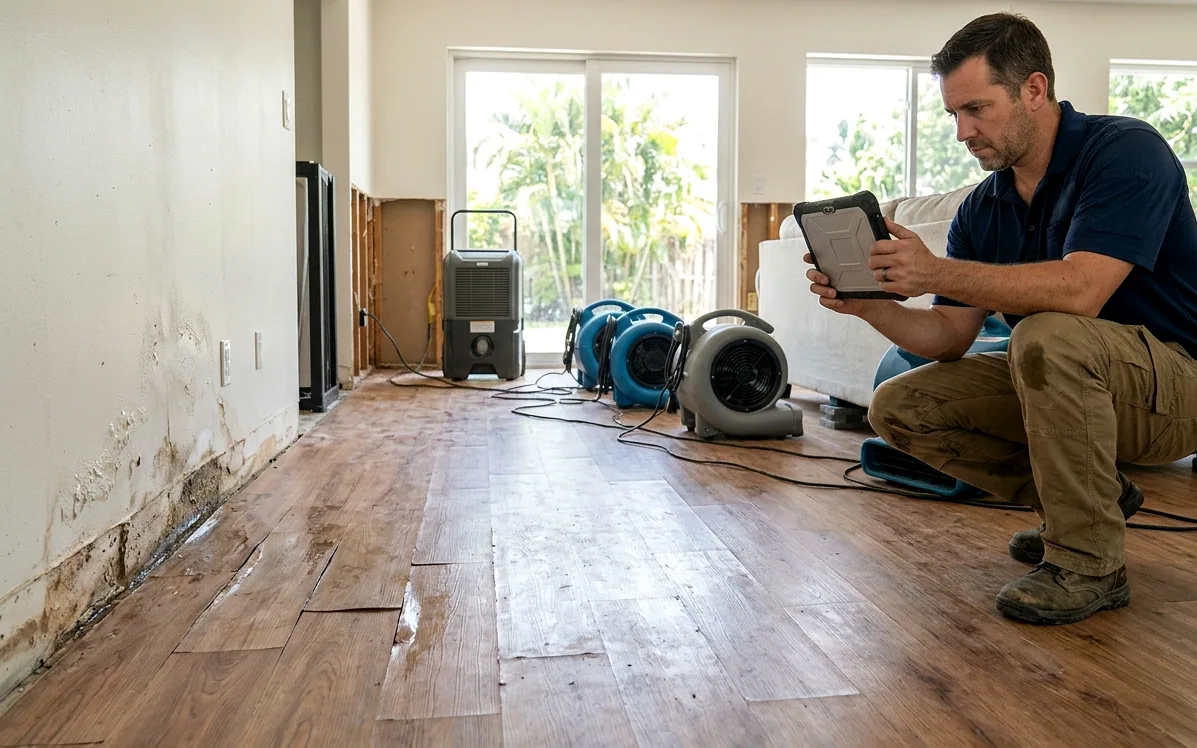
Water damage often grows after the first look. Wet insulation is found behind a wall, the subfloor under tile turns out to be soaked, or mold appears in a cabinet base a few weeks later. Good drying records make those later findings much easier to tie back to the original loss.
- New or reopened claim: notice within 1 year of the date of loss
- Supplemental claim: notice within 18 months of the date of loss
- Insurer acknowledgment: within 7 days
- Insurer pay or deny decision: within 60 days
Storm dates and the date of loss
For hurricane and other weather-related losses, the statute sets the date of loss as the hurricane's landfall date or the date NOAA verifies the weather event. So if rain came through your roof during a named storm, the clock runs from landfall, even if you did not find the ceiling stain until days later.
The official Atlantic hurricane season runs from June 1 to November 30, with its peak around September 10. If a storm damages your home late in the season, the 1-year notice deadline will land in the following hurricane season, so put the date on your calendar right away.
Flood is a separate matter. FEMA states that most standard homeowners policies do not cover flood damage, so rising water from the street usually goes to a separate flood policy with its own claim rules. Ask your flood carrier for its timelines too. If both wind and flood damaged your home in the same storm, you may be dealing with two claims at once, so keep the records for each one separate and clearly labeled.
The assignment of benefits change for policies from 2023
An assignment of benefits, often called an AOB, is a document that transfers your right to be paid under your policy to a contractor, who then bills your insurer directly. Florida first reformed AOBs in 2019 under HB 7065, which gave policyholders 14 days to rescind an assignment and capped emergency-services assignments at $3,000 or 1 percent of Coverage A.
The bigger change came later. Under Section 627.7152(13), any assignment of post-loss benefits under a residential or commercial property policy issued on or after January 1, 2023 is void and unenforceable. For most homeowners with a current policy, that means the claim stays in your name and you work with your insurer directly.
In practice, you hire the restoration company, the work and the records come to you, and you submit them to your insurer. Our job is to dry the home and hand you a clean record of what was done, so your claim is easy to support.
Records that make a claim easier
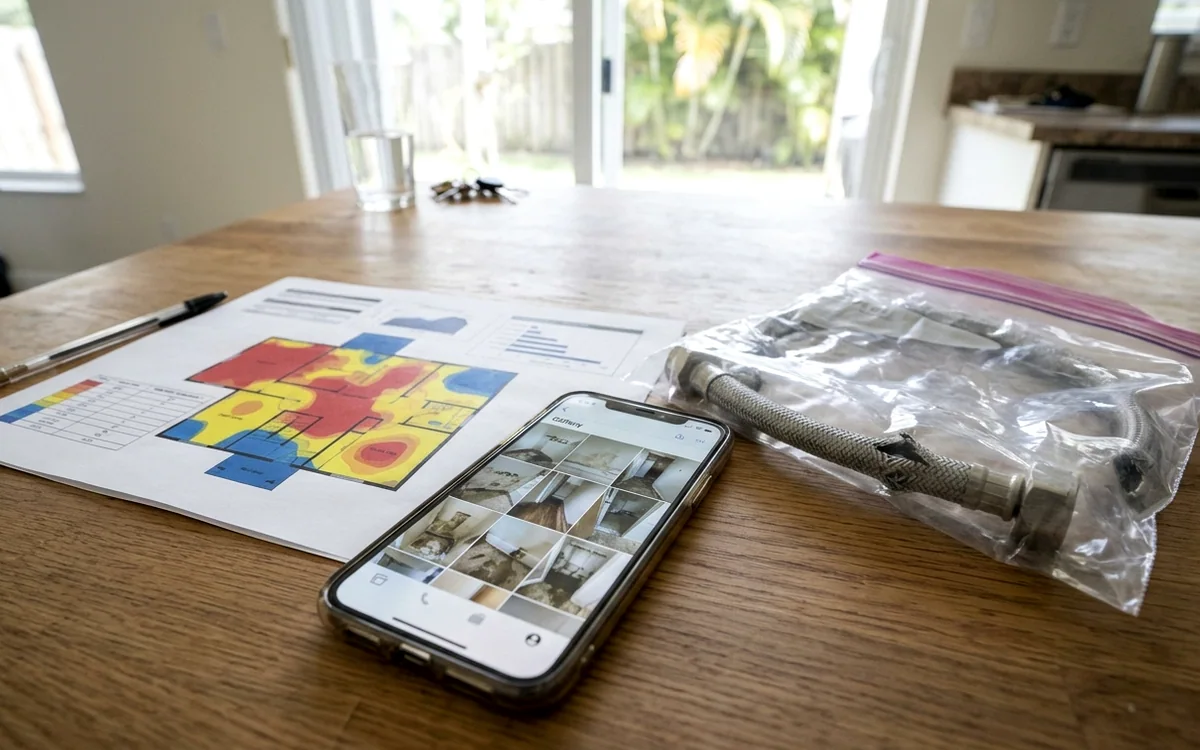
Deadlines matter, but a claim also needs evidence. Adjusters want to see what happened, what was damaged, and why the work done was needed. Start a folder or phone album on day one and add to it as the job goes.
On our jobs, we keep photos, moisture maps and daily drying logs from the first visit to the last, and give them to you organized by room. Those logs show which materials were wet, how wet they were and when they reached dry, which helps answer questions about why equipment ran for the days it did or why a wall was cut.
If you have water damage in your Miami home or condo, call us at (786) 947-0034, 24/7. We will stop the spread, dry the structure and document every step so you have what you need when you file within Florida's deadlines.
- Photos and video of every wet area before cleanup
- The failed part, such as a split hose or rusted fitting, kept in a bag
- The date and time the water was found and stopped
- Moisture readings and daily drying logs
- Receipts for fans, towels, hotel stays and repairs
- Notes of every call with your insurer, with dates and names
Reader questions
I found the leak months after it started. When does my 1-year clock begin?
The statute runs from the date of loss, which for a slow leak can be hard to pin down. Report it to your insurer as soon as you find it, and keep notes and photos that show when you discovered it. For questions about how the date applies to you, talk to your insurer or an attorney.
The adjuster already paid, but more damage showed up behind the wall. Is it too late?
Not necessarily. Florida allows a supplemental claim to be noticed within 18 months of the date of loss. Photograph the new damage, keep the drying records that tie it to the original leak, and contact your insurer promptly.
A contractor asked me to sign over my insurance benefits. Is that still allowed?
For residential policies issued on or after January 1, 2023, Section 627.7152(13) makes an assignment of post-loss benefits void and unenforceable. Check your policy's issue date, and ask your agent or an attorney before signing anything that refers to your benefits.
More guides from our crews
AC drain line leaks in Miami condos
In a Miami condo, the air conditioner runs most of the year and pulls gallons of water out of the air. When the small drain line that carries that wat
Read the guideCan wet drywall be saved after a leak?
Wet drywall does not always have to come out. Whether it can be dried in place depends on what kind of water soaked it, how long it has been wet, and
Read the guideThe first 24 hours after water damage at home
The first day after a leak or flood decides how much of your home can be dried and kept. These are the steps that matter most, in the order we would t
Read the guideWater where it should not be? Call now.
A person answers every call, day or night. Tell us what got wet and when it started, and we will tell you what happens next.